Bustle Exclusive
Naomi Watts Doesn’t Care About Looking 25
The actor opens up aging in Hollywood and how early perimenopause led her to launch Stripes Beauty.
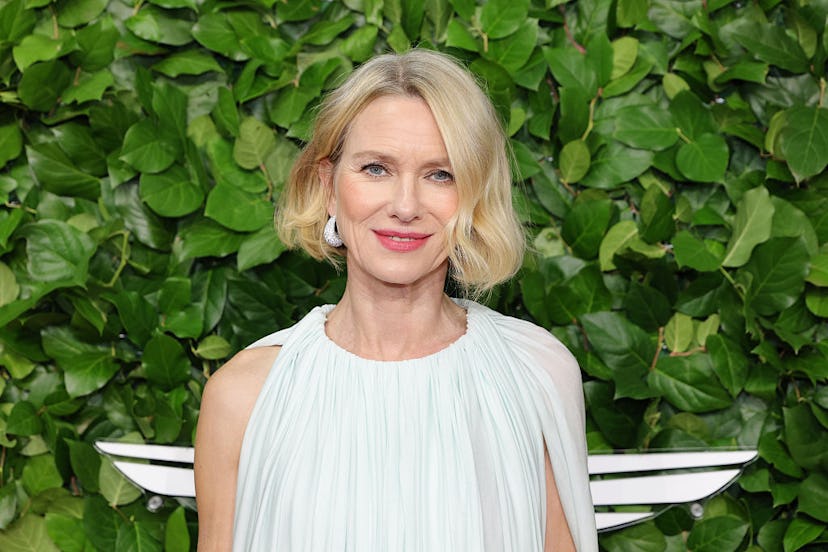
Naomi Watts was just 36 when she began experiencing physical changes — “dry skin, night sweats, irregular periods,” recalls the actor, 57 — but had no idea they were related to menopause. For years, she says, doctors searched for other explanations. “Tuberculosis came up before menopause did,” she adds, incredulously.
With no clear answers — and nobody to talk to about what was happening in her body — Watts began building the support system she wished she’d had. One part of that system became Stripes Beauty, a menopause-focused beauty brand that features skin care, hair care, and wellness products created specifically for women navigating perimenopause and menopause symptoms, from skin dryness and thinning to hair texture changes.
“I paired up with two friends who were founders of a beauty company, then I learned more and more about menopause and how it affects the skin,” Watts says, sitting beside me in a hotel suite on a blustery New York City day, her blond hair grazing her jawline above a gray turtleneck.
Now, Watts is building on that mission with the brand’s latest launch, Rich & Tight, a peptide-spiked, skin-firming body butter designed to target menopause-related crepiness. But don’t call it a vanity project: “I just thought, ‘This woman feels underserved, under recognized, and needs to be reflected,’” she says.

Ahead, Watts opens up about aging in Hollywood, her thoughts on the facelift boom, and her scariest on-set moment.
You began talking about menopause before a lot of others did. When you started Stripes Beauty, did it feel like a risk at the time?
Absolutely. I didn’t want it to end my existing career that was going pretty well. But at the same time, it was really a hard, lonely, scary time for me. I wished there was a manual. Ultimately, I was sick of pretending that perimenopause wasn’t happening and started talking about it. I tested the waters with friends, and sometimes it would be met with nervous laughter. If I’d make an estrogen dip joke or something, people would say, “Oh, don’t be silly, you’re too young.”
Over time, the burden of carrying the secret became exhausting. I wanted longevity for my career as an actor — not to be on a list of, “No, she’s got to go off to the corner now and pull out knitting needles.” I still have time, I still have energy, and there’s lots I want to do. People are living longer, so I wanted to address how women can do that with dignity and strength.
What’s something unexpected that going through menopause has given you?
Community and a lot of knowledge about my body. I realized it wasn’t an ending but a beginning — a different time for your body and well-being.

What’s the most freeing beauty realization you’ve had in your 50s?
Not trying to look how I once did — just embracing myself at this point in time. I think you get to a certain age, and you know what works for you and you just stick with it. I don’t want to look 25 anymore or look like someone who’s fighting to look 25.
Aging does feel more visible these days, in light of the facelift boom. Where do you land on plastic surgery?
I haven’t had the nerve to do it and I am interested in putting myself forward as I am. For now, I hope other people around me can tolerate my drooping jowls, because right now I don’t want to go under the knife. I can’t categorically say I’m for or against at this moment, but I certainly would never judge those who do it.
How has your relationship with beauty changed over the years?
Now that my kids are grown and more independent, I’m really into my end-of-the-day ritual. In the beginning of the day, if I’m not working or on camera, I’m not going to wear makeup. But I get in the bath every night, if I can. I listen to a podcast or maybe even burn a candle. I just love hot, steaming water — it prepares me for a good night’s sleep.
Which podcasts are you listening to?
I love Ezra Klein. I listen to The Daily Show, 10% Happier. Oh, and Krista Tippett’s podcast — she has the most calming, lovely voice.
Your blond bob is a signature part of your look. Would you ever change it up?
I’ve always had a bob. I think the shape of my face has never really worked with long hair.
Which beauty trend do you secretly hope never comes back?
Thin eyebrows. I never partook, but I got savvy to the nice bushy brow early enough that anytime I played a part that required a thin brow, I never let the makeup artist touch them.
You were wise on that one. What’s your go-to beauty look?
I’m very partial to blush and always have been, and I always put it close under the eye so it looks like a natural flush rather than makeup. I’ll also use lipstick to add a bit of color.

Which beauty lesson would you want to pass down to the next generation?
Don’t do anything too extreme. I try to tell my daughter that the natural you is pretty special. But I get it. I did some terrible things to my hair. When I was 15, I literally held up my pony and hacked away at it with the kitchen scissors to create an asymmetrical undercut. Do you remember a band called Human League? Phil Oakey had that haircut, and all the girls, too. It was the rage at the time.
I love that — such a bold move. On a different note, you’ve acted in a number of horror movies. What was your scariest experience on set?
I remember I did a corset drama for the BBC and I had to open the cupboard, and a whole lot of cockroaches had to fall down on top of me. They were real — and they were in my hair and they would go into my corset. Then [production] would help me get them all out, and I’d be like, “Ah, I think I still have one in there.” But they were allegedly clean and well-bred, not cockroaches picked up from the back alley. They were British.
Oh, good, they weren’t New York City cockroaches. What do you hope women your age feel when they encounter your brand?
Sometimes I get stopped in an airport or on the street and I think, “Oh, God. I haven’t got lipstick on. They’re going to want a selfie and to ask what movie they’ve seen me in.” But it’s not that. They come and say, “Thank you for giving me permission, or giving me the dialogue to speak to my husband, to speak to my children, to speak to my boss about what’s going on with me.” So I want them to feel included, recognized, reflected.
This interview has been edited and condensed for clarity.
