Entertainment
Beyond the Stage: How Josh Pele Turns Live Events Into Shared Experiences
The magician and mentalist has built a career on reading the room and the people in it.
The Moment That Sticks
The most memorable part of a live event usually isn’t one that was planned. It is not the keynote or the timed lunch. More often, it is an unexpected moment; something that makes the audience feel like participants rather than spectators.
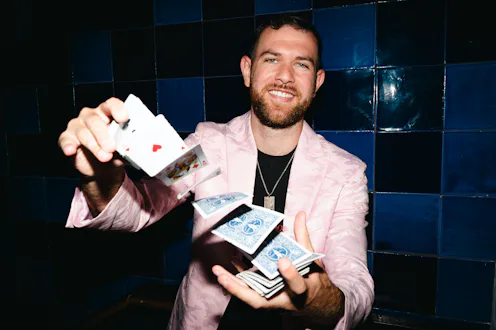
That difference is at the core of Josh Pele’s work. As a magician and mentalist performing for corporate audiences around the world, Pele has built his approach around a simple premise: people remember how an experience made them feel, not just what they saw.
Starting With The Room
Corporate audiences are not a monolith. A small leadership offsite has a completely different energy than a conference floor packed with hundreds of attendees across an industry. Or, a private company celebration will look nothing like an international product launch.
Rather than arriving with a fixed set and running through it, regardless of the context, Pele treats those differences as part of the work itself. His performances are built around audience involvement, pulling individual participants into moments that ripple to the rest of the room. That structure gives him room to adjust on the fly. If an audience is slow to warm up, he can give moments more space. If someone’s reaction creates an opening, he can follow it somewhere unscripted. The goal is for the performance to feel like it belongs to that specific event, not like something that wasn’t meant to be there.
A Global Career Built On Preparation
Pele says he has performed in more than 20 countries, a scope of work that has required him to think carefully about how entertainment translates between different cultures and regions. That kind of reach does not happen accidentally; it is the result of years spent learning what different audiences actually respond to.
Pele claims to have performed magic and mentalism in 11 languages, including English, Spanish, Portuguese, Italian, Swedish, Russian, Ukrainian, Japanese, Korean, Vietnamese, and Indonesian. For some of those performances, that meant learning enough of a new language to communicate directly with a native-speaking audience.
It is an unusual commitment, but one that reflects the logic behind his approach. When a performer speaks to an audience in its own language, even imperfectly, it tends to shift the dynamic. Participation feels more natural. The gap between the person on the stage and the people watching it closes in a way that is difficult to force. Preparation, in other words, is not just about knowing the cool tricks. It is about knowing the room before even walking into it.
Why Flexibility Is the Real Skill
There is a tendency to think of live performance as something that happens spontaneously. The reality is that what looks instinctive on stage is usually the result of a significant amount of work beforehand.
For interactive entertainment, especially, that preparation matters. Pele pays attention to the structure of an event, who will be in the room, why they are there, and what tone the rest of the day has set, before deciding how to approach his portion of it. The answers shape everything from pacing to which moments get more time to breathe.
But preparation can only take a performance so far. Once the show begins, the audience takes over as the main variable. Reading how they are responding, noticing when energy is building, when something has landed, when a participant is ready to be brought in further, requires a different kind of attention. It also requires a performer who is genuinely comfortable letting go of the plan when the room calls for it.
That combination of preparedness and adaptability is what allows Pele to work across formats that demand very different things: exclusive retreats, large conferences, private events, and international festivals. Each comes with its own unique factors. A performance calibrated for a room of colleagues who have worked together for years will not carry the same energy for a mixed international audience. Pele’s approach accounts for that by keeping the core of the work consistent while allowing the delivery to shift as needed.
What the Audience Walks Away With
Corporate events have long been structured around information. Keynotes, panels, and networking are expected, and that will not change. But there is growing recognition that how an event feels matters just as much as the technical information it provides. Attendees want to leave with something more than notes.
For live performers, that creates a real opportunity, but also a very real test. Audiences can tell the difference between participation that feels genuine and participation that feels like a gimmick. They want to be a part of something, not directed through it.
Pele’s answer has been to make the audience the material. The magic gives people something to watch, but the interaction around it gives the performance its shape. Because the people in the room change every time, the experience does too. In a market increasingly focused on creating events that resonate, that kind of performance is harder to replicate than it might look. And that is exactly the point.
BDG Media newsroom and editorial staff were not involved in the creation of this content.
