Stepping Out
Cat Cohen Survived A Stroke. Then She Made A One-Woman Show About It.
After a health scare at 31, the comedian mined the terrifying experience for Broad Strokes, her hilarious and moving off-Broadway debut.
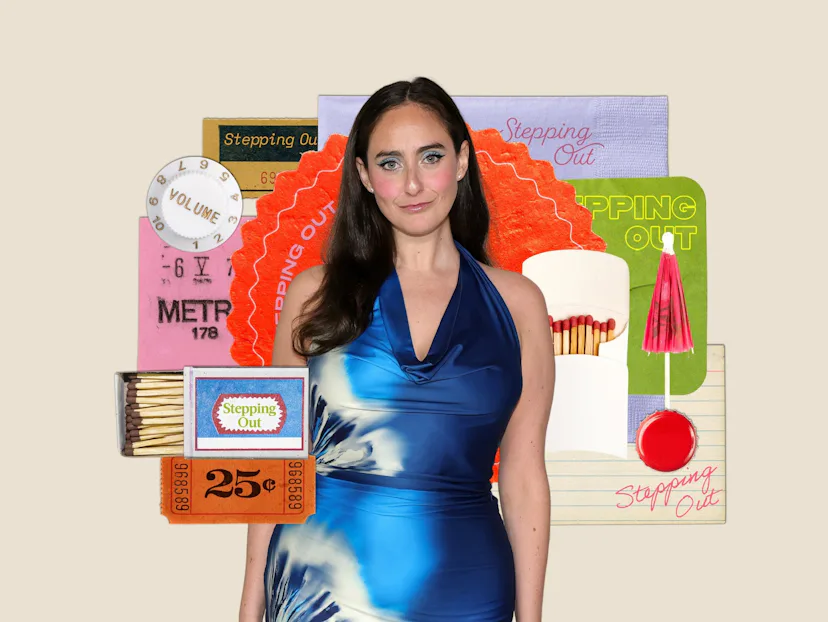
One of Cat Cohen’s songs in her new one-woman show, Broad Strokes, is titled “Are You Mad at Me?” So it was somewhat fitting that the question was turned back at her after a woman in the audience fainted toward the end of a performance in early August.
“I got a text the next morning from this woman who I know from comedy,” recalls Cohen on a recent Friday afternoon. “She goes, ‘That was my wife who fainted, and she wants to know if you’re mad at her.’” (Thankfully, the woman was OK.)
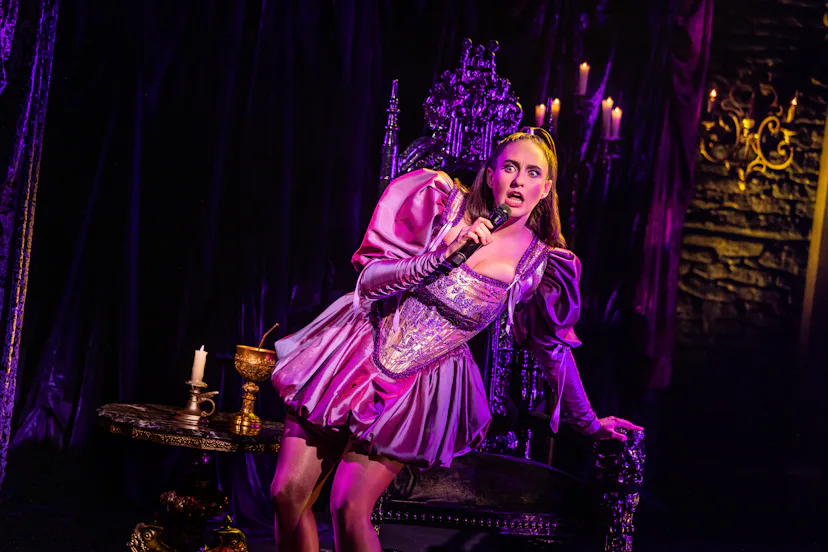
It has not been the only medical emergency, Cohen says: a few audience members have fainted during her show, which recounts her experience suffering and recovering from a stroke at age 31. The incidents happened right around the time Cohen goes into colorful detail about the heart surgery she underwent poststroke. “I think a lot of people are triggered by hearing about medical stuff,” says Cohen, now 35.
In the summer of 2023, the comedian was watching TV at home in her apartment and getting ready to head to the Edinburgh Fringe Festival when her left arm stopped moving. She went to the ER, where she learned she had an undiagnosed congenital heart defect — in layman’s terms, a hole in her heart that allowed a blood clot to travel to her brain. The condition, she later realized, also contributed to the visual aura migraines she had suffered from since she was a preteen. Once it sunk in that she was lucky enough to be diagnosed quickly at a great hospital and treated by great doctors (including one named, no joke, Dr. Love), “I could see the funny parts of it while it was happening,” says Cohen, an acolyte of Nora Ephron’s “everything is copy” mantra. “I was traumatized by this, but really quickly I was like, ‘OK, but I got great content. I got a lot to talk about.’”
Cohen recounts this as we sit with her Chihuahua mix, Romeo, on two benches in a shady nook of the Jane Street Garden after grabbing coffees at PlantShed across the street. It’s a blistering hot August afternoon, and I’m sweating through my linen pants and J.Crew cotton T-shirt; she is glowing in a black floral-print sundress, diamond earrings, and oversize sunglasses, her hair slicked back into a perfect bun and adorned with an oversize pink chiffon ribbon. Resilience is simply her way: “My mom said that one of my teachers when I was 3 was like, ‘Everything with her is just for the moment.’ I’ll be very devastated, and then, an hour later, I’ll be like, ‘I’m good. Life rocks,’” she says. “For better or for worse, that’s how I am.”
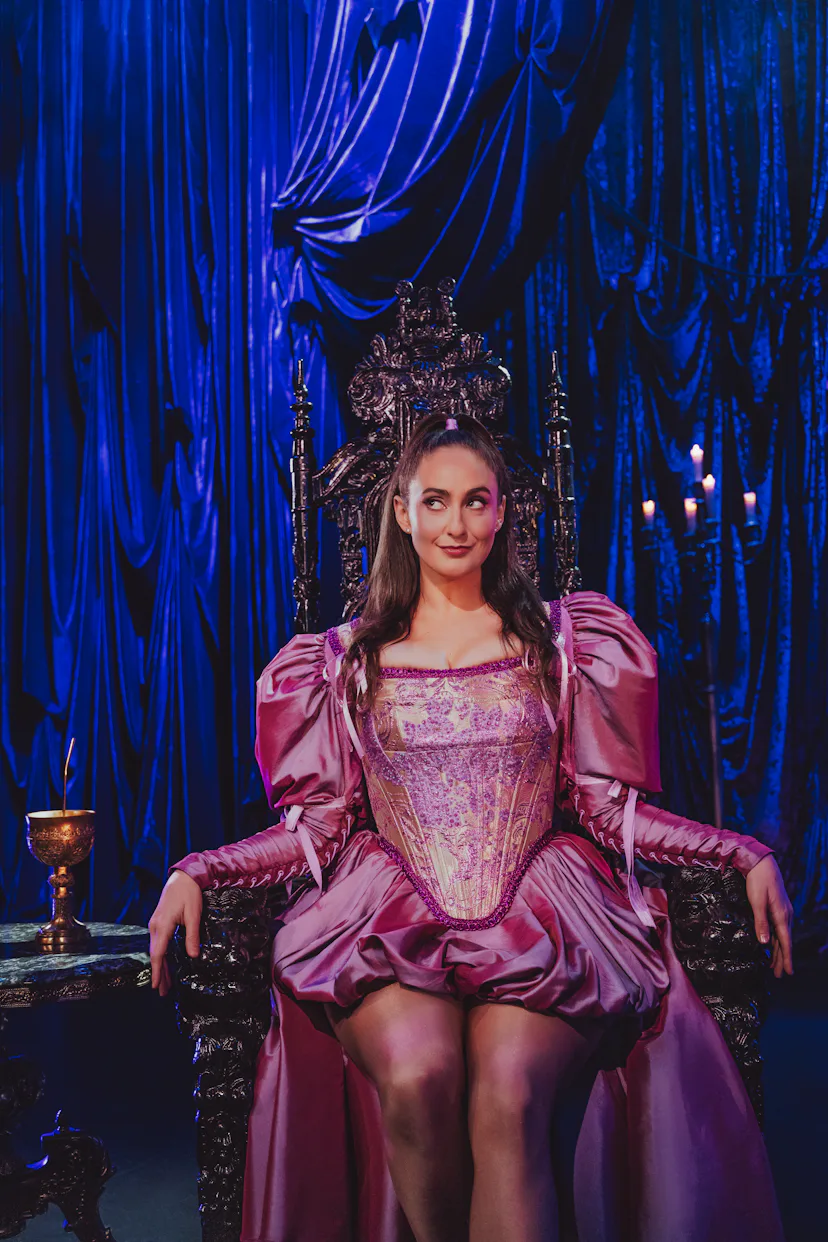
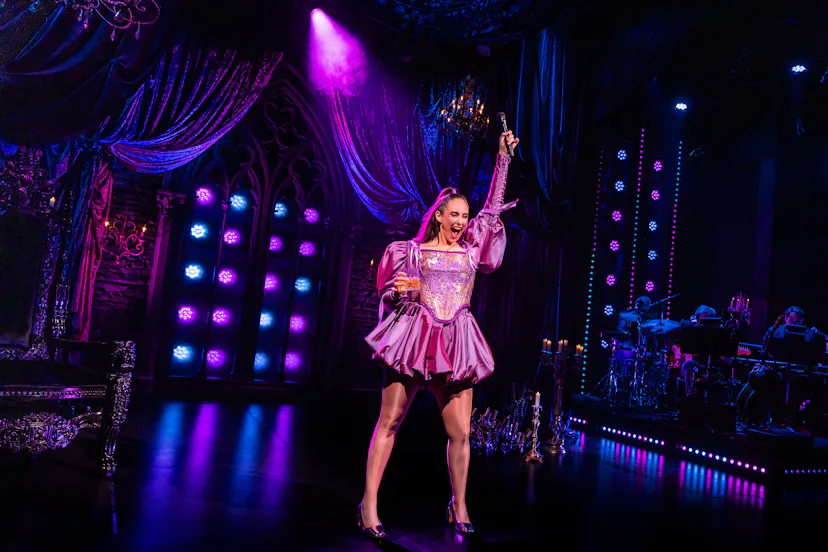
Broad Strokes, directed by Tony Award-winning director Alex Timbers, is running at the Lucille Lortel Theatre through late September and marks Cohen’s off-Broadway debut, but in-the-know New Yorkers and pop culture fiends will recognize her from the comedy scene over the past decade or so. Her “Cabernet Cabaret” variety show was a fixture at Alan Cumming’s Club Cumming, she’s filmed multiple comedy specials — including Netflix’s The Twist…? She’s Gorgeous — and her TV and film credits include a Season 4 arc on Only Murders in the Building and a role in Joachim Trier’s Oscar-winning Sentimental Value. She also hosts a podcast, Seek Treatment, with fellow comedian and writer Pat Regan. Loving attention and an intractable desire to be unique are frequent themes of her work, including in Broad Strokes, where she recalls learning that Hailey Bieber had the same rare condition she did: “This is the first time in the saga I’m like... I think I’m going to like it here.”
For all her overt main-character energy, however, Cohen is deeply introspective, genuinely curious, and a generous hang: She’s bursting with questions, to the point that I have to remind myself I’m doing an interview, not yapping with a fellow West Village girlfriend as we discuss our favorite neighborhood spots (Corner Bistro); her upcoming wedding planning (“I have a lot of Virgo on my chart. I’m very Type A,” she says); recent books we’ve loved (Belle Burden’s Strangers); and our shared medical anxiety and aversion to lettuce amid the cyclospora outbreak.
Her recovery allowed a lot of time for self-reflection. Friends and family rallied around her, but she still found herself with long stretches of time to fill by herself. “I was alone just watching TV for hours and going to see movies by myself. I saw Oppenheimer three times,” she says. “All I could do was see movies and walk around, and sit and think.” (And treat herself to well-deserved chocolate cupcake deliveries from Magnolia Bakery: “I would say binge-eating was my friend during that time,” she adds. “I was like, ‘What vice can I do right now?’”)
Just as unsettling as the surgery was what came after: “I think I drove everyone in my life crazy because I was just frozen in fear that something wasn’t right,” she says. “I was in lots of extra therapy.” But in 2025, after a year or so of makeup performances she’d canceled due to her stroke, she got to work on what would become Broad Strokes, consulting comedian Mike Birbiglia for advice on balancing the darker, sobering aspects of her experience with lighter moments. “He was like, ‘You need to just have a joke ready to undercut the thing you’ve dropped on them,’” she says. “From his work, it’s like, ‘Don’t be afraid to let those moments hang.’ I’m always scared to slow down or let some things sit. But I was inspired by him.”’
How does she square taking risks in art with the desire to be adored that she talks about regularly in her comedy? “I’m learning every day — and have been for many years — that you can’t please everyone, and not everyone is going to like your work. And I think especially if people really ride for you, a lot of people will really not like you, too,” she says. “If I believe in something, know that it will find its audience. And if everyone doesn’t like it, it’s not my business. But it’s hard because, obviously, you want everyone to like everything you do.”
You can’t be all things to all people all the time, though, I point out. “I know, but I want to be!” she says, laughing. “People will describe me as niche — I’m like, ‘That's rude.’ Like, why am I niche? I’m talking about some pretty generic things — love, acceptance.”
But while Cohen, toward the end of Broad Strokes, sings about wanting to be a “normal girl” on the heels of her unlikely experience — “up at 6, Pilates, work… engaged to a guy named Josh or something” — her ambition proves that she’s anything but.
“When you first start, you think like, ‘Oh, if I get this one thing, I’ll be happy and then I can just chill.’ It’s like, ‘No, you actually have to keep working constantly, and you have to just keep moving through it,’” she says. “If I want to do this forever, then you have to stop attaching your self-worth to every single thing that happens.”
