Entertainment
Tom Bateman’s Dream Life
The star of The Love Hypothesis adores Shakespeare and steamy romances in equal measure: “You’re not going to change the world with a rom-com, but you might change a person.”
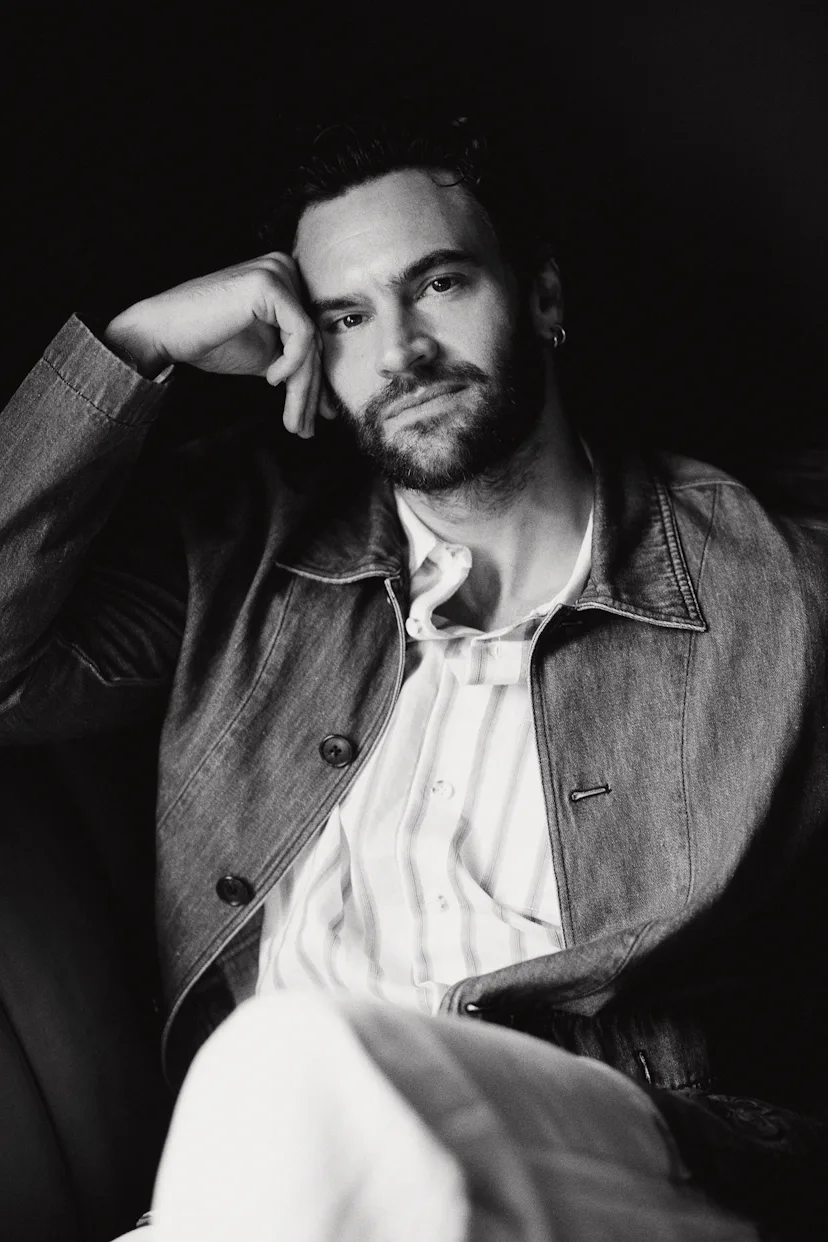
Tom Bateman has a really good story about his latest role.
It starts, as you might expect, with a call from his agent, who asks whether he would be game for a rom-com. Bateman, a fan of the genre, of course says yes. And so he reads a script for the movie adaptation of romance novel The Love Hypothesis, then has a chemistry read with his future costar Lili Reinhart. It is only when he is offered the part that the director, Claire Scanlon, lets him know about the source material: Ali Hazelwood, the book’s author, likes Star Wars. She likes it so much, in fact, that her hit novel emerged from fan fiction she had written about the franchise’s characters: Kylo Ren and Rey, who are played by Adam Driver and Daisy Ridley, respectively. OK, not such a big deal — inspiration can be found anywhere — but, in an intergalactic coincidence, Bateman just happens to be married to that very same Daisy Ridley. “I remember thinking,” the actor tells me, with a note of lingering disbelief, “press for this is going to be fun.”
I can confirm that press with Bateman is, indeed, fun. The 37-year-old, perhaps best known for his role in Kenneth Branagh’s Hercule Poirot movies, is quick to laugh and keen to ask questions. It helps that we share an appreciation for rom-coms. Bateman’s three favorites? The Apartment, Bridesmaids, and Moonstruck. “Cher should be in more films,” he notes.
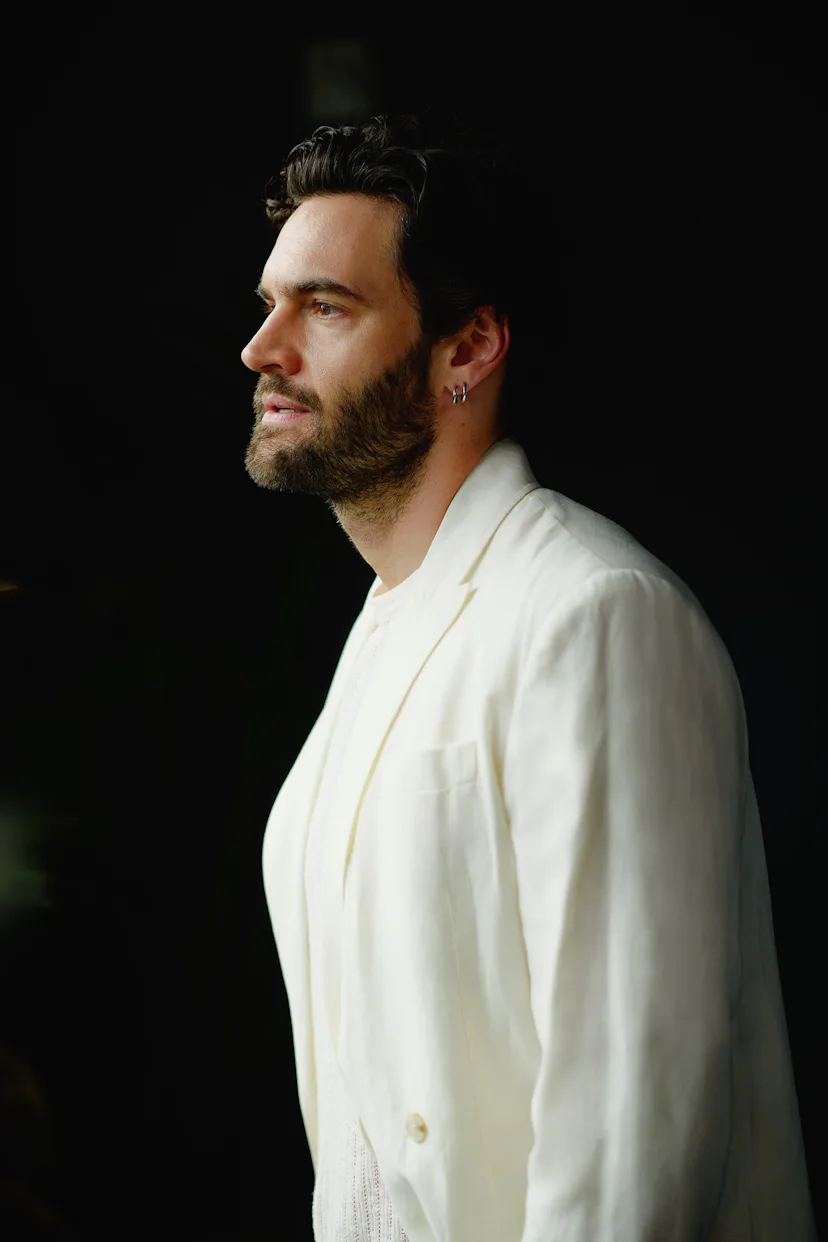
The Love Hypothesis (out Sept. 23 on Prime Video) exists very much in that tradition, telling the story of brilliant and resilient Olive (Reinhart), a Ph.D. candidate doing cancer research at Stanford University, where she meets Adam, a surly biology professor. Their relationship is instantly acrimonious — this is a classic rom-com, after all. But Adam (named for Driver, the only remaining trace of Star Wars in this story) soon concocts a plan: They should pretend to date so that he appears to be a committed, long-term faculty member, which means Stanford will fund his research. And Olive will be able to convince her friend she has a healthy dating life. You don’t have to be a neuroscientist — which Hazelwood was, before becoming a full-time writer — to see where this sham relationship is headed.
“You’re not going to change the world with a rom-com,” Bateman tells me over Zoom in August, “but you might change a person, and that person might change another person.” So in spite of the necessary clichés — Olive and Adam must awkwardly flirt in public! Olive and Adam arrive at a hotel room, and there’s only one bed! — Bateman takes this stuff seriously. He points to moments throughout the movie in which Adam, more than a little up his own ass, sets his sizable ego aside and reconsiders Olive. “If you just forget everything — where you come from, where they come from — and you just look another human being in the eye and properly listen to their point of view,” Bateman says, “you can’t help but love them.”
“Any intimacy, in any play or film, deserves attention to detail. It deserves the weight and the responsibility that an intimacy coordinator brings.”


Plus, there’s sex. The steamier scenes survive the jump from page to screen and provide equal parts tenderness and horniness. While discussing that material in interviews, Reinhart has referred to a “nudity rider,” which outlines, in detail, how much of her body she will show on camera. It was the first time she had signed such an agreement. Hollywood’s approach to filming sex scenes has markedly changed since Bateman started scoring principal roles in the industry a decade ago: He can remember doing a couple before intimacy coordinators, and he’s all for them.
“Any intimacy, in any play or film, deserves attention to detail,” he says. “It deserves the weight and the responsibility that an intimacy coordinator brings.” These professionals can transform potential awkwardness — “You’re with a bunch of strangers at the end of the day,” he points out — into important story beats: You have to think about the hesitant moments before sex, the delicate feelings afterward.
Ridley, by the way, has seen The Love Hypothesis. The couple caught a screening at a London cinema — which had been rented out just for them on a Thursday morning, an experience that Bateman calls an “accidental flex” — and she loved it.
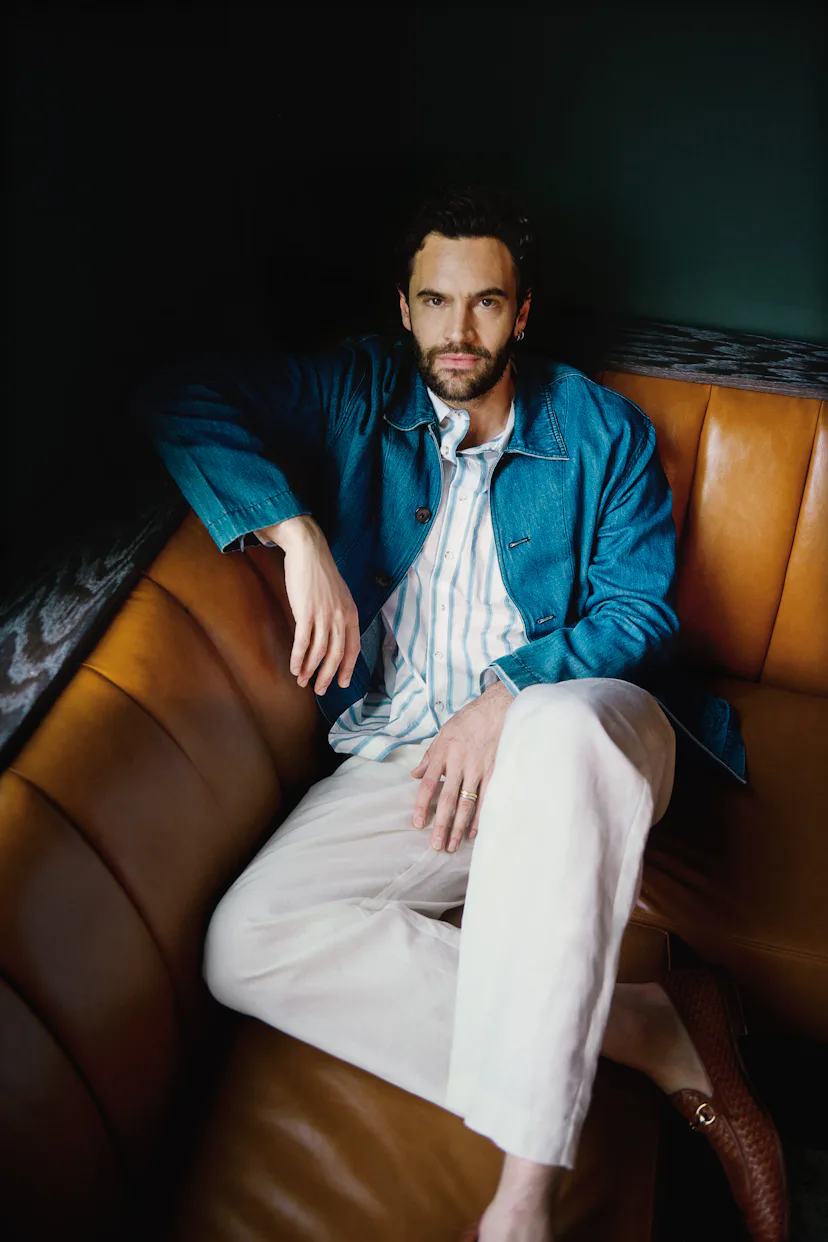
Bateman grew up in Oxford, one of 14 children. His father is a music teacher, his mother a primary-school teacher. He has a twin, named Merlin, who is an artist. Those details certainly sound bohemian, I point out. “We had a very structured childhood,” he says, “but it was bohemian in that both my parents were very creative.” (Some of the actor’s soulfulness — obvious even over a video call — one might attribute to his father, whom Bateman describes as a “very spiritual Catholic” and a “deep thinker.”)
He can trace his desire to act back to a VHS of Trevor Nunn’s 1996 adaptation of Twelfth Night. “From the second it started,” Bateman says, “I was mesmerized.” He can still remember feeling goose bumps from Shakespeare’s poetry. In fact, he reels a word-perfect line off to me — “She sat like patience on a monument, smiling at grief. Was this not love indeed?” — and from there remembers wanting “more and more and more.”
“This is exactly how I imagined it: Spotlight, people, darkness.”


As a teenager, he took part in the National Youth Theatre, a British charity that nurtures young talent, and later tried out for the London Academy of Music and Dramatic Art (LAMDA), the capital’s oldest drama school. That audition was nothing less than a revelation: There he was, in a studio theater with the lights turned down, reciting a soliloquy from Hamlet. “This is exactly how I imagined it,” he recalls thinking. “Spotlight, people, darkness. And I remember there was a great comfort in that, thinking, ‘You’ve arrived at the place you really wanted to be, and it may go your way, it may not, but this is the place you wanted to be.’”
At the end of his third year, Bateman bagged his first role, as Claudio in a production of Much Ado About Nothing, starring U.K. TV icons David Tennant and Catherine Tate. “The first-ever show I did was a sold-out West End hit before I’d even auditioned,” he says, that note of disbelief creeping in once more. Toward the end of that run, he got his second role, in The Lion in Winter, directed by Trevor Nunn. Rehearsals started, in a star-aligning bit of scheduling, the Monday after Much Ado finished. “I remember feeling numb and thinking it was like a waking dream, man,” he says about that period, before adding wistfully: “I guess I’ve never woken up from that dream.”
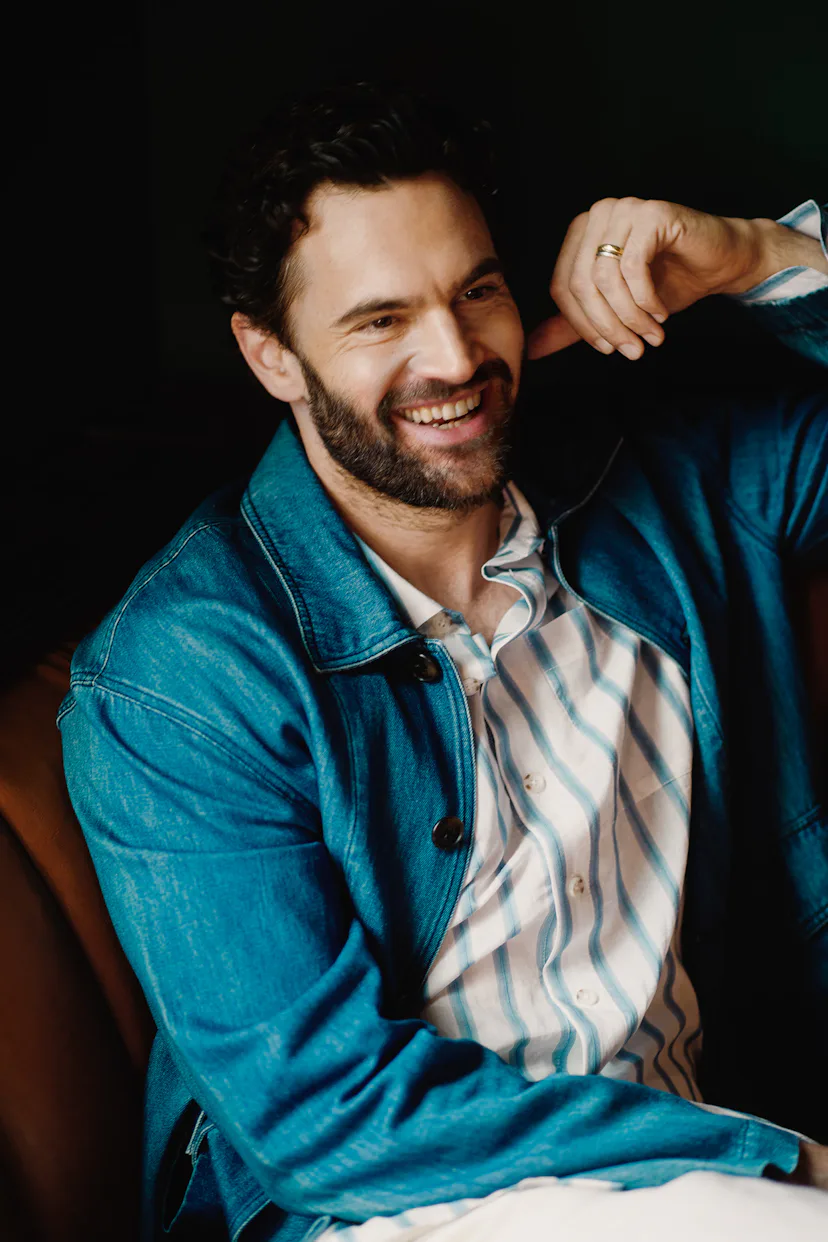
Bateman, who lives in London but has spent the summer in Manchester shooting a Harlan Coben adaptation, has certainly built up an eclectic résumé. It helps that he’s both handsome enough for period dramas (historical television drama Da Vinci’s Demons; several Renaissance plays) and sufficiently mysterious for weirder projects (supernatural Netflix thriller Behind Her Eyes; Nia DaCosta’s big-screen Ibsen update Hedda). It was on the set of Branagh’s 2017 adaptation of Murder on the Orient Express that Bateman met Ridley; he played bon viveur Bouc, and she was a mysterious governess aboard that ill-fated train. More recently, Bateman wrote the horror-thriller Magpie, which tells the story of a toxic marriage with a technological twist. Ridley played the central role.
“That was our first go of many, and we learned so much from it,” Bateman says of the movie, which originated from one of Ridley’s ideas. “We’d never done it before, and we just willed it into the world with love and sheer determination.” Their relationship certainly sounds productive: Bateman has written another project that will hopefully shoot next year, which he says is “very much for Daisy.”
“To watch something about true connection? I think people were starved of it, and I think people yearned for it.”
Bateman is refreshingly open about his ambitions. He recently watched Olivia Wilde’s domestic comedy The Invite and would love to act in one of her movies. While he hasn’t done theater recently, he’d happily return to the stage in any project from Australian director Simon Stone. While filming The Love Hypothesis, he had his own idea for a rom-com. “One of the many things I love about this chosen path and profession,” he says, “is I don’t know what’s round the corner.” Once this film is out, there is a very real possibility that what might be lying around the corner is mass hysteria.


When it was published in 2021, the book spent more than 40 weeks on the New York Times bestseller list. Given the recent success of gay hockey drama Heated Rivalry and collegiate soap Off Campus, you wouldn’t bet against the romance genre right now. Bateman partly attributes that appetite to social media, which he says has made us all a little “disconnected.” “To watch something about true connection? I think people were starved of it, and I think people yearned for it,” he says. Yearn is the right word: One video posted on Reinhart’s TikTok — showing Bateman picking up the actress with one hand — has more than 85 million views. Underneath, there are thousands of comments, ranging from thirsty to rapturous, about the adaptation.
Bateman will likely never see those particular sentiments — he has no public platform at all and does not seem like a finsta guy, either — but he knows exactly why people feel that way. “Listen,” he says, leaning in as though he is imparting a secret, “love is quite literally, I think, the most powerful of human emotions. Do you know what I mean? It’s so incredibly powerful. It’s something that unites us all.”
Photographer: Shane McCauley
Writer: Henry Wong
Editor-in-Chief: Charlotte Owen
Editorial Director: Christina Amoroso
Creative Director: Karen Hibbert
Video: Rachel Chapman
Photo Director: Jackie Ladner
Production: Kiara Brown
Features Director: Nolan Feeney
Social Director: Charlie Mock
Talent Bookings: Special Projects
