Wellness
It’s HS Awareness Month & Here’s What Support Looks Like According To Those Living With It
Support looks different for everyone with HS. Here, five women share what it actually means to show up for them.
We all remember the middle school “acne era” — the frantic morning concealer sessions and the soul-crushing timing of a breakout right before school pictures. For most of us, those days are a core memory we’ve happily left behind. But for the 1% of the population living with hidradenitis suppurativa (HS), skin struggles aren’t just a puberty-induced phase: They’re a painful, daily reality.
HS is a chronic inflammatory skin condition that causes deep-seated boils, abscesses, and scarring. Despite affecting roughly one in every 100 people globally — making it one of the more common chronic inflammatory diseases on par with rheumatoid arthritis (RA) — it remains one of the most misunderstood and even ignored conditions out there.
Why Haven’t We Talked About This?
There’s a reason HS doesn't always make wellness headlines. It disproportionately affects women, and as we know, health issues that primarily impact women tend to be majorly under-researched (and shrouded in a layer of unnecessary stigma).
Living with HS means navigating a world that doesn't always “get it.” Because the symptoms can be physically painful and emotionally taxing, finding a solid support system isn’t just a nice-to-have — it’s essential.
Building A Community Of Care
In honor of HS Awareness Month, we’re passing the mic to the experts: The people living with HS every day. From the friends who help with wound care to the online communities that offer a safe space to vent, support looks different for everyone.
Below, five women get real about their HS journeys and what it actually means to show up for them.
1. Meaningful Support Looks Like… Spreading Awareness (And Fact-Checking Stigma)
Due to its appearance, HS is often incorrectly mistaken for a hygiene disorder. That’s why Kelly, 36, finds spreading awareness to be one of the most meaningful forms of support.
“Ten years ago, when I first had these strange symptoms, HS was not even a part of the conversation,” Kelly explains. “I remember going to my gynecologist for one of the lumps, but she thought it was just an inflamed hair follicle or something and didn’t think much of it.”
As OB/GYNs and other providers become more fluent in HS, patients can get help faster. Plus, talking about it helps strip away the shame associated with symptoms that are often embarrassing.
2. Meaningful Support Looks Like… Medical Care With Compassionate Providers
Cristina, 40, was wrongly diagnosed with a sweat gland issue at age 13 and told to “practice better hygiene.” The medical gaslighting she faced as a teenager was traumatic.
“For most of my life, I had a lot of shame associated with my condition,” Cristina says. “HS manifests in very private areas, leaves awful scars, is excruciatingly painful, and oozes and weeps and bleeds. It was already mortifying to endure, and on top of that, my first experience with a dermatologist just cemented the shame.”
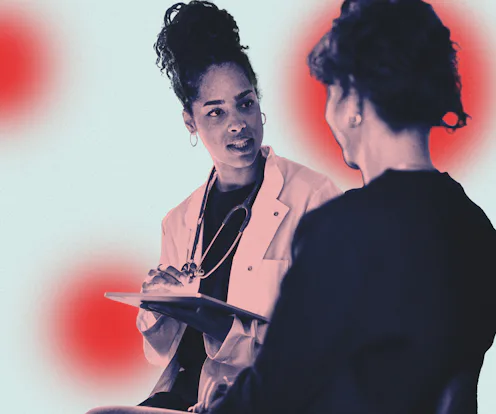
Finding a specialist changed everything for her: “After a lifetime of being let down by the medical system when it came to managing my HS, it was incredible to see a medical team that thoroughly understood the condition, listened to me and my personal experience with living and managing this disease, and had an open and two-way conversation about what disease management looks like.”
3. Meaningful Support Looks Like… Finding Community
Jessica, now 30, was diagnosed with HS at the age of 12. At an already incredibly vulnerable age, her diagnosis made her feel even more isolated and alone. Discovering HS support groups and sharing her journey online was a game-changer.
“[At first] I felt like no one knew or really understood what I was going through,” she explains. “By sharing [my HS journey with others], I connected with incredible organizations, which have really empowered me to persevere even on some of my toughest days.”
4. Meaningful Support Looks Like… Zero Judgement
For Hannah, 27, meaningful support is simply being understood without the side-eye.
“HS can make you feel really isolated or insecure, so having people who listen, check in on you, or just don’t make you feel gross means a lot,” she explains. People often underestimate how emotional HS can be, so the little things really count.
“Support doesn’t always have to be some huge thing, even just having someone believe your pain and be patient during flares is meaningful.”
5. Meaningful Support Looks Like… Fair Workplace Accommodations
Selina, 31, has a rockstar support system at home, but she says the support she gets at the office is what truly allows her to manage her health.
“My coworkers and supervisors have been so understanding [of my condition] and have even donated sick days to me,” Selina explains. “When you have good support, it really gives you the time you need to try and heal and get better and take care of yourself.”
If you’re looking for extra personal support or want to help a friend or loved one, learn more about HS here and find a dermatologist in your area.
Presented by BDG Studios
