Olympics 2026
Perfectly In Sync
After a health scare and a seven-year hiatus, Olympian-sibling duo Alex and Maia Shibutani are returning to competitive skating. This time, they’re doing it for themselves.
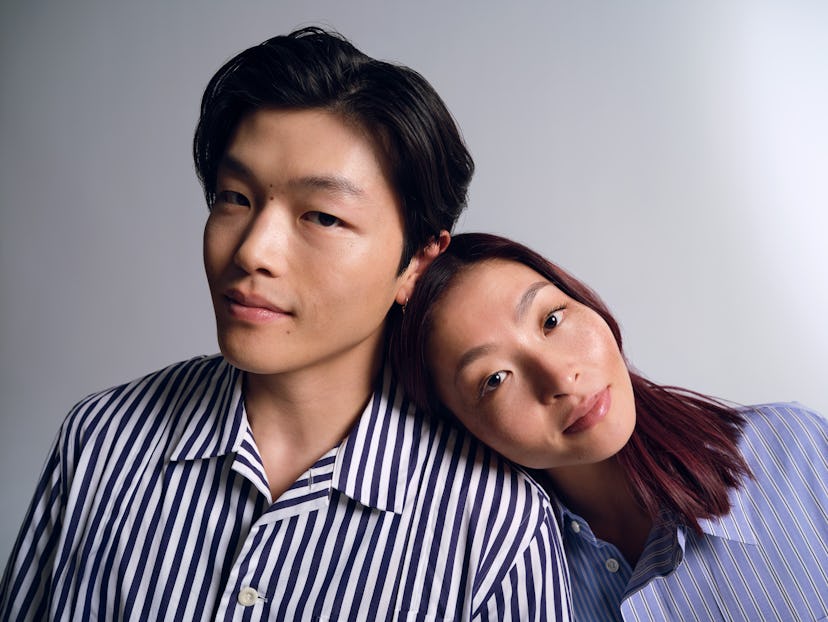
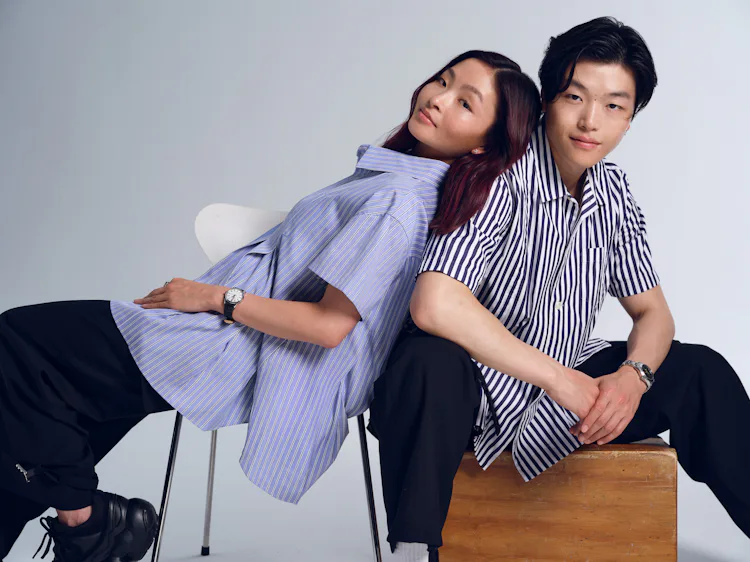
On a mid-December Saturday afternoon in Los Angeles, Alex and Maia Shibutani are unlinking their heads from a single interlocked position, like a life-size Lego build coming apart. The Shib Sibs, as the brother-sister duo are affectionately known in the ice dance community, are taking their Bustle photo shoot very seriously, game to try different poses as the dulcet sounds of Olivia Dean play in the background. The high levels of concentration are also punctuated by moments of levity and affection, however, and a few minutes later, a snuggly position on the floor with Maia hugging her brother from the back elicits “aws” from the photography crew.
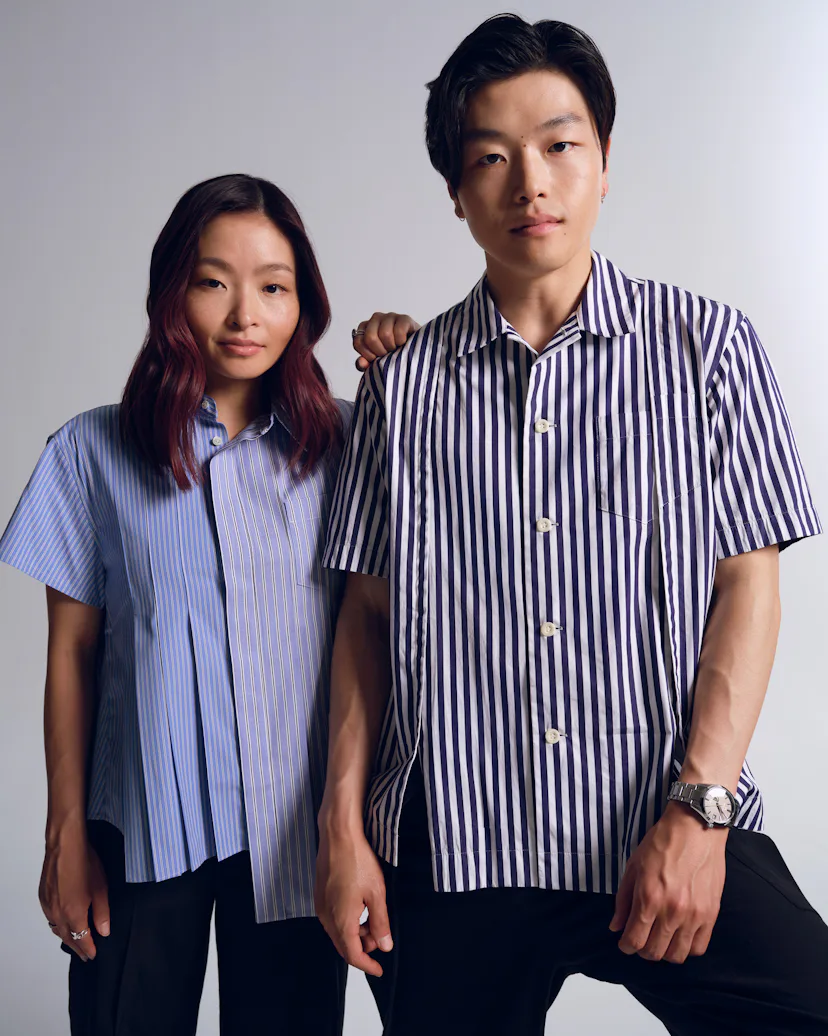
The pose is a physical manifestation of the unshakeable bond between the Shibutanis, who have been competitive ice dance partners for 21 years and often finish each others’ sentences or say the same things at the same time. The Japanese American athletes, who were inducted into the U.S. Figure Skating Hall of Fame in 2023, became a viral sensation after capturing hearts at the 2018 Olympics, where they won two bronze medals and became the first ice dancers of Asian descent to medal at the Games. Shortly after that career high, however, they were hit with devastating news: Maia, then 25, was diagnosed with kidney cancer, and the two announced a hiatus. During their seven years away, they settled into life off the ice in LA (in separate houses, for those curious) and successfully pivoted to other creative endeavors like inking book deals and exploring content production.
“Over the past seven years, we’ve been able to experience so much life.” — Maia Shibutani
Now in their 30s (Alex, 34; Maia, 31), the duo have mounted a comeback and are sticking to a vigorous training regimen. “I’ve never been in better shape in my entire life,” Maia says proudly. At times, the pressure can be intense: In October, when a leaked video went viral showing Alex yelling at Maia during a training session, he immediately took responsibility, and the siblings released public statements reemphasizing their commitment to each other and the process.
With their eyes set toward the 2026 Olympics, which kick off in February in Italy, the pair say they’ve never been in a clearer headspace. “We’ve experienced a lot of life, great things but also personal challenges,” says Maia, noting that the pair are happy to return to the ice — “our home,” as Maia calls it — on their own terms.
How does your approach to storytelling feel different from when you last competed?
Maia: We started when we were 9 and 12, and we continued until we were 23 and 26 — amazing life experiences, but also within the silo of sports. Over the past seven years, we’ve been able to experience so much life.
Alex: Early in our career, we skated to achieve good results and maybe reach a placement goal. Now, we are using it as a way to process life, because it is the language that we both know how to communicate through, both physically and emotionally. It’s more of a personal decision — us deciding to do it is for ourselves as opposed to for results or perception from judges. Obviously, we miss performing for an audience, but what drew us back were the moments we shared together in competition.
Is that the main goal of your comeback then?
Maia: We want to fulfill our own potential. We experienced so much success very early on, but one of the things that used to be challenging to hear was, “Well, you’ll understand after X, Y, Z.” Or, “Once you live a little, you’ll be able to bring more of yourself to your performance.” What I feel so confident in now is that I’m able to show up very fully on the ice.
Maia, you’ve been open about the health challenges you’ve faced. What did returning to the ice look like for you physically and mentally?
Maia: I had kidney cancer in 2019, which required surgery. If you had asked me in 2020 or 2021, or even in 2022, whether I thought that I’d be able to be this engaged with my body again, I probably wouldn’t have believed you, because for a while I was struggling with my mental health. One of the amazing things that Alex was able to suggest, because he knows me so well, was a return to the ice — not for competition but to connect with myself. It started off with just loving the feeling again, and that grew to the point where it was undeniable. Our skills were becoming even better than before, and we could feel our creativity shining through.
Alex: Maia put in so much work — both of us did — not to be in the grind of training every day and competing year to year. Part of the joy of being able to step away was to unwind a little bit and not hold ourselves to such high, restrictive lifestyle choices that a lot of elite athletes have to make. To prepare for this season, we really committed ourselves, but we wanted to do it in a very thoughtful, appropriate way.
“To know he saw me through one of the biggest challenges in my life gives extra weight and power to our bond when we are at a competition — like, “OK, we got through that, so we can do this.” — Maia Shibutani
Alex, how did you navigate that period in 2019 as a brother and as a skating partner?
Alex: I tried my best to support her. We’ve both dealt with injuries over the course of our careers, and we’ve always been good support for each other, but this was something so much bigger than skating.
Maia: He showed up as my brother and my teammate, because I think it’s all rolled into one. I was so lost, and he was very patient. The number of times he encouraged me when I had a hard time thinking about the future or being positive was immense. To know he saw me through one of the biggest challenges in my life gives extra weight and power to our bond when we are at a competition — like, “OK, we got through that, so we can do this.”
Alex: And in a similar way, when you experience things that are challenging in life, the skating serves as a reminder: “Remember when we were at that competition, and it was a really stressful situation and we weren’t placed after the first segment in the way that we wanted to, but we showed great tenacity and fortitude and bonded together? We said to ourselves, ‘Screw you, this is for us.’” We’re fighting for ourselves, and it’s not about outcome or results.
Maia: Looking back, I don’t know that I would have shared what I went through in the same way, but I was recognized at the hospital before my surgery, so at the time, I was like, Oh, I want to share on my terms. I probably wouldn’t have been as open if I was going through it now.
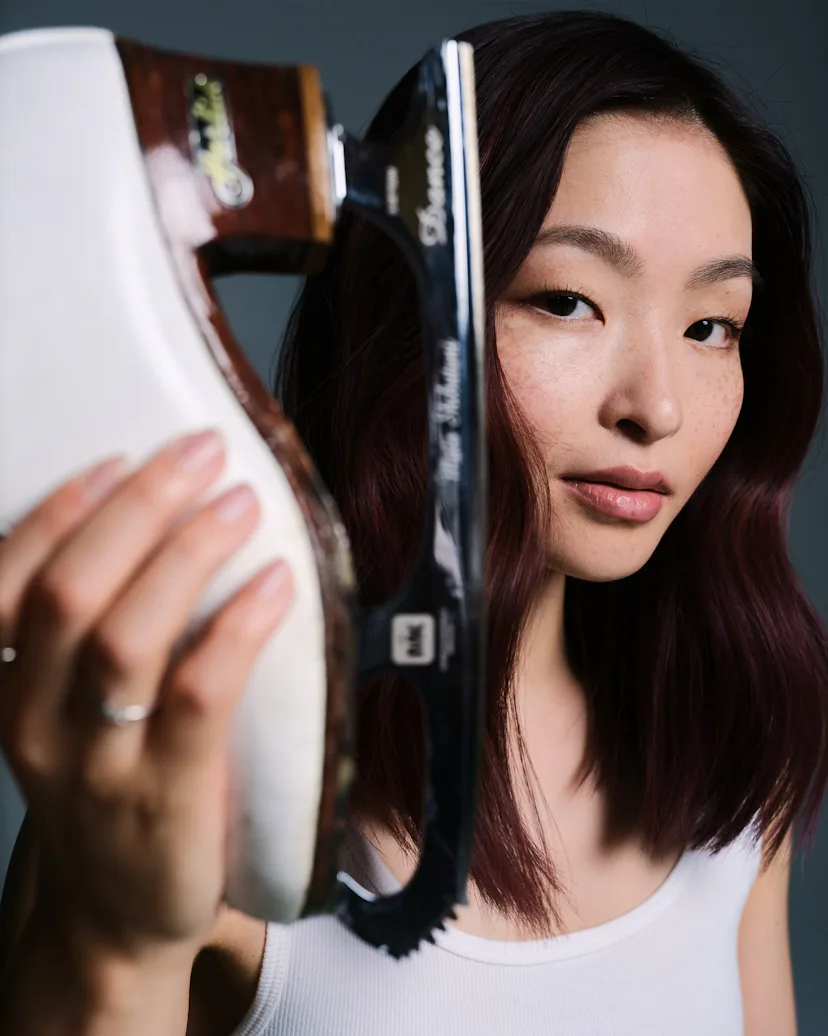
As you guys said, you’ve been partners for 21 years. How do you keep your creative collaboration fresh?
Maia: It’s fresh because we get along so well. And we’ve grown as people and have different points of reference, so we’re able to bring that into our skating.
Alex: We share without restriction what we’re excited about. So, Maia sees a piece of art on Instagram and sends it, or a longer video —
Maia: — Or a podcast, or it’s a conversation or a museum visit. We’ve been really inspired by musicians, because they often don’t come out with an album every year. There’s a lot of intentional life that they try to live between when they share their art and not. For us, this feels like our updated album in a sense.
Alex: We always look at what the other person’s saying, because it’s a love language. It’s a way of showing, I’m excited about this, and I think you’ll find something in it that we can apply together. It’s that never-ending curiosity that allows us to keep things fresh.
Sibling pairs have unique challenges. When you guys first started out, people thought it might be a disadvantage because judges tend to favor more sensual choreography. What are some unique advantages of being paired as siblings?
Alex: It is a disadvantage.
Maia: On paper, you wouldn’t cast us to be the ice dance team — both based on our dynamic as siblings, but also our identity and ethnic background. If you look at the history of ice dance, we were the first team of color to be on the Olympic podium, in 2018. Of the skating disciplines that are at the Games, it certainly has the least amount of diversity.
Alex: This is reflected across the sport in terms of the demographics of coaches, judges who are determining the outcome of the competition. Cultural bias and people’s own experiences — lived in or not — are reflected in results.
“On paper, you wouldn’t cast us to be the ice dance team — both based on our dynamic as siblings, but also our identity and ethnic background.” — Maia Shibutani
Maia: When you’re a young creative, it’s easy to hear things like that and be concerned: “OK, so they say we can’t do it.” But we were able to realize there’s something beautiful about being different within our discipline.
Alex: And you do it anyway. People don’t know it can be done until someone does it. So if you love it and are willing to overcome the challenges and the prejudice or the negativity that comes from the exclusionary practices of a space that may not be comfortable with your existence, then you’ve given yourself a really good shot.
Coldplay is a really important band to you guys — particularly songs like “Fix You.” Is there a dream song or artist that you’d like to skate to?
Maia: We chose “Fix You” this season because sometimes you listen to a song at one point in your life, and you return to it later and it means so much more. The ways we’ve connected to it throughout this past year have changed and gone even deeper. Initially for me, it was the lyrics “Lights will guide you home” because with this return to the ice and competition, I was like, That’s so beautiful.
Alex: When we skated to it a decade ago, [we were] trying to bring a more contemporary style to a sport that relies heavily on styles of dance or movement that can be more traditional. As young people who were trying to find our voice at the time and express who we were, it was those lyrics, “When you try your best, but you don’t succeed.” We wanted to medal at the Olympics, but it seemed like we weren’t communicating through our skating, at least to the judges. So we were like, “How do we show up in a way that expresses this dynamic urge, but also an urgency?”
Maia: Recently the lyrics, “If you never try, you’ll never know just what you’re worth,” really hit me. Before we decided on this piece, we were reflecting a lot about the return and the journey home. Visuals like a circle and full circle came to mind. With a circle you think about, “O,” and then the Odyssey, and the Odyssey was a 10-year journey home. To realize we skated to “Fix You” 10 years ago felt very meant to be.
Have you been keeping an eye on the field of competitors? Is there someone you’re excited to compete against?
Alex: No! [Laughs] I remember watching the Summer Games one year, and there was a pretty iconic moment in one of Michael Phelps’ races where he was racing against a rival, and the rival was looking at him the entire time. Phelps obviously just focused on his race. We’re focused on our work, and there’s respect for other athletes, but if we were coming back because we wanted to compete or beat or win, that’s not really the right reason.
Maia: What’s really cool, though, has been meeting the next generation of skaters, because we used to be more active on social media. To hear that part of the reason they fell in love with the sport was because they saw the storytelling we were doing in that medium — that’s been really cool.
How much time do you guys spend together outside of training?
Maia: A lot, because we believe so fully in what we’re creating.
Alex: Sometimes I don’t think people can see the forest through the trees with the sibling thing. Now, obviously there’s burnout and frustration given the physical, emotional, mental demands of what we’re doing. People have good days and bad days, but if you have the choice to hang out with your best friend, you would do it. Or I would hope that people would. That’s the way that we see our dynamic. Often we hear, “Oh, I couldn’t do that with my sibling.” But the beauty of our relationship is that, yeah, she’s my sister and I’m her older brother, but we’re both adults now, and we’re best friends.
Maia: I had a friend ask me, “What are you doing for holiday shopping?” When we were younger, we used to exchange the exact same amount of money and write each other cards. I have so many cute cards from when we were kids where Alex would draw me little mazes that I would have to solve, and now we just don’t have time for that.
“People have good days and bad days, but if you have the choice to hang out with your best friend, you would do it. That’s the way that we see our dynamic.” — Alex Shibutani
Alex: The gift is Maia will go through her camera roll, and she’ll send me a photo from a year ago or five years —
Maia: — “On this day, what were we doing? Where were we?”
Alex: And it might be totally blurry, not frame-able. But it’s like, “Hey, this is the journey. This is where we were. Let’s be present and enjoy our life.” She’ll send photos that we scanned from when we were kids where I’m crossing my eyes and being silly, and Maia’s hanging onto my leg. Those are gifts.
How do you want this comeback to be remembered?
Maia: They showed up fully as themselves and they loved what they created.
Alex: That’s kind of the legacy question. I don’t need to be remembered. I just want to remember.
Photographer: John Jay
Writer: Naomi Elias
Editorial Director: Christina Amoroso
Editor-in-Chief: Charlotte Owen
Creative Director: Karen Hibbert
Hair: Christi C
Makeup: Jenni Clark
Video: Austin Ashburn
Photo Director: Jackie Ladner
Production: Kiara Brown
Fashion Market Director: Jennifer Yee
Features Director: Nolan Feeney
Social Director: Charlie Mock
