Make A Statement
Go Ahead, Color-Drench Your Home
As the world gets noisier, the oddly calming decor trend is on the rise.
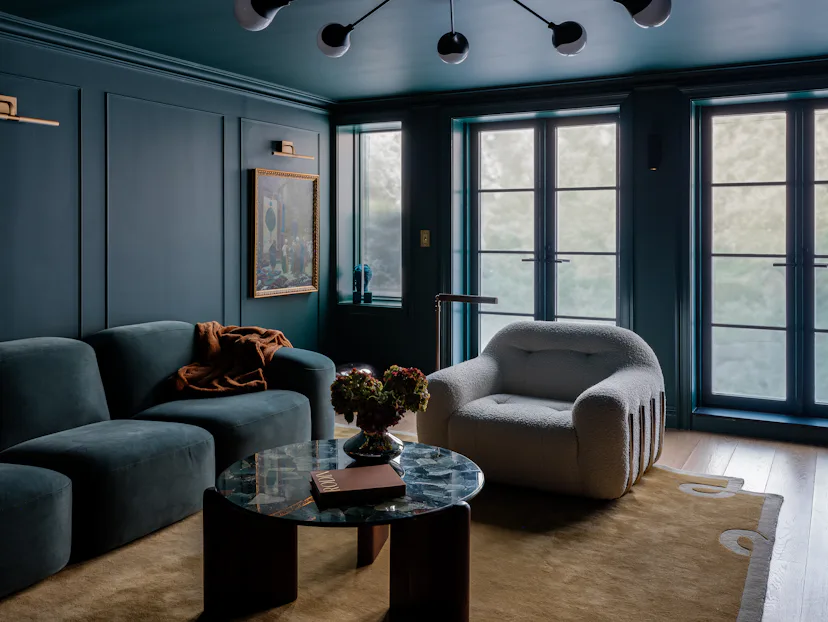
Beauty might lie in the eye of the beholder, but when it comes to decorating your home, most of us can agree that plain white walls are irrefutably… well, boring. Interior design’s version of a yawn, if you will. If your bland walls could talk, they’d probably ask if you forgot about them. For years, gallery walls and wallpaper have been go-to solutions for a livelier look. Now, though, you might want to consider paint — lots of it.
Meet color-drenching: a clever design trick where an entire room — walls, ceilings, doors, and, yes, even trim — is painted in the same shade. This unabashedly bold approach is everywhere. High-end decorators? Check. Cool content creators and DIYers? You betcha. The real-estate market? Believe it or not, yes. According to Zillow's 2026 Home Trends Report, mentions of “color-drenching” are up 149% in Zillow listings.
It’s clear color-drenching has a chokehold on homebodies… but why? In an era when virtually everything is accessible with a few swipes, scrolls, or AI prompts, Alicia Savin, an interior designer in Vancouver, theorizes that people are simultaneously overstimulated and a little bored of their surroundings. Color-drenching, she counters, gives a space personality without veering into eyesore territory.

“Oddly, the effect is very calming,” she says. “Even when the color is bold, the lack of contrast keeps it in check. It feels intentional, which is the point.” And let’s be honest: Why settle for basic when you can create a space that’s both statement-making and serene?
The trend reflects a shift in what people need from their surroundings, says Kayla Kratz, Behr’s senior director of color and design strategy. “The outside world has grown noisier, which means the home is carrying more emotional weight. It has to restore, not just shelter. Drenching is one of the purest ways to create that feeling.”
Though this trend can look good anywhere, it’s particularly fitting in more atmospheric spaces, according to Barry Bordelon, one half of the New York-based interior designer duo known as The Brownstone Boys. “A study, bedroom, dining room, or powder room can be a great place to begin because those spaces can really benefit from feeling a little more enveloping,” he says.

He and his partner Jordan Slocum love to use this tactic in historic homes because a burst of color manages to “highlight the architecture rather than chop it up.” (But let’s be honest: It can also work in an outdated rental that needs a little TLC.) As Slocum says, “In older homes, there is often so much trim, millwork, and detail. Painting everything the same color can actually simplify the room in a really elegant way and let those architectural elements speak more clearly.”
One solid hue can also rectify some of your home’s less desirable quirks — just ask Britany Arnesen, an Indiana-based designer, interior stylist, and content creator. Though she originally painted her living room ceiling white, the room’s north and south windows reflected light differently, giving her room a lopsided glow. Eager for a change — and a cozier vibe — she covered her entire space in Champagne Wishes, a warm peachy-pink by PPG Paints. “It made a huge difference in how the room feels,” she says.
If you’re going all-in on a single color, pick carefully. Slocum says it’s important to consider the mood. Do you want a soft and relaxing respite? Reach for a soft pastel. A dash of drama? Try a jewel tone. Perhaps a cozy cocoon? Believe it or not, darker hues can hit just right.
“People often think dark colors will make a room feel smaller, but they can actually make it feel calmer and more finished,” Bordelon explains. Kratz agrees and says Cracked Pepper, Behr’s soft black, has become a popular choice because it makes a drenched room feel “enveloping rather than closed-in.”
Before committing to a color, Slocum recommends painting large swatches — at least an 8-by-8-inch square — on each wall plus the ceiling. “A shade that looks soft on a sample card can suddenly feel much deeper or moodier when it wraps the entire room,” he says. “That’s why sampling is so important, and not just on one small spot.”

Consider how both the shade and finish changes throughout the day. “Even if you use the same color throughout, the sheen can subtly change how the room feels and how the light moves across it,” Bordelon says.
Glossy finishes are durable and easy to wash, but can accentuate a wall’s imperfections. Though matte surfaces can disguise cracks, they’re not exactly simpatico with high-trafficked spaces. Arnesen typically opts for an eggshell finish, which offers the best of both worlds.
But otherwise? If you have the guts to do it, color-drenching is a rallying cry to sidestep convention — go big and go home. “Don’t apologize for what color you like or what your taste is,” Savin says. “I would much rather see you do something different and have the courage to commit to it than hold back because you are worried about what someone else might think.”
