Life
How Ana Gonzalez Galindo Is Helping People Find Their Village
Ana Gonzalez Galindo built an app that matches couples and families with curated social experiences, removing the guesswork from making friends.
Adults in the United States are finding it harder than ever to make friends, with packed routines, frequent moves, and a lingering wariness of strangers all working against the casual connections that once formed on their own. Ana Gonzalez Galindo moved to New York to test a straightforward idea: that the work of finding community could be made far easier than it usually is.

Her company, Friendly Together, matches individuals, couples, and families with vetted activities and the people most likely to enjoy them. The concept grew out of something Gonzalez knew firsthand. Before she studied loneliness, she lived it.

A Founder Who Knows The Need For Social Circles
Ana Gonzalez Galindo has moved countries more than once, and each relocation has forced her to rebuild her social circle from scratch. The hardest reset came nearly four years ago, when she left Mexico for graduate study in the United States and became a first-time mother soon after. She deferred her own program for a year because of her pregnancy, with her daughter's father starting his studies on schedule and building a community of his own.
That first year carried two emotions that refused to reconcile: joy over her daughter and a sadness she could not explain. "I was sad, and at the same time, I was super happy because I had my daughter. I couldn't understand how those two feelings could coexist," she says.
With no peers who understood new motherhood abroad, she had no one to confide in, and the classmates around her had their own social lives that she felt were incompatible with hers.
At first she couldn’t even identify the feeling as loneliness. Only after she began researching her own emotions did she trace it to its source: isolation, and a lack of common ground with the people around her.

Turning the Problem Into a Field of Study
That recognition turned into research. While pursuing her MBA, Gonzalez studied loneliness directly, working alongside professors, psychologists, and longtime experts on the subject. She took a dedicated research-project class to give the work more room, then ran interviews and small-group workshops to learn how often people felt alone, at what moments, and whether a major life change had set it off.
The patterns were consistent. Certain events, including having a child, a divorce, or a move, tend to dismantle a person's social structure all at once. Adult life, she found, lacks the built-in routines that make friendship easy in school, where shared classes and daily contact do the work automatically. Modern habits compound the problem: work, the gym, screens, and sleep cycle through the day with little room for anyone new.
She points out the pandemic deepened this further, eroding the everyday practice of walking into a room of strangers and staying. Many people, she concluded, had grown so wary of rejection that they chose to stay home.
At the center of it sat a reluctance to admit the problem in the first place. "People don't want to talk about it, and if people don't talk about it, no one can name it. If you can't name it, then you can't fix it," she says. Stigma, she decided, was the obstacle to solve for, and she began brainstorming and prototyping solutions in entrepreneurship classes.

Friendly Together: A Curated and Vetted Village
After graduating, Gonzalez moved to New York and set out to address the problem where it ran deepest. She began building Friendly Together the summer after her MBA and launched that autumn with a deliberately basic app, designed to learn what users actually wanted. The early months leaned on friends, family, and beta testers to refine the activity lineup and the matching before events opened to the public in February.
The model strips out the planning that older platforms left to the user. On regular platforms promoting meetups and activities, a person had to invent the activity, schedule it, and hope someone showed up. Friendly Together supplies the activity and handles the vetting and pairing, matching individuals, couples, and families with curated outings so members simply choose a date and show up.
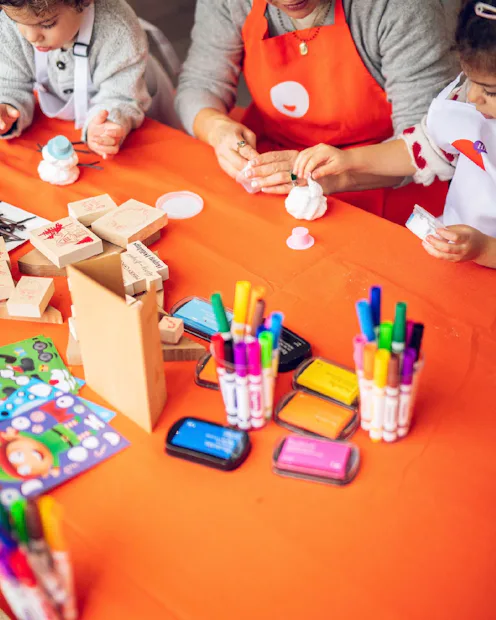
Partnerships power the experiences, including cooking classes with well-known chefs and mixology sessions with Liquid Lab, alongside jazz nights and family events such as CPR in the park.
Its defining focus is the group most existing services overlook. Dinner clubs and party-driven apps cater mainly to individuals; couples and families who relocate often find nothing built for them. "No one was really catering to couples or families, which is our main focus," Gonzalez says.
According to Gonzalez, the company has grown steadily and now counts more than 1,000 registered users and runs two channels: a brand account showcasing activities and Gonzalez's personal account, which has grown to roughly 12,000 followers, where she writes about loneliness and connection. Both keep a small but highly engaged following rather than a large, passive one.

Seeing the Benefits of the Platform Firsthand
The platform changed Gonzalez's own life before it changed anyone else's. Through its classes, she’s met other parents whose children now play with her daughter, along with single mothers, a circle that had been hard to find when she was the only one in a classroom of eighteen. Several of her activity partners became friends as well, part of the support system she had spent years trying to rebuild in a new country.
She’s candid that the hardest barrier isn’t the technology but the vulnerability of admitting the need, and the stigma that still surrounds the word itself. That’s why she speaks openly about her own experience, including the fact that someone building a remedy for loneliness still feels lonely at times. If more people talked about it plainly, she argues, it would be easier for everyone to face and to solve.
Her five-year aim is to expand to major cities abroad, helping people rebuild community wherever they land, and she hopes members eventually outgrow the app once their circle is in place. "If we can make at least one person less lonely, then we've done well," she says.
Her credibility, she argues, comes from the same place as the company itself: she has felt the problem, studied it, and found her own way out. "Living through it and getting out of loneliness has been, I think, my best asset for why I'm the best person to build this," she says.

A New Way of Community Building
Ana Gonzalez Galindo is turning a private struggle with isolation into a researched account of why adults stop forming communities and how they might start again. With Friendly Together, she’s built a service that removes the planning and the guesswork from meeting people, centered on the couples and families most other platforms ignore. Having felt the problem firsthand, studied it, and worked her own way out, she’s building for others the village she once had to rebuild alone.


BDG Media newsroom and editorial staff were not involved in the creation of this content.
