Life
How Outdoor Play Both Stimulates And Soothes Your Child
Balancing screens with nature for healthier childhood development
Parents have long been concerned about their children’s screentime. In the 1950s, when televisions became common in homes, parents worried that their children spent too much time sitting still and watching. Today, growing concerns around phones, tablets and algorithms present new challenges but the worry is still the same.
Many parents have valid concerns about their children’s ability to emotionally regulate, solve problems and pay attention due to too much screentime. But for better or worse, screens are an unavoidable part of life. The good news is that outdoor play not only has many benefits for children, research suggests it can also counteract some of the negative side effects of screentime.
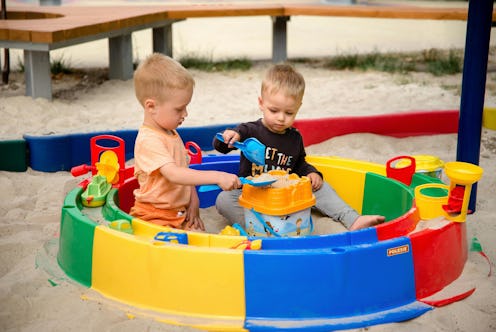
Time outside is not only fun but it offers children space to move, explore and rest at their own pace. Outdoor play can become even more valuable when it involves elements designed to aid in children’s development.
The Benefits Of Outdoor Play
Outdoor play is more than just fun for children. Among its numerous benefits are mental and emotional health, cognitive and social development and emotional regulation. Experts suggest that time outside provides children opportunities to move, explore and reset in ways that structured indoor environments often can’t.
Time outside has many physical benefits as well including things like better coordination, motor skills and an improved immune system. It also supports mental and emotional health. Being outside, especially in the sunshine, can reduce stress.
Cognitive development is another important aspect of outdoor play. Unstructured playtime helps with problem solving, creativity, imagination and flexible thinking. Studies show that outdoor play is associated with executive function, helping with ADHD symptoms, memory and social skills.
When children are playing with others outside, the benefits increase. Social engagement is critical to childhood development and unstructured outdoor play is an excellent way to foster this. Building confidence, taking turns, sharing and negotiating can all unfold naturally in this environment.
Structure For Added Benefits
Unstructured outdoor play supports many critical developmental milestones. It allows children to explore, follow their curiosity and move at their own pace. That freedom remains essential. At the same time, adding structured elements can also provide additional benefits that support development.
Community gardens are available in many cities and they support learning through participation and routine. These spaces also encourage sharing and cooperation for everyone who uses them. Nature walks can be a fun way to mix up a routine by exploring somewhere new and working on focus and observation skills.
Obstacle courses introduce new challenges and competition. Even a simple obstacle course that requires minimal setup can provide opportunities for children to problem solve, strategize and use critical thinking skills.
Playgrounds often bring multiple structured elements together. By integrating unstructured play with thoughtful design, they combine many of the most important elements for development. These spaces also provide children the opportunity to choose how they want to engage and move through both unstructured and structured outdoor play at their own pace.
Elevating Outdoor Play With Design
Long-gone are the days when metal slides and splintery wooden playsets defined structured outdoor play. Today, many outdoor play spaces reflect a more thoughtful approach. While playgrounds are still a fun way for children to burn energy, with a few key elements, they can also provide many developmental benefits.
Thoughtfully designed play spaces create opportunities for several different kinds of engagement in one environment. Textured surfaces, stepping paths or tactile elements provide sensory elements. Sensory outdoor play aids in cognitive and emotional development. Other design elements that offer choice might include things like transitional areas. These spaces provide a quiet, calm space to rest between more high-energy activities.
Inclusive Design In Outdoor Play
Just getting outside has shown to have many developmental benefits for children, but thoughtfully designed playgrounds can elevate that experience even more. Modern playground designers increasingly work to build spaces that reflect how children actually play and what would benefit them the most.
Playground Equipment highlights the blend of inclusive play zones and sensory-focused features. Elements like sensory zones, tactile surfaces, visual cues and shaded areas help children burn energy, develop critical skills or learn how to rest.
Inclusive play spaces include all these elements so that children can move at their own pace. By integrating calming and stimulating elements together, these environments encourage autonomy, social interaction and cognition.
Outdoor Play As Part Of Childhood Development
Outdoor play offers far more than a break from screens. It supports physical health, emotional balance, curiosity and social connection. Research reflects that time outside benefits multiple domains of development simultaneously.
Playgrounds that balance stimulation and soothing mirror how children naturally move through the world. These spaces make room for exploration, rest and shared experiences. In doing so, outdoor play becomes not just an alternative to screens, but a meaningful part of healthy child development.
BDG Media newsroom and editorial staff were not involved in the creation of this content.
