Hi! Nice To Meet You
So You Need Some Parent Friends
A practical guide to finding your people after having kids.

The shortest period of time that I was in a room before breaking something was 10 minutes, and it was two months ago. On a rambly Saturday walk with my toddler and a college friend, my friend insisted we stop at the house of another young, queer family she knew for a very quick “hello, hi, let’s-be-friends” introduction. It was grotesquely humid in Philadelphia, so I accepted a glass of water even though we’d just be there for a few minutes. And when I tried to put the glass in the sink as I was chasing my toddler out the door, it smashed into a beautiful, antique ceramic nutmeg grater and cracked it.
After our meeting, my friend had said she’d connect us all on text. She never did, and, of course, I assumed this couple with a 6-month-old didn’t want to add another accident-prone human into their orbit. But I love a big gesture and making things right! So, I found a similar nutmeg grater on eBay, wrapped it up, and wrote a letter about how I usually don’t break things with my phone number included. Within an hour, they had invited me to the park with them on Sunday, and we’ve been the closest of pals ever since.
HA, not at all! Our schedules keep missing each other, as these things tend to go. But I’ll keep making these big efforts because: I am very serious about making parent friends.
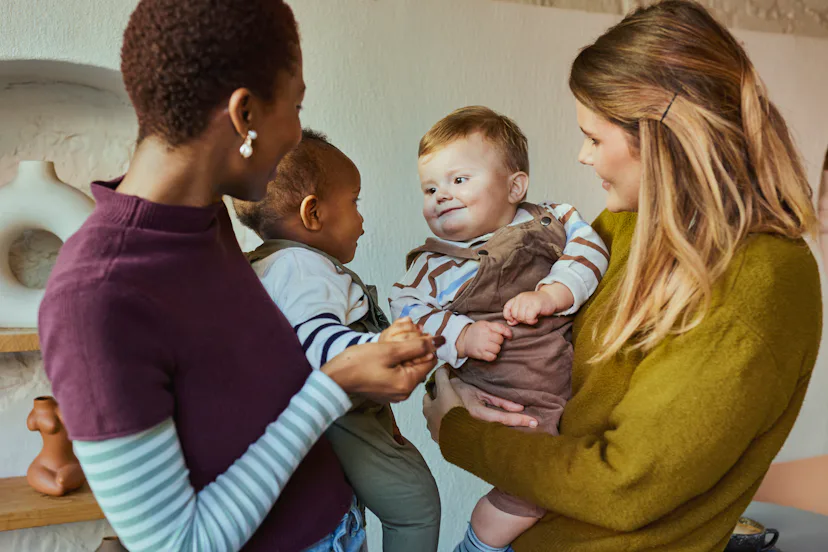
My devotion to finding friends who are also parents isn’t a response to a new well of loneliness that overtook me after having a child. Actually, my friends from before I had a kid have (for the most part) adapted excessively well to my child-rearing life. Their interest and tolerance for hanging with an indefatigable 2-year-old often revives my exhausted boredom and renews me with delight.
However, I knew I needed people who could share advice, who had kids for my son to hang with, who had similarly wonky schedules, and who shared a shorthand for understanding my complaints. These relationships, I knew, would be crucial for sanity and enjoyment and support and lending a travel crib.
“You cannot parent without this,” says Michaeleen Doucleff, the author of Hunt, Gather, Parent and Dopamine Kids. “A prerequisite to being a good parent is having one or two of these families where the kids get along, and you get along with the parents.” Otherwise, you are at risk for a lonely, burnout-prone, isolated social world.
I’ve made more friends as a parent, in rapid succession, than I have in maybe any other time in my life. It’s also taken a great deal of effort. I polled some of these new parent friends, some older long-distance friends who have become parents, and other acquaintances about the strategies that really work and the obstacles that we all simply have to accept. Here’s what I found.
How To Make The Magic Happen
First: baby-parent activities — like neighborhood meet-ups, library story-time, niche WhatsApp groups (“Fall/Winter 2025 Babies”; “Queer Philadelphia Parents”) — yield little fruit. But they also keep us from feeling isolated, maybe just by seeming like a productive path to community.
Sarah, my friend in Montana, dutifully attended baby dance classes hoping to meet like-minded parents, but was surprised by what she found. Instead of gently bopping to 2003 bar mitzvah hits with her daughter in a carrier, they played grating children’s music. And she felt a big distance from the other parents too. “The other moms looked really done up, and I'm in my sweatpants, and it just felt like these aren't my people. So I stopped going,” Sarah says.
Everyone — everyone — found the listservs and organized group chats overwhelming. I went to one painstakingly scheduled meet-up for parents with similarly aged newborns in my neighborhood. It left me, I think, lonelier than before. I attempted to befriend one interesting-seeming parent of three, who happened on the meet-up by accident because she recognized a friend. She was not interested. In fact, she obliquely indicated she already had too many parent-friends. I left feeling over-tired and zonked and both standoffish and desperate, and like I was maybe not an appealing friend at all.
Except, except, except: it turns out at this same park gathering I also met two parents who I’m now close with. We didn’t really chat at this meet-up, but met later through daycare and mutual friends. In sum: these chats and organized gatherings are flawed crapshoots, but you can likely find good people if you keep chugging.
“People are super open to making friends in a way that's reminiscent of college or a first job.”
Rejection is unavoidable. We all said that if we’re at a party or something, and someone appealing mentions they have kids, we try to be really forward and get a phone number and ask to go on a walk together. It works out about… a third of the time? Extremely better than none of the time!
Fortunately, the odds are more in your favor than usual. “I think it is a lovely time where people are super open to making friends in a way that's reminiscent of college or a first job or moving to a new city,” says Sarah. Early parenthood days are also a time that we should cherish, because we’re the only people with a say in the matter. Babies have no opinions! We can thank them for that.
Mutual friend set-ups are the best, most reliable, most pleasant way to meet other parents you’re going to like. These cannot be demanded or sought out; otherwise, they tend to feel forced. So, here is my plea to you: If you know people who you sense would like each other at all, who live close to each other, matchmake!
A similar strategy: resurrecting old connections now that you all have children. Two of my closest parent pals, another queer couple Octavia and Marlene, both reconnected with semi-lost friends. Octavia hit up a friend-of-a-friend they met at queer line dancing who they hadn’t spoken to in seven years. And Marlene found a welcome, fresh sense of closeness with previously distant friends after she had kids, too. “I go to them for advice, or they give us hand-me-downs and check in,” she says.
Keeping Your Friends Close
Savvy planning can help deepen these bonds. Primarily: get a regular hang on the cal. Go to similar activities. With a few of our parent-friends, we signed our kids up for the same toddler soccer, where we could all wrangle them together. When Michaeleen’s daughter was in preschool, she and a few other families would rotate hosting biweekly dinners. “It was really wonderful,” she says.
Also — this has been a life-saver for me and my partner — offer childcare to each other. After a mutual friend introduced us to Octavia and Marlene, we watched each other’s babies, before they both started daycare. This requires a lot of trust. “A lot of parents don't want to give up control,” Michaeleen says. “Parents will say ‘here's a list of things that the other parents don't do.’ You have to let go a little, right?”
In an ideal world, you’ll pick families who parent in ways that feel similar to yours, filled with delight and love and gorgeous snacks. But also, Michaeleen says, aligning 60 to 80 percent of the time could be enough. Does this family let your toddler jump off of the dining table onto pillows? How fun. The negotiation that they simply will not be doing this at your house is actually very minor, in the long run.
That doesn’t mean that, for the sake of community, you have to put up with unpleasantness. “I know we’re not supposed to not like kids and I understand tantrums aren’t necessarily their fault, but I do get upset at my friend’s toddler intentionally hurting her,” my friend Beth says. I’ve spoken to other friends about how awful it has been to see another kid biting their mom while she’s breastfeeding and then bragging happily about it.
New Challenges & Delights
Early parenthood is a vulnerable transition — “emotionally tricky,” as Octavia puts it. I met them and Marlene when our kids were infants, and we often say that we wished we’d known each other before our identities and focus were subsumed.
“And on the flip side,” says Octavia, “it’s super hard when you have preexisting friendships that are negatively impacted by becoming parents. Friends, mostly the ones who gave birth, lose touch with the parts of themselves we really loved. And it’s harder to have conversations where we connect as our full selves as opposed to talking about our children.”
The depth of connection is going to be both more intense and more fragile; you’re more likely to see each other cry, you’re less likely to have a sustained, uninterrupted conversation for longer than six minutes.
But with these relationships, I often experience the most dreamy social scenario, something I yearned for as a 20-something: I’ll get a 2 p.m. text from someone on a Saturday, and within the hour, we’re standing next to each other in a park, gossiping and snacking and plotting a mutual friend’s birthday party. I used to be too busy to be spontaneous. My weekends were a series of overlapping plans, or intentionally skipping these overlapping plans to read or go on a moody bike ride by myself. Caring for a whim-based toddler, who may want the park or the library, keeps days really loose and open.
This is why proximity is so, so important. This might be less true in areas with more driving, but I live in a dense, residential neighborhood and I’ve got a big handful of friends whose houses I can walk to in under eight minutes. Then there are people I adore who live a 25-minute drive away, which is somehow a schlep. I don’t like that this is true, but it is.
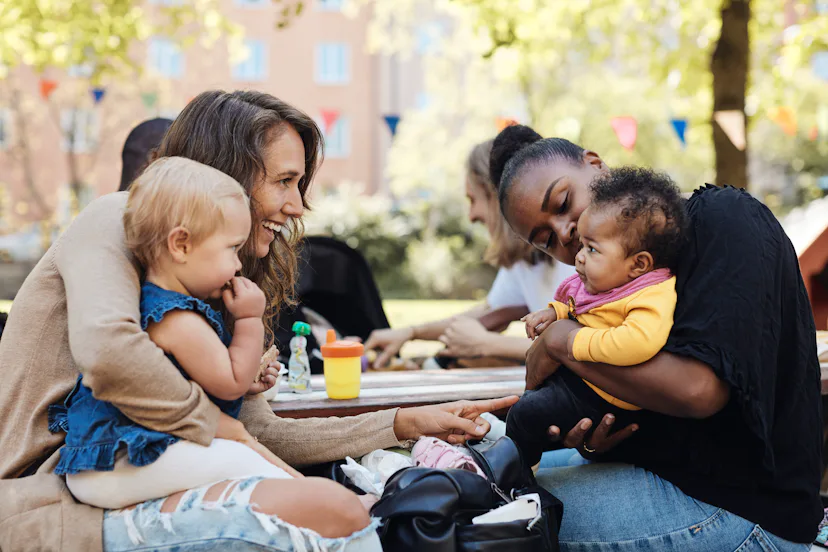
Here is another terrible, true, unappealing barrier: finicky nap schedules. Later, I’m sure it will be whatever after-school activities and weekend birthday parties eat up the week.
If you told me four years ago, I was actively seeking out friends in a certain block radius, reliant on the nap schedule of a child who can’t really pronounce “shoes,” I would say: Well, wait, but are they fun and funny? Do they like to read and chat and snark? Most do! With some, however, there’s a fear that we have “nothing more than being mothers in proximity to each other,” as my friend Sarah puts it. We don’t think it’s such an outrageous hope, but we’d really like to really like our friends.
This is a time when the criteria for friendship changes. Some loosens, some heightens. You won’t build your social circle overnight, but every few weeks, attempt a nice gesture or invite someone to the park.
My partner Megan and I are moving next month, a 14-minute walk from where we live now, and we got a flier inviting us to a block party there. We were totally wrecked and exhausted from a houseguest and skipped naps and a tick incident on a hike (actually it was two tick incidents, a true nightmare). I’m usually bold and outgoing, but I’d recently experienced two soft friend-rejections in a row. Megan and I just stood there talking to each other, nursing beers, sort of playing badminton with our son. What a bust, I thought, but I’m proud we tried.
And then our kid saw another 2-year-old wielding a bubble machine on a porch. Let me tell you: sometimes children do your work for you. He marched up and said ‘Hi’, and then this family’s 6-year-old told me she liked my watch, and suddenly, we had the phone numbers of some very welcoming parents who asked us to text about anything and warned us that the block WhatsApp chat is out of control, but really fun. We sat on their stoop for 20 minutes, barreling into bedtime, chatting away.
Names and identifying details have been changed for some privacy.
