Life
The Designer Behind The Visual Language Of Modern Mexican Hospitality
How design shapes the experience of modern Mexican dining.
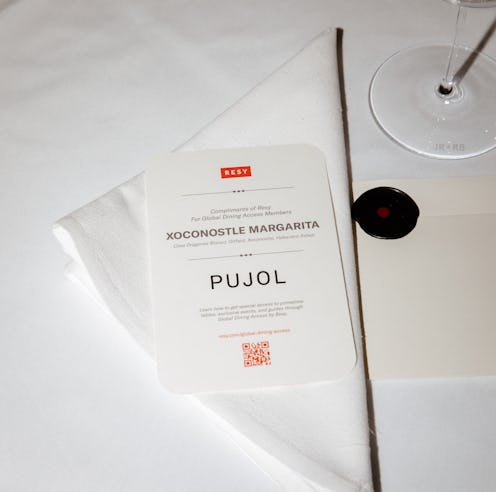
Before a plate ever reaches the table, a restaurant has already introduced itself.
It speaks through typography. Through the weight of a menu in your hands. Through the tone of its social media presence or the rhythm of a newsletter that lands in your inbox. Long before the first bite, design shapes expectations.
For Maya del Olmo, that first impression is where the real story begins.

Olmo has built her career within the fast-evolving world of contemporary hospitality, translating culinary philosophy into cohesive visual systems. Her work exists everywhere at once: in dining rooms and on websites, inside Illustrator files at midnight, across social feeds and campaign decks, on printed menus that guests fold and take home, and even within partnerships and press.
In an industry where restaurants operate as cultural institutions, design is authorship.
Designing At The Level Of Pujol And Cosme

Olmo serves as Director of Marketing and Communications at Casamata, the hospitality group founded by chef Enrique Olvera, whose restaurants — including Pujol in Mexico City and Cosme in New York — have helped redefine how Mexican cuisine is understood globally.
Working at that level means the visual language must carry as much rigor as the food itself.
“When you’re designing for restaurants of this caliber, every detail matters,” Olmo explains. “The typography, the spacing on a menu, the tone of a caption — it all communicates intention.”
And in hospitality, that conversation is constant.
“You’re moving between strategy and execution all the time,” she says. “One minute you’re thinking about long-term brand positioning, and the next you’re designing a newsletter or resizing assets for social. Being a creative today is 360-degree work.”
Culture As Infrastructure

For Olmo, design is inseparable from cultural context.
As a Mexican designer building brands that operate in the United States, she understands her role as both creative and custodial. Mexican cuisine has long been simplified in American markets, its visual language often reduced to cliché. Her work resists that flattening.
“You have to understand where a brand comes from before deciding how it should look,” she says.
“Designing for a restaurant group like Casamata means holding that complexity with care. The goal isn’t to make something feel ‘Mexican’ in a surface-level way, but to build systems that feel grounded, contemporary, and aligned with the chefs’ philosophy — while also respecting the local context of cities like New York and Los Angeles and collaborating with local creatives whenever possible.”
In this way, graphic design becomes a form of translation — not just across languages, but across histories, expectations, and place.
From Small Bars In Mexico City To Global Dining Rooms

Olmo began her career in Mexico City working on branding projects for small consumer packaged goods (CPG) brands, and independent bars.
“That’s where I learned how to think conceptually,” she says. “When you’re working with small brands, every decision counts. You can’t hide behind scale.”
Those experiences sharpened her ability to create adaptable, scalable visual systems — something that now defines her work within larger hospitality structures.
Even as her projects expanded in reach, the core remained the same: understand the culture, build the system, protect the brand.
The Invisible Work Of Hospitality Design

The most successful restaurant branding rarely calls attention to itself. It feels natural, intuitive — inevitable.
But behind that ease is a rigorous process.
Menus are revised dozens of times. Typography is tested for legibility in dim lighting. Campaigns must align with chef philosophy while functioning within digital algorithms. Newsletters must feel personal, not promotional. A single collaboration can require a fully developed visual identity that lives both online and in physical space.
“It’s not just about making something beautiful,” Olmo says. “It has to work operationally. It has to respect the food. It has to make sense in the room.”
That operational awareness — understanding the rhythm of service, the constraints of print production, the realities of social media — is what defines modern creative leadership in hospitality.
Beyond Aesthetics


Today, restaurants are media platforms. They’re cultural ambassadors. They operate across cities, countries, and audiences who may experience them digitally before ever stepping inside.
For Olmo, the responsibility is clear: build visual languages that feel honest to origin while strong enough to travel.
At the level of restaurants like Pujol and Cosme — and under the vision of Enrique Olvera — the expectation is precision. Design must carry intellectual weight without overpowering the dining experience. It must frame the story, not dominate it.
When done right, guests may never consciously notice the typography or layout choices guiding their experience.
They simply feel something cohesive.
And that feeling — quiet, intentional, and rooted in culture — is the result of countless hours spent moving between strategy and screen, between heritage and innovation, between Mexico City and New York.
Before the first bite, the restaurant has already spoken.
Maya Olmo just makes sure it says the right thing.
BDG Media newsroom and editorial staff were not involved in the creation of this content.
