Dye On This Hill
Let The Blue Hairs Speak!
It’s become the right wing’s go-to shorthand for woke, urban types. But what do the sapphire-haired among us have to say for themselves?
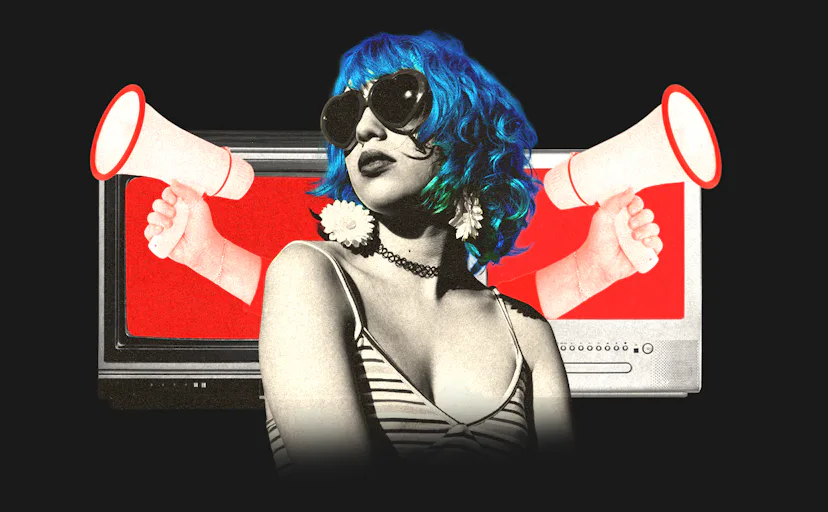
Although they’re both hairstylists, Jude Bennett and Lexy Tippetts are from very different parts of the country. Bennett, 23, works in the Bay Area, home to some of the most liberal people in the U.S., where he services a clientele of mostly young, alternative, urban creatives. Thirty-one-year-old Tippetts, meanwhile, is located in Wyoming, one of the most conservative states, where she serves customers — some older conservative women, others artsy high schoolers — in Buffalo, a three-stoplight town of fewer than 5,000 people with the closest Walmart 30 minutes away. But despite their geographic difference, Bennett and Tippetts have carved out the same specialty as of late. They both frequently work with clients who want to color their hair a hue that’s recently become laden with cultural meaning across the country and online. It’s a color both stylists have applied to their own hair in the recent past, too, even if they have different feelings about whether the pejorative term associated with it applies specifically to them. We’re talking about the blue-haired liberal.
“A lot of the liberals do have bright, crazy hair color,” says Tippetts, who identifies as politically down the middle. “That sounds worse than I wanted it to! But you do see them with those colors and a little less on the conservative side.”
Bennett, on the other hand, embraces the stereotype. “I’m definitely someone like that; I’m doing blue hair and pronouns,” says Bennett, who uses she/he/they pronouns interchangeably. “There’s nothing wrong with being blue-haired and liberal. At face value, it’s an accurate description of what’s going on here!”
Roughly a decade ago, blue hair emerged as a beauty trend among millennials who might have brushed with the blue-hived Marge Simpson and Kate Winslet’s electric-haired manic pixie dream girl in 2004’s Eternal Sunshine of the Spotless Mind and were now suddenly surrounded by sexier, more mainstream blue-haired sirens like Katy Perry or Demi Lovato. In 2013, the steamy lesbian love story Blue Is the Warmest Color also won the Palme d’Or prize at Cannes, becoming a global sensation and thrusting blue-haired actor Léa Seydoux to fame (and two different turns as a Bond girl). Before that, blue had been more tepid than cool, a color associated with aging punk rockers and — in the U.K., particularly — older, conservative women.

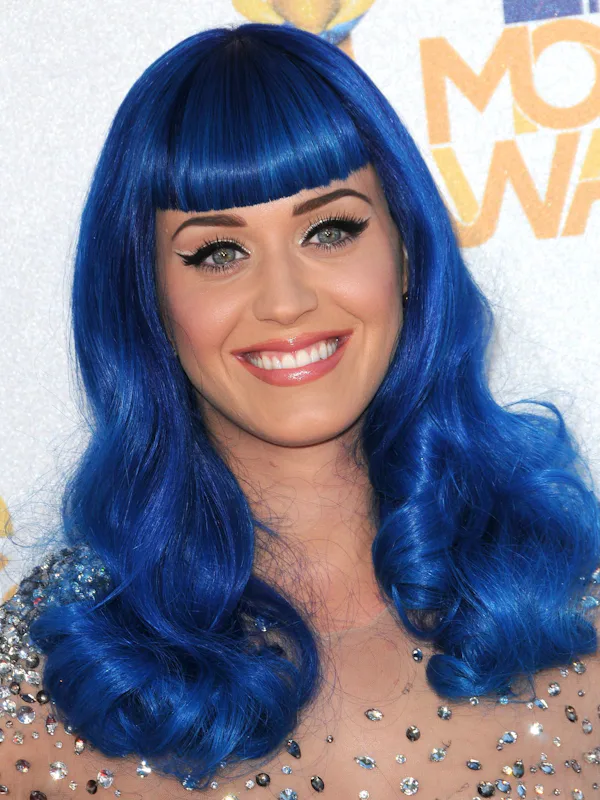
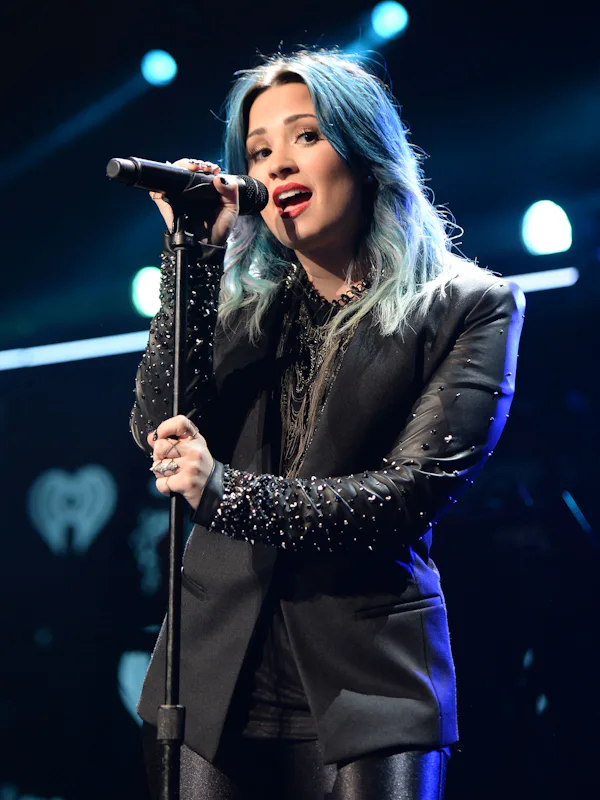
Now, though, a blue ’do carries an entirely different meaning still, especially to those of the conservative persuasion. In right-wing corners of the internet, the blue-haired liberal stereotype is so pervasive it has earned its own definition in the Urban Dictionary and on the website Know Your Meme (see: “Of Course You Have Blue Hair And Pronouns”). On progressive TikTok, meanwhile, blue-haired users joke in viral videos that going out in red states means being swarmed by people crowing “Trump!” at them like in a scene from Alfred Hitchcock’s The Birds.
But it’s not just online trolls who use the term. In January, the New York Post ran a cover featuring a stock image photo of a screaming azure-haired woman with nose and tongue piercings and the headline “OUT OF THE BLUE” to mock large liberal states potentially losing congressional seats after the upcoming census. That same month, a pair of straight hockey podcasters got in trouble for texts in which they seemed to make fun of Heated Rivalry fans as being members of "blue-haired Twitter.” Never missing a chance to taunt the other side, the White House has also employed the caricature, releasing an AI video in February that showed two overweight individuals with blue shags sweating in a hot car that used the fuel-saving auto start-stop function — in contrast to a lithe Sydney Sweeney look-alike enjoying her air-conditioned sports car nearby (caption: “Keeping cool while Making America Hot Again. 🏁 Auto start-stop is officially dead”).
“Many conservative sites would articulate freedom and individualism as core principles of the American Dream — yet find individualism in the form of blue hair a source of mockery.”
Not since the “dumb blond” has a single hair color been used so pervasively to slander a person’s character. So when and how did blue hair become MAGA’s favorite insult, leveraged by everyone from Kid Rock to Whitney Cummings? Is it just another way for conservatives to express misogynist, anti-LGBTQ rhetoric? And amid signs that blue hair may be coming back in vogue (see: recent looks from Cardi B and North West), can it now ever be divorced from politics? “I just roll my eyes,” says the turquoise-maned Danica Lamb, a 51-year-old artist who works with animal bones in Cheyenne, Wyoming, and currently boasts a head of hair that’s half blue, half magenta. “You should not listen to what other people say about your hair color.”
It’s not like hair dye is as new to the scene as Zohran Mamdani. People have been coloring their hair practically since the dawn of time, according to Rachael Gibson, a London-based hair historian set to release a book on the subject, Roots, in 2027. Using minerals from the earth, plants, and animals, our ancestors often color-coated their hair for religious or ceremonial reasons, but also just to hide gray hairs and maintain a more youthful appearance. Blue, though, has its own unique history. In ancient Egypt, the gods were thought to have hair made from a rare deep-blue mineral, lapis lazuli, and pharaohs were often depicted accordingly in Egyptian art. It wasn’t until 18th-century France, though, that people inspired by Marie Antoinette and her coterie in the court of Versailles began using powders with fantastically unnatural colors like pink, green, and blue in order to match their wigs to their outfits in the name of fashion.
In the 20th century, Gibson says, blue and other bright, unnatural colors rose in popularity. By the 1920s and ’30s, fashion designers were dyeing models’ hair blue as a provocation, while the invention of aerosol technology helped pastel colors become popular for certain young women in the 1950s, even just as temporary looks. (Think Frenchie’s pink coif in Grease.) It wasn’t until the arrival of the punk movement (and the invention of semipermanent hair dyes) in the 1970s that these outlandish colors became part of an anti-fashion, countercultural movement. “It’s hard for us to imagine because it’s not unusual to see someone with green hair now, but people had literally never seen anything like it in their lives,” Gibson says. “People were quite horrified and offended by it.”
“There’s a lot of fantasy hair color in the queer community. If you felt you couldn’t live your life the way you wanted for a long time, you probably want to be quite experimental with your look.”
Blue hair persists today in part because of this punk ethos. In a MAGA culture dominated by traditional gender roles and the perfect, mostly blond — though hardly natural — blowouts we see all over Fox News, dyeing your hair blue can be a signal that you’re rejecting conservative standards. “Not being boxed in is super important,” says Lamb in Wyoming. “The media is always doing this, that, and the other with how women should be.”
Emily Crosby, a professor at Virginia’s University of Mary Washington who studies digital rhetoric and feminism, says this refusal to conform to “natural” ideas about hair — you know, those of God’s hair palette — has proved upsetting to some right-wingers. For them, Crosby says, “blue hair invokes the supposed pitfalls of feminism, when women question and possibly reject beauty ideals.” (That the people who complain about “triggers” would be so, well, triggered is not the only irony of the blue-hair trope: “Many online conservative sites would articulate freedom and individualism as core principles of the American Dream yet find individualism in the form of blue hair a source of mockery,” Crosby says.)
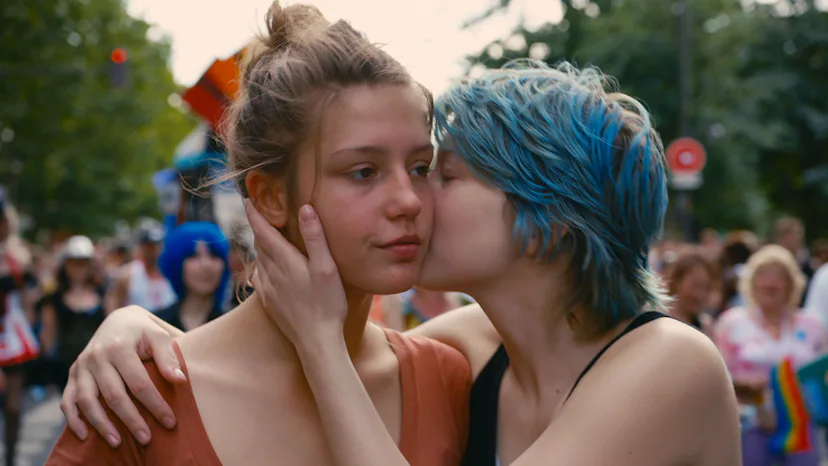
The roots of the right’s obsession with the blue-haired liberal trope began circa 2014, around the time of another landmark moment in teal tresses: Kylie Jenner’s iconic dye job. On social media apps that rewarded colorful photos like Tumblr, Instagram, and Pinterest, the blue hair trend was suddenly everywhere. These platforms and hair colors were also particularly popular with young members of the LGBTQ community, who were enjoying a boom in visibility during the new, feel-good era of marriage equality. “There’s a lot of fantasy hair color in the queer community,” Gibson says, “because if you felt you couldn’t live your life the way you wanted for a long time, then finally feel able to do so, you probably want to be quite experimental with your look.”
“I have had conservative ranchers comment on my hair — about how we need more blue-haired people around.”
Seemingly overnight, blue hair wasn’t just associated with aging punk rockers but with trendy young women, queer people, and trans or nonbinary internet users. Or, in the eyes of the increasingly extreme right wing festering on misogynistic sites like 4Chan, the enemy. During the first Trump administration, people with brightly colored hair became caricatures for social-justice warriors. And by 2022, this rhetoric was being weaponized by anti-LGBTQ activists like Chaya Raichik (aka @LibsOfTikTok) and Christopher Rufo, who were then at the peak of their cultural influence as they railed against drag and the increased visibility of trans and nonbinary people in a bid to unwind the progress of the LGBTQ movement as a whole. The right had stumbled upon an umbrella term that could swiftly dismiss the left as cartoonish figures not to be taken seriously.
For Daniel Taylor, a 40-year-old software developer in northern Kentucky who identifies as agender, coloring their hair blue can indeed feel like an act of LGBTQ pride. (They once, for example, dyed their hair half-blue, half-pink in order to pay tribute to the Transgender Pride flag.) Taylor says rocking blue hair in spite of the right-wing caricature is about showcasing their self-confidence and signaling to others that they are a safe person to approach about issues of gender or sexuality. “I want [young people] to be able to see that you can grow up and be happy and successful,” they say. “I don’t mind if people see my appearance and think, ‘Oh, yeah. Liberal.’”
Lamb, the Wyoming bones-forward artist, says that she, too, thinks of her hair color as a way to express herself and make herself happy, as opposed to trying to situate herself as a member of a leftist tribe. Bright, colorful hair reflects the joy she says she’s felt since a massive weight loss years ago. “I just wanted to be the person I felt like I kept in a cage for so long,” she tells me. “I don’t really care what people think. I don’t do it for anybody else but me. I just like how it looks.” Still, it’s not like she minds if people make (largely correct) assumptions about her politics based on the color of her hair. After all, she’s just as guilty of making assumptions about others based on their appearances. “It’s likely somebody is going to see me out there and be like, ‘Oh, there's a crazy liberal,’ just like if I saw a guy out on a horse with a cowboy hat I’d be like, ‘Oh, that’s a conservative rancher,’” she says. “That’s the kind of bias that we have in life.”
“It’s hard for us to imagine now, but people had literally never seen anything like it in their lives. People were quite horrified and offended by it.”
Despite the ubiquity of the blue-haired liberal trope online and in right-wing media, perhaps the real world is a different beast. “People usually feel a lot more comfortable saying that about a faceless group of people, rather than saying it directly to someone they know,” Taylor says. Both Lamb and Taylor have found that, as blue-haired people in red states, they’ve actually only ever received compliments about their hair, not criticism. “I have had conservative ranchers comment on my hair — about how we need more blue-haired people around,” Lamb says. “Every single day I get comments about my hair here, and it’s never negative.”
Similarly, Bennett, the stylist in big-city California, and Tippetts, in small-town Wyoming, both say that blue hair’s enduring popularity is proof that what people are really angered by is politics in and of itself, not pigmentation. More often than not, dyeing your hair blue can just be a statement about fashion, not fascism. “They do it because they want to do it, not to put a political point on it,” Tippetts says. “They want to express themselves and how they’re feeling.”
Still, there’s one color combination Tippetts draws the line at because of what it represents. “The only colors I haven’t done are blue and orange together,” she says, “because I will not be associated with the Denver Broncos.”
