Power
The Unseen Energy Infrastructure Behind Your Digital World
AI is in everything now. But it isn’t magic, and it uses a lot of energy. Find out what keeps those AI algorithms powered up and running every day.
Have you ever found yourself listening to a playlist and feeling like your music player reads your mind? Or maybe a new movie suggestion pops up in your queue, you hit play, and a few minutes in, you’re thinking, “How does it know me so well?” Even something as commonplace as using AI search can feel unreal. The program can not just understand your queries. Sometimes it feels like it’s finishing your thoughts.
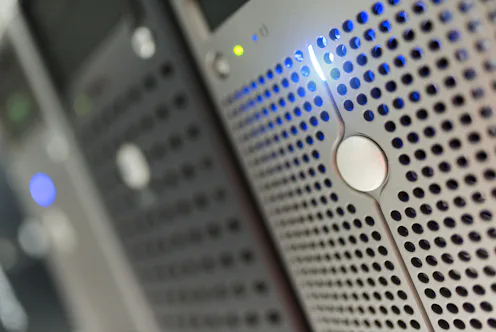
AI creates experiences that can feel seamless and intuitive. But like the cloud, AI doesn’t actually run on magic. Nor is it a nebulous “thing” up in the sky. It is a very real digital system dependent on data centers, powerful computing and significant amounts of electricity. How much electricity? A substantial amount. And the demand is rising.
A non-technical look at the power turning the gears behind every “smart” recommendation shows how those metaphorical power lines have people racing to keep AI running (and the lights on) in an increasingly digitized 21st-century life.
The Surging Energy Demands Of The AI Boom
Artificial intelligence uses a lot of power. If you’ve ever wondered how much, the truth is, it’s hard to put a firm number on it. One way to do that is by looking at the energy consumption that data centers (which AI use) consume.
For example, in 2023, data centers used around 4.4% of the total energy consumption of the United States. That’s around 176 terawatts (TWh) of energy, or 176,000,000,000,000 watts.
To be fair, there’s a lot that goes into the centers that house data, but AI was specifically called out for its growing role in energy consumption — and back in 2024, when those numbers were reported, they were expected to rise to as much as 580 TWhs, or 12% of total U.S. electricity usage, by 2028. Some think it could even jump to 945 TWhs by 2030. That’s more power than the entire country of Japan used in 2025.
That puts increasing strain on the power grid, especially in an area like America, where AI is used a lot in different ways. The good news is that, overall, leaders in the power sector believe they can meet the demand (and some think it may be possible to do that with clean energy, given the time and resources).
While the potential to meet the demand is there, though, actually meeting the demand is an ongoing challenge. Innovators in this sector have been working for years to meet this surge in energy demand from emerging technologies like artificial intelligence. They’re finding multiple ways to manage the issue, too.
Using More Efficient AI To Reduce Power Consumption
One way to meet the rising electricity demand is to streamline the actual energy demand of AI and similar high-electricity consumption forms of tech. One Chinese company drew attention in this area in early 2025 when it released a tool that could approach the capabilities of mainstream AI tools with significantly less computing needed.
This reduction in computing “muscle” meant less need for power. How much less? The AI company estimated that as much as 10 to 40 times less energy was required to run its AI technology compared to its American competitors.
Even if the energy needed to run AI decreases significantly, though, the overall demand will continue to grow. Thankfully, there are already players in the market working to meet that surge — some of which were already on the scene before the AI wave started to truly pull on the power grid.
One Answer To AI’s Energy Needs? Expanding And Modernizing Power Infrastructure.
As AI power demand continues to grow, one approach is to increase available power for computing infrastructure — and a few companies are finding ways to do that. One of those is Giga Energy.
The modular data power infrastructure company started when a pair of college students in Texas, Matt Lohstroh and Brent Whitehead, started welding modular data center systems in 2019. Before long, they realized that the biggest need wasn’t more physical data storage. It was power.
They pivoted, and Giga Energy was born. The company has taken a different approach to the traditional energy-infrastructure supply chain. Giga Energy set out to address the slow and fragmented existing solutions. Instead, Lohstroh and Whitehead’s company manufactures transformers, switchboards and modular power systems for data centers, which it offers as turnkey alternatives to more traditional models. This has helped accelerate the process of meeting energy needs for many AI projects.
Running Power Grids More Efficiently Could Help, Too
Companies like Giga Energy have been working to meet rising AI-related power demand in creative ways. While some work toward expanding available energy, others are investing in finding the most efficient use of existing power — and not just through more effective AI tools.
For instance, reducing reliance on additional hardware. An Arizona startup ran a real-world test where it used software to control power use during peak demand on the energy grid. At the same time, it balanced and met the AI data center energy demands to perform at full capacity.
During the test, which ran for three hours, the software was able to reduce the power consumption of an AI workload by 25%. This demonstrated that managing existing energy grid “traffic” with the right software has the potential to trim the overall amount of power required by AI and similar power-hungry consumers.
Understanding The Invisible Machine Powering Your AI Life
AI is increasingly embedded in everyday tools. But it isn’t magic. It works from real data centers using real power — power that has become a hot commodity.
Across the U.S. and globally, companies are exploring different ways to keep those playlists and streaming queues running with relevant recommendations and outputs. AI tools are becoming leaner and less energy-unfriendly. Software is learning how to govern electricity usage to be as efficient as possible. And some are working to effectively expand the grid and available power solutions as a whole.
As the next few years play out, expect the demand for electricity to power AI to rise. As artificial intelligence solutions improve daily life, they will continue to need more power. It’s a typical outcome of increased technological adoption.
This ongoing need creates opportunities for innovators already building solutions to meet it. But as with anything used in everyday life, it’s worth being aware of what it takes every time a phone or tablet is powered up or an AI program is asked to do something.
BDG Media newsroom and editorial staff were not involved in the creation of this content.
