Wellness
Barometric Pressure And Your Migraine: What’s the Connection?
If your head aches before it rains, there might be a real connection.
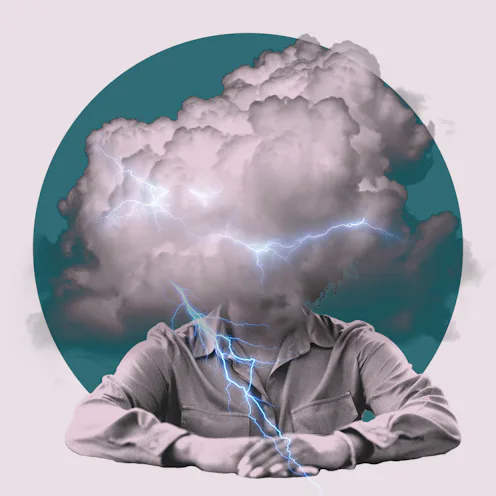
Most people check the forecast to decide what outfit they’re going to wear. For some people living with migraines, it can feel more like a preview of whether you’ll be having a good day — or spending it in a silent dark room in bed. “Living with weather-related migraines means constantly being on guard, never knowing when this complex, neurological disease will strike and stop me dead in my tracks,” says Tonya, who’s been dealing with migraines for 15 years.
Research shows that changes in barometric pressure, especially sudden drops, can trigger migraines in about a third of people who get them. And while the science isn’t exactly definitive, for some people like Tonya, those shifts have become pretty reliable signals. “I notice that the transition from spring to summer and summer to fall always puts me in a migraine cycle where I would get them for days on end before having to go on steroids to stop them,” she says.
If you’ve ever felt like a human barometer — calling it before the forecast even does, because you can feel a migraine coming on — it’s not something to brush off. Let’s break down why that happens, and what you can actually do about it.
Why Weather Changes Can Trigger Migraines
At the heart of everything is your nervous system and how easily it reacts to change. For people who experience migraines, that system can become more reactive over time, partly due to genetics, repeated attacks, and things like stress or poor sleep lowering the brain’s threshold for sensory input. “If the nervous system has become extremely sensitive, it can amplify a response to particular inputs,” says Eric Anderson, MD, a board-certified neurologist and Chief Medical Officer of Lin Health. In that state, something as subtle as a change in barometric pressure can feel much bigger internally.
Barometric pressure, which is the weight of the air around you, is constantly fluctuating, but on its own, those changes are minor. In a sensitized system, though, they can act as what Anderson describes as a kind of “salience enhancer,” making certain sensory signals stand out as more important (or even threatening) than they actually are. “It can alter trigeminal, vestibular, autonomic, or cranial mechanosensory input just enough that a sensitized central nervous system treats it as a threatening sensory perturbation,” he explains. In other words, it’s not that the pressure change is actually doing any damage — it’s more that your brain is being more “overresponsive,” he says.
That helps explain why drops in pressure (like the kind that happen before storms roll in) are so commonly reported as triggers. But pressure isn’t acting alone. Other environmental factors tend to move alongside it, creating a kind of domino effect. Temperature and humidity, for example, often coincide with pressure shifts, and research has found that a 26.5% increase in humidity is associated with a 28% higher risk of migraine.
Sunlight adds another layer. Longer days and extended exposure, especially in the summer, have been linked to a higher likelihood of migraine attacks in some people. One study in Arctic regions found that sun-related migraines were more frequent during the brighter summer months than in winter, while another showed that headaches can occur much more quickly after sunlight exposure in the summer — within five to 10 minutes, rather than closer to an hour in winter. And since light sensitivity is already a hallmark symptom of migraine, that extra exposure can be enough to push things over the edge.
Why Some People Feel It, And Others Don’t
Not everyone with migraines notices a connection to atmospheric changes, and that mostly comes down to how reactive their nervous system is to begin with. “The people most likely to be weather-sensitive are those whose sensory systems are already heightened and amplified,” says Anderson. For them, even tiny shifts can feel like a big deal, while someone else might not notice a thing.
That same sensitivity also helps explain why some people swear they can feel a thunderstorm coming before it even happens. According to Anderson, the brain in this state is more on high alert, picking up on internal and external changes most people would miss. At the same time, migraines often come with early warning signs — think fatigue, moodiness, or even sinus-related symptoms — that can show up hours before the actual pain.
For Tonya, that early clue is specific: “When my left nostril starts running, I know what’s coming,” she says. It might sound random, but it’s the kind of pattern you start to recognize when you’ve been dealing with migraines long enough.
Can You Prevent A Weather-Triggered Migraine?
You can’t control the weather, but there are ways to stack the odds a little more in your favor. There’s no guaranteed way to stop a migraine triggered by atmospheric changes, but managing everything else that affects your system can make a real difference. A migraine is often described as a “threshold disorder,” meaning multiple factors (like sleep, stress, hydration, and diet) can stack up and make an attack more likely. Anderson explains that when your system is already strained, it’s more likely to amplify incoming signals.
That’s why Tonya goes into what she calls a “period of sensitivity” mindset when she sees a weather shift coming and knows she might be more vulnerable. “I am ultra cautious and do my best to be proactive,” she says. “No alcohol, no candles, air deodorizers, fragrance. I'm not around smoke. I won’t go to church or places like the theatre where I know I could be sitting for an extended period next to someone who may be wearing scents. So I take steps to protect my comfort.”
While you cannot influence the weather, you can control how you respond to it. Paying attention to patterns, cutting back on extra triggers, and acting early when something feels off can all help. It won’t stop every migraine, but it can keep things from escalating as quickly.
Presented by BDG Studios
