Ultra-Clean Living
Meet The Bubble Girls
“Short of living in a bubble, we can’t prevent all exposures and still interact with modern life. But nobody would recommend that you do that, right?”
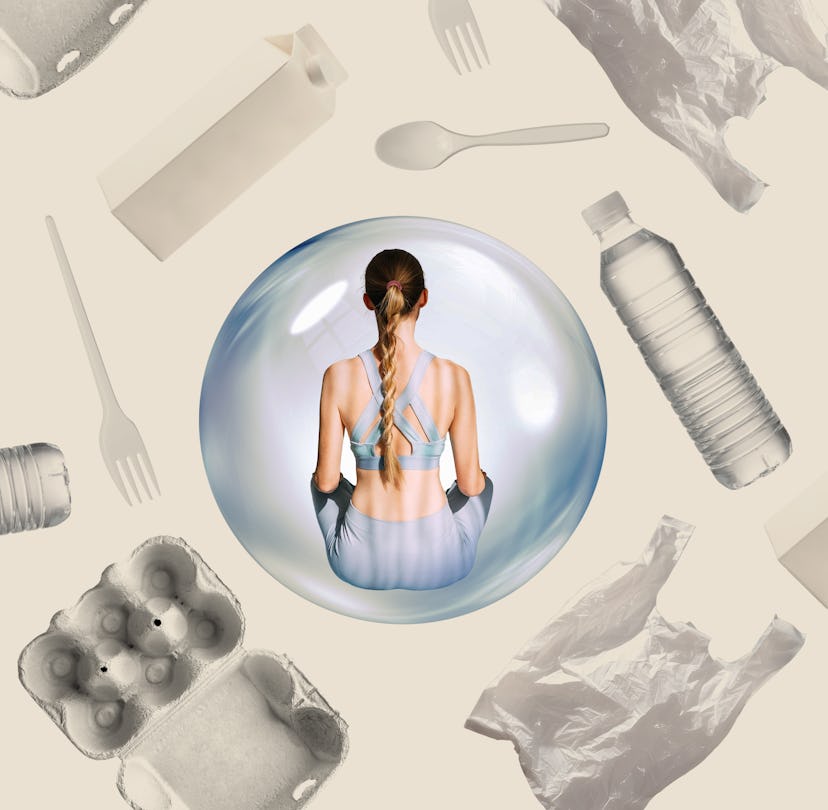
Taylor Dukes believes she’s doing just about everything she can to avoid toxins. The functional nurse practitioner and wellness influencer avoids clothing made with synthetic fibers and eschews mainstream cleaning and beauty products in favor of “clean” and “low-tox” alternatives. She eats grass-fed beef, cooks with ceramic skillets, and sources raw milk from a trusted farm. She uses special power strips to limit exposure to electromagnetic fields (EMFs). She filters her water and her air. This summer, the 35-year-old mom of two moved her family to a farm and spent “a full month” retrofitting her new home with health-minded renovations. What she can’t avoid, she attempts to remove from her body with coffee enemas and “liver flushes”; every six months, she goes through a “parasite cleanse” with her husband and children, timed to the full moon.
“It’s taken me 12, 14 years to get to where I am,” Dukes says of her regimen, which she began after experiencing years of puzzling symptoms that stumped doctors and severely impacted her quality of life: hair loss, joint pain, gastrointestinal issues, unrelenting fatigue, and more. She ultimately found relief through functional medicine, a model of holistic care centered on diet and lifestyle changes. She now encourages her 350,000 followers to begin with smaller measures — swap fabric softener for distilled white vinegar, standard pasta for gluten-free alternatives, mental health medication for sunshine — while offering aspirational images from her world: Protein muffins made in millennial beige kitchens. Salad dressing stored in mason jars. Dukes herself, face framed by balayaged Utah curls, smiling at the camera while she lowers herself into a cold plunge or waves a red light wand across her face. “This changed my life,” Dukes tells Bustle of her nontoxic journey. “I can never go back.”
Dukes is what you might call a Bubble Girl. At once extremely health-conscious and deeply distrustful of institutions, she’s on a mission to create a sanctuary free from the onslaught of toxins that, to be fair, have become intertwined with modern life. Which is tricky, as there’s no singular, trusted source decreeing what’s actually safe. (Even before the Trump administration took over and began deregulating toxic substances, the EPA and the Food and Drug Administration have repeatedly proven themselves fallible; for example, agencies knew about the dangers of phthalates without taking major action.) Moreover, much of the science on the effects of some commonly used substances, like plastics and parabens, is nascent and as-yet unsettled. This leaves each Bubble Girl to decide on her own what belongs within her own four walls. Except on social media, her ideas hardly stay within the confines of the house.
Online, you’ll find a wide variety of Bubble Girls. There are the familiar, left-leaning crunchy types, promoting eco-friendly solutions; many overlap with other “____-Girl” trends like Clean Girl and Scandinavian Girl, their feeds awash in white linen and light-drenched interiors. Some stick to scientists’ expert recommendations, or are even scientists themselves, hoping to counter misinformation and promote evidence-based changes. Others come to conclusions that directly contradict modern medicine (the raw milk, the EMFs, the parasite cleanses), and a loud minority take their bubble-building to the extreme: living on rural homesteads, producing their own tallow-based moisturizer. A Bubble Girl often starts on the more measured end of the health-conscious spectrum, seeking to replace her Teflon pans and phthalate-laden face creams — which, yeah, you probably should — and quickly finds herself going full MAHA, fretting about the nearby cell tower and what Wi-Fi signals might be doing to her body. But no matter where they fall, proselytizing for the #lowtox lifestyle can be lucrative. Smaller creators often land occasional brand deals, while well-established ones develop their own products, or sell tiered memberships to those looking for more detailed advice and support (Dukes does both).
All varieties of Bubble Girl thinking are on the rise, and not without reason (nearly nonstop headlines show how potentially harmful pollutants are popping up in drinking water, in wildlife, and even in the air). The #nontoxic tag on Instagram and TikTok conjures enough content to scroll endlessly; searches for “non-toxic” have more than doubled over the past three years. I’ve seen my own friends and family flirt with the Bubble Girl lifestyle, buying European sunscreen over concerns about American brands’ particular chemicals and religiously using apps like Yuka to vet products’ ingredients and origin. The Atlantic’s Annie Lowrey recently wrote an article about her attempt to purge plastics from her life. It began with her cookware and quickly spiraled outward, encompassing the whole of her home — at first in an ad hoc manner, but later directed by doctors and experts. The piece reads like a horror tale, with one woman discovering a Hydra in her home and continuing to slice off its heads even as it sprouts more.
“We don’t have the regulation that allows us to feel confident that things are tested before they end up on the shelves,” says Julie Herbstman, Ph.D., an epidemiologist and the director of the Columbia Center for Children’s Environmental Health. Herbstman has devoted her career to studying how toxic substances can affect well-being, particularly in babies and children. She dreams of a more proactive, effective regulatory system that would ensure product safety, so that Americans could trust what’s sold in stores. In the meantime, she’s working with her colleagues to conduct research and spread the word — for instance, producing informational handouts about small, achievable steps that can limit exposure to forever chemicals, if not eliminate it. “Short of living in a bubble, we can’t prevent all exposures and still interact with modern life,” she says. “But nobody would recommend that you do that, right?”
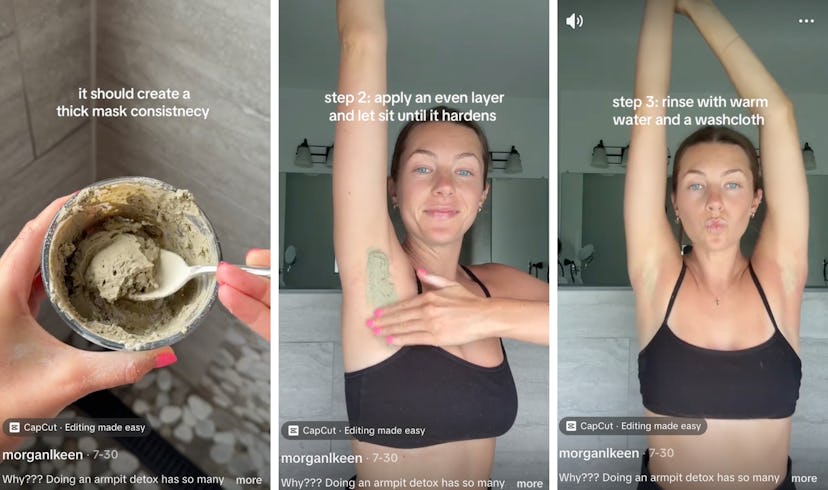
Morgan Keen, a 25-year-old content creator based in Iowa, makes videos that are less perfectly-staged-white-quartz-kitchen, more PacSun-bag-on-the-floor-starter-apartment. (Unlike Dukes, Keen hasn’t moved to a custom homestead just yet.) She sits on her mostly-made bed, offering advice on natural cold remedies, infographics highlighting nontoxic products, and even armpit detoxes. (What, you thought you could skip pit day?)
As with Dukes, Keen’s Bubble Girl journey began with illness — specifically, unexplained weight gain and rashes, which led doctors to believe she might be at risk for a chronic autoimmune disease. “I was just like, oh my gosh, no, that’s not my destiny,” she tells me. Her quest for answers led her to #lowtox influencers, who post about how to “heal your hormones naturally” (by switching up your products) or using “raw milk to heal [your] gut.”
“The videos that caught my attention were videos where they mentioned these popular products — they literally contain carcinogens, hormone disruptors. And when you see that as a consumer, you’re just like, oh my gosh, that’s my favorite product. I mean, how is that even possible?” she says. “And then you start seeing other videos about it — you know how the algorithms work. You just start going down the rabbit hole.”
Like many Bubble Girl creators, Keen is reluctant to weigh in on topics that overlap directly with politics. When asked for her opinion on vaccines, she stresses that everyone should make their own decisions, but brings up a TikToker she follows who “reads the vaccine inserts and shares all the side effects that they can have on your health.” She says she’ll do a deeper dive if and when she has children, but for now, the TikToker’s warnings are enough to make her wary: “Those are eye-opening things for me.”
You know how the algorithms work. You just start going down the rabbit hole.
Many Bubble Girls are suspicious of the government and the medical establishment (which has repeatedly proven the safety and efficacy of licensed vaccines, including newer kinds like mRNA, and explained why fears about certain common ingredients are unfounded). “I think the U.S. does try and keep us sick,” Keen says. Today, she says she’s never been healthier, and believes it’s all thanks to her lifestyle.
“I wish people could just sit down and do their own research and make opinions for themselves,” she says. “I wish people didn’t get so upset. Like, what’s wrong with that?”
It’s a risky proposition. “Phrases like ‘do your own research’ or ‘everyone has to decide for themselves’ effectively shift the burden of complex medical and scientific understanding onto the average person,” says Rebecca Rialon Berry, Ph.D., a clinical psychologist and associate professor at New York University’s medical school who studies the effects of wellness content. “It suggests that all information sources hold equal weight, which is simply not true in the realm of health and science. It can empower individuals to dismiss expert consensus in favor of a charismatic influencer’s personal experience.” Berry adds that these phrases can “provide a shield” for influencers, allowing them to discuss potentially dangerous practices while avoiding accountability.
It’s no accident that both Keen and Dukes began building their bubbles after getting sick. It’s a common story, particularly among women, who are both more likely to be dismissed by doctors and more likely to develop autoimmune and autoimmune-associated conditions, which are still poorly understood — leaving doctors with limited treatment options to offer — and largely incurable. (Adding insult to injury, many Americans face steep costs to receive such unsatisfying advice.) Similarly, many women who struggle to conceive find themselves looking for answers and solutions professionals can’t provide; Bubble Girls are more than happy to step in to fill the gap.
Sarah Reddington struggled with Graves’ disease in her 20s. When medication and endocrinologist-recommended diet changes weren’t enough, her doctor suggested radiotherapy, which she says “didn’t sit well” with her. “We sought a holistic doctor because we weren’t getting the answers from conventional medicine in terms of the actual root cause.” She believes that her new #lowtox, organic-food-focused lifestyle has helped tremendously.
Herbstman, the Columbia epidemiologist, warns against taking such anecdotal evidence as gospel: “There are things that people can do to reduce exposure, to improve wellness. Is it going to cure medical problems? Likely not.”
It’s a hard message to hear — and unlikely to do numbers on TikTok — at a time when society is, in the words of Berry, the NYU professor, “grappling with information overload, a desire for control, and a constant search for meaning and well-being in a rapidly changing world.” It’s hardly surprising that some might try to wrest back a sense of self-determination — particularly when it comes to health, a realm in which so much is up to chance, or dependent on broad structural change. Especially considering that, while public health has improved dramatically thanks to modern medicine, with life expectancy doubling since the early 1900s, there are a handful of ways in which we’re getting more sick: Environmental and food allergies are on the rise; celiac disease is diagnosed more frequently than ever. For the health-conscious, that’s a scary, uncertain state of affairs.
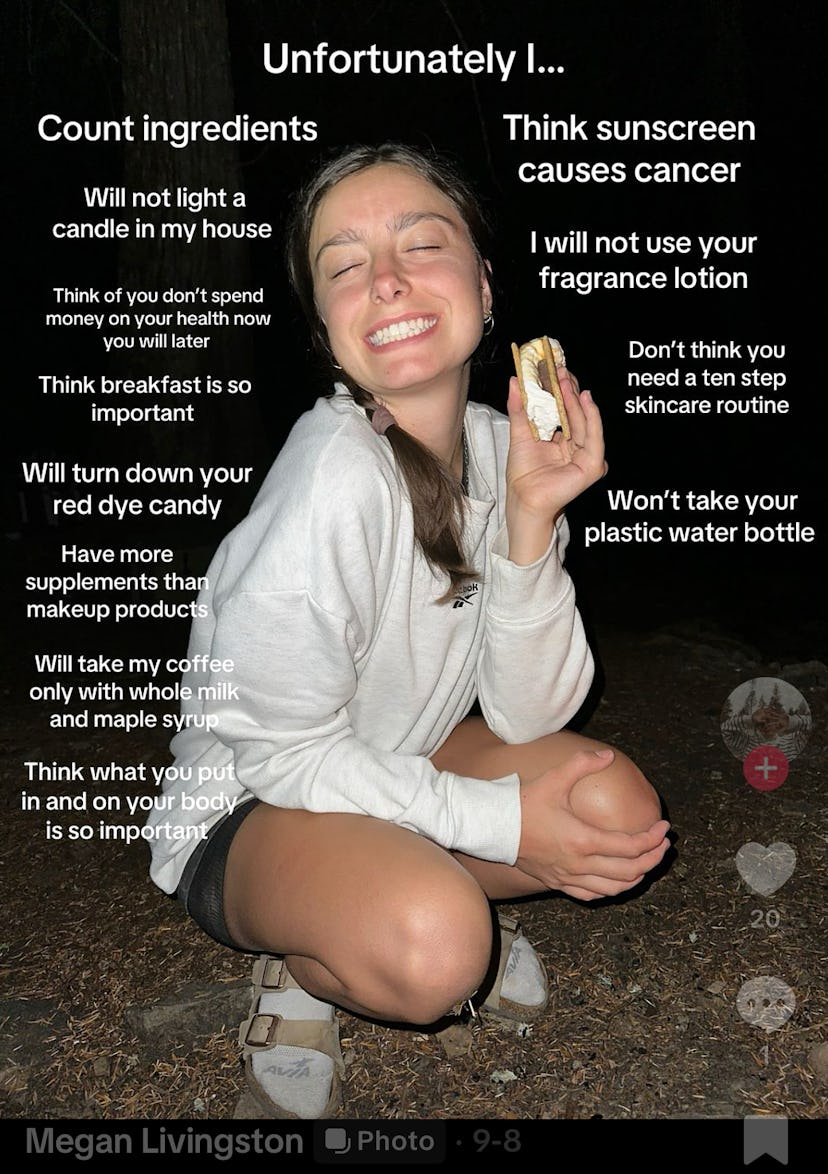
“This was the first time I felt like I was in control of something,” says Megan Livingston of her #lowtox lifestyle. The Idaho-based content creator says her mom’s breast cancer diagnosis motivated her to take the leap, but the decision also gave her agency during the uncertainty of the pandemic. And, she says, it helped with her depression, which she’d struggled with since 2021. “It’s changed my mental health,” Livingston says.
Livingston’s grid doesn’t have Dukes’ beige-core serenity, or Keen’s pretty infographics. While she does produce #lowtox advice and commentary (and money-making spon-con) she does it with a little less bravado; the 27-year-old is just breaking into content creation. Livingston’s bubble ethos recalls old-school “all-natural” living — overalls, granola, camping — with a heap of Christian morality on top. (Livingston, along with Dukes and many other #lowtox creators, believes her back-to-basics lifestyle befits her faith.) “I’m a Christian, so I feel like we should eat the way God intended,” she says. She cut out refined sugar, limits her dairy and gluten intake, and takes daily dietary supplements. She also gave up perfume, because of potential endocrine disruptors, until she partnered with a nontoxic perfume brand. “Influencers have these 10-step skin care routines, and you don’t need those,” she says. “It’s simple — you know, beef tallow, water, and a washcloth.”
Over a year into her new lifestyle, Livingston’s #lowtox efforts are still a work in progress. “In a perfect world, [I would] switch everything at once,” she says. “But then, there's always new research coming out about other things. So it’s never like, ‘All your stuff is nontoxic, you are perfect.’” The rabbit hole is bottomless.
This was the first time I felt like I was in control of something.
Of all the Bubble Girls and Bubble Girl-adjacent people I spoke to, fashion journalist Alden Wicker seems the most measured and well-researched. Wicker investigated the harmful effects of PFAS and other harmful substances commonly found in fabrics while writing her book, To Dye For, and was surprised by what she found. While most people may not experience symptoms as a result of what they wear, Wicker encountered people who had serious reactions or major flare-ups of chronic illnesses. The experience led her to scrutinize her wardrobe (how could it not?) and she recommends others do the same, within reason.
“You could obsess over it and become the worst person to invite to a dinner party,” she says. “Or you could do the best you can and live your life the way that seems holistically healthy for you.” She suggests starting with your content consumption: watch less GRWMs, be less tempted to amass polyblend-heavy fast fashion.
An Instagram cleanse could have another positive effect. Online, it’s impossible not to notice that the nontoxic movement has a type: she’s thin, she’s white, she’s Christian. If you don’t fit that description, it’s easy to feel alienated or even targeted by a lot of #nontoxic content. At first, the pretty infographics and snappy how-to’s can feel like an easy answer to all of the conflicting headlines and unanswered questions about our wellness, but spend too much time inside the bubble and you’ll find it can become its own kind of noise. As Herbstman says, “[Showing] a person who's living this pristine life with their picket fence is … not making anybody healthier.”
Detox your feed, and the rest will follow.
Editor’s Note: This article discusses wellness practices and personal health beliefs that are not supported by mainstream medical consensus. Readers should consult a licensed medical professional before making changes to medical treatment, diet, or health routines.
