Wellness
What Dermatologists Wish More People Knew About Vitiligo
Vitiligo is more visible than ever, but there’s still a lot people get wrong about it.
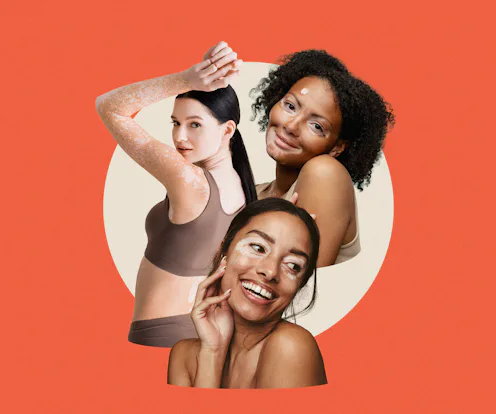
For many people, vitiligo is recognizable before it’s understood. Maybe you’ve seen it on a runway, in a campaign, or on someone you follow online, like model Winnie Harlow, whose skin has helped bring more visibility to the condition. Vitiligo is a chronic autoimmune condition in which the immune system attacks melanocytes (the cells that produce pigment), causing patches of skin to lose color. And while it’s become more visible in the cultural conversation over the last decade, there’s still a lot people don’t know about what it actually is — and what it isn’t.
Despite being one of the most recognizable skin conditions, vitiligo is often surrounded by assumptions. It’s not contagious, it isn’t caused by something someone did “wrong,” and it doesn’t look or progress the same way for everyone. It’s also more than a cosmetic concern for many people living with it. To separate fact from fiction, we asked three board-certified dermatologists to share the things they wish more people understood about vitiligo, from the misconceptions they hear most often to the signs people tend to miss.
It’s Not Contagious, “Just Cosmetic,” Or Anyone’s Fault
Ask dermatologists about the biggest misconceptions surrounding vitiligo, and they’ll tell you the same myths come up again and again. At the top of the list? The idea that it’s contagious. “The biggest misconception that I hear from new patients is that it’s contagious,” says Dr. Debbie Palmer, a board-certified dermatologist and co-founder and medical director of Dermatology Associates of New York. It’s not. You can’t catch vitiligo from touching someone, sharing food, or being in close contact.
Another common misunderstanding is the idea that vitiligo is something a person somehow caused. In reality, experts say the condition develops through a mix of genetic and environmental factors that are largely outside someone’s control. It’s not the result of the “wrong” skincare routine, stress management plan, or diet.
And while vitiligo affects the skin, dermatologists are quick to point out that it’s not simply cosmetic. “While the condition itself is not physically dangerous, it can have a very real emotional and psychological impact because skin is such a visible part of our identity,” says Dr. Elizabeth Aziz, DO, FAAD, a board-certified dermatologist. For many people, the emotional impact of living with a highly visible condition can be significant.
There’s also a misconception around who vitiligo affects. “People sometimes think it only affects darker skin tones, when in reality it can occur in any ethnicity or skin type,” says Dr. Nicole Ruth, DO, FAAD, a board-certified dermatologist in New York City. While vitiligo may appear more noticeable on deeper skin tones, it can affect anyone — which is part of why dermatologists say broader awareness matters.
How Vitiligo Shows Up
Vitiligo can develop at any age, though it most commonly appears before age 20. People with a family history of vitiligo or other autoimmune conditions — including thyroid disease, type 1 diabetes, and rheumatoid arthritis — may be more likely to develop it.
Most people picture vitiligo as bright white patches of skin, but dermatologists say the earliest signs can be much subtler. “Patients first notice color changes around the lips, fingertips, or areas exposed to friction before larger patches appear,” says Aziz.
From there, no two experiences look exactly the same. Vitiligo is often unpredictable, and its progression can vary widely from person to person. Some people experience periods where the condition stays stable for years, while others notice new patches appearing over time. “It’s typically a chronic condition that can wax and wane,” Aziz says, though meaningful repigmentation is possible for some.
And vitiligo doesn’t just show up on the skin. Because depigmented areas lack melanin, they’re often more sensitive to the sun and can burn more easily. Hair can also be affected, sometimes leading to premature whitening of the scalp hair, eyelashes, or eyebrows — changes people may not immediately connect to vitiligo.
The Emotional Toll Of Vitiligo
For many people, the hardest part of vitiligo isn’t always the condition itself — it’s how visible it can feel. “I’ve had patients avoid social situations or stop wearing certain clothing because they feel self-conscious about their skin,” says Aziz. Ruth sees similar experiences in her practice, especially among adolescents and young adults, and says conversations about emotional well-being are often just as important as conversations about treatment.
Research published in JAMA Dermatology found that people living with vitiligo experience higher rates of anxiety and depression, with more recent findings suggesting the emotional impact can be especially significant for patients with darker skin tones, where pigment changes may be more noticeable.
That’s why dermatologists often stress a more holistic approach to care. Alongside medical treatment, Palmer recommends building in emotional support — whether that’s therapy, counseling, support groups, or cognitive behavioral therapy. Organizations like the Global Vitiligo Foundation, including its UNITE virtual community, and MyVitiligoTeam can also help people connect with resources and others navigating similar experiences.
The Bottom Line
Vitiligo is far more nuanced than many people realize. It’s not contagious, it’s not something a person caused, and for many people, it’s about much more than changes in skin color. As Ruth puts it, vitiligo is a complex autoimmune condition that deserves the same understanding, empathy, and medical attention as any other chronic disease. While there’s currently no cure, dermatologists stress that there are treatment options — and that a diagnosis doesn’t have to define someone’s quality of life.
Presented by BDG Studios
