Bronzer 2.0
The Anti-2016 Bronzer Trend Has Arrived
A celebrity makeup artist reveals how to achieve the "suede bronzer" glow.
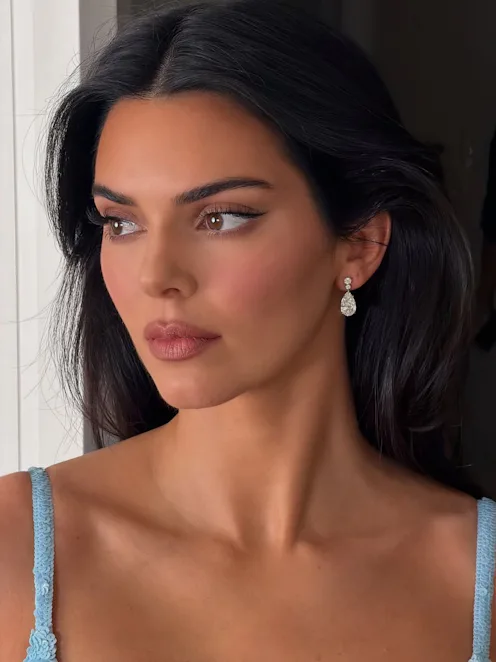
Forget blush — bronzer blindness came first. Muddy foreheads are still the stuff of nightmares for anyone who *accurately* remembers 2016 makeup: bronzer got blended into contour until it became one continuous orange gradient across your forehead and cheeks. The result? Less sun-kissed, more shellacked. (Or as Lena Dunham said in Girls, “You look like you just went to Hershey, Pennsylvania.”)
Thankfully, that era of makeup has come and gone, and in its place, everyone’s reaching for products that look like your skin, but better — which is where suede bronzer comes in. It’s there to add a little warmth and maybe fake a few hours in the sun, but without bringing back the ghosts of 2016. Ahead, everything to know about the trend, straight from a celebrity makeup artist — including which formulas actually nail that soft-matte finish.
What Is “Suede Bronzer”?
If you’ve ever been personally victimized by bronzer, the trending suede iteration is your reset. “It's not flat matte, and it's not overly luminous,” says celebrity makeup artist Christian Briceno. “The soft, brushed texture looks diffused on the skin, almost like light is being absorbed and reflected at the same time.”

What sets it apart from other bronzers is that blurred finish, which is also why the trend feels perfectly in step with makeup for spring and summer when the skin naturally produces more oil. As Briceno explains: “Overly glowy products can start to read sweaty rather than radiant, and flat matte can feel dull in daylight — suede lands right in that middle space where the skin still looks alive, but controlled.”

“Controlled” is where skin as a whole is headed. “Less glass, less heavy matte, more balance,” he says. Suede bronzer fits neatly into that shift toward lighter layers, better placement, and finishes that look good in real life, not just on camera.
How To Get The Airbrushed Look

According to Briceno, suede is one of the most versatile finishes right now, meaning it can work for a wide range of skin types — though it’s especially ideal for normal to oily skin, where it keeps things looking refined without adding extra shine. “On dry skin, it still works beautifully as long as the skin is well hydrated underneath,” he adds.

In terms of formulas, the easiest way to spot a suede finish is how it reflects the light. “If it's completely flat in the pan, it will likely read dry,” he explains. “If you can see shimmer particles, it's going to lean glowy.” What you’re looking for instead is a subtle, velvety reflection — i.e., something that looks smooth on the skin, not chalky or sparkly. Online, that usually shows up as terms like “soft matte,” “natural matte,” or “blurred finish” — typically, with powder or cream-to-powder formulas.

Once you find the right one, it all comes down to application — and with bronzer, less is more, according to Briceno. “I don't place a large amount of product at once,” he says. “I blend first, then add more — always blend, then build.” It should live on the places where the sun would naturally hit: the top of the cheek, the temples, and a touch across the forehead. Gently pick up product and tap off the excess before applying, and if you want it to melt together even more, Briceno suggests going over the transition areas with a clean brush or a damp sponge.
The goal? Diffusion. “Suede bronzer leans into that soft-focus, skin-first direction,” Briceno says. “You should never see where it starts or ends.” In other words, a far cry from the muddy foreheads of yore.


