Book Talk
The 10 Best New Books About Women Breaking The Mold
From Lena Dunham's new memoir to Oyinkan Braithwaite’s witty romance.
The inspirational quote industrial complex suggests that successful women are rebellious ones. From Instagram quote cards proclaiming, “We are the granddaughters of the witches you couldn’t burn,” to Tumblrs etched with “Well-behaved women seldom make history,” it’s the loud, visible rule-breakers who live on in perpetuity.
They aren’t the only ones who deserve the spotlight. There’s a quieter kind of glory in making life choices that defy the expectations placed on women as partners, mothers, and daughters. It’s radical to disrupt generational cycles, put your desires first, and not contort yourself to be “likable.”
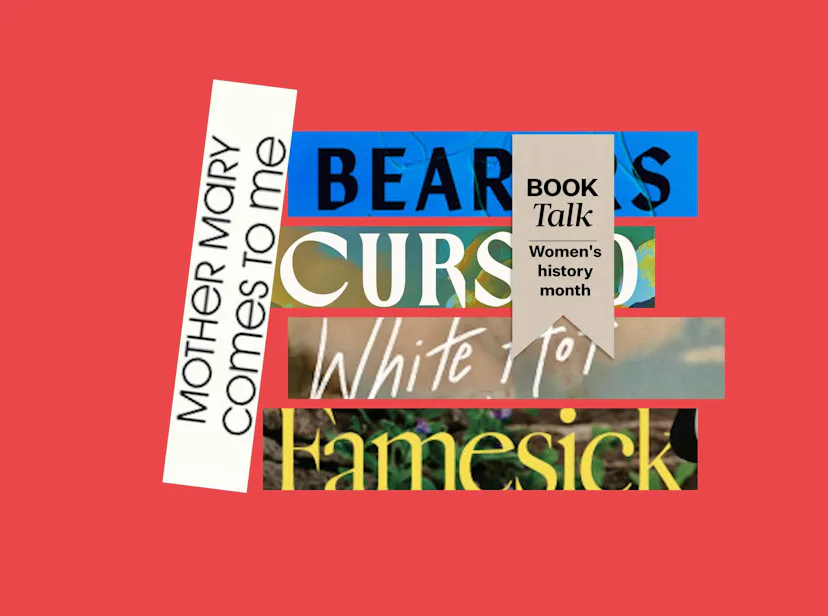
For Women’s History Month, we’re celebrating disruption in all its forms. From fiction to memoirs, these 10 recent books embrace women breaking the mold.
How to Commit a Postcolonial Murder by Nina McConigley
This striking debut novel is set in the 1980s, as first-generation Indian American sisters Agatha and Georgia welcome their extended family into their Wyoming home. When their uncle Vinny abuses them physically and sexually, they resolve to murder him with antifreeze. Set against the crushing legacy of British colonialism and the isolation of life as a racial minority in rural America, McConigley’s book interrogates sisterhood, otherness, and culpability in this coming-of-age tale.

Good Girl by Aria Aber
In post-9/11 Germany, where Muslims are viewed with suspicion and neo-Nazis remain a visible presence, Nila begins searching for a way out. The 19-year-old daughter of Afghan immigrants strays from her family’s expectations and toward the grungy, brutalist haze of Berlin’s nightlife, where she meets Marlowe, an American author and fading star. This coming-of-age story marks Aber’s arrival as a promising new voice in fiction.

The Ten Year Affair by Erin Somers
Cora has begrudgingly relocated from Brooklyn to upstate New York with her husband, Elliott, where she finds herself stir-crazy and deeply depressed. When she meets Sam, another parent at a local baby group, their mutual fixation quickly becomes unbearable. Though they choose not to act on their connection, the novel splits into two timelines: one tracing Cora’s increasingly depraved fantasies of what could be, the other rooted in the underwhelming, millennial-angst-lined reality of their present lives. For fans of Miranda July’s All Fours, this twisty work of literary fiction pushes readers to rethink modern marriage, desire, and autonomy.

The Dry Season by Melissa Febos
While many of the books on this list explore women acting on their deepest, most repressed sexual desires, Febos’s memoir asks the opposite. After a devastating breakup with a long-term partner — and the realization that she has spent most of her teens and adulthood in relationships — Febos embarks on a three-month period of celibacy that ultimately stretches into a year. Drawing on a lineage of female writers, from Sappho to Octavia Butler, she explores what it’s like to shed the guilt, rigidity, and expectations she’s grown to associate with romance.

Mother Mary Comes to Me by Arundhati Roy
Mary Roy was a force — a feminist and education activist who left her marriage with nothing to her name, won a landmark Indian Supreme Court case securing property rights for Syrian Christian women in Kerala, and went on to found a renowned school. She was also, Arundhati Roy writes, a cold, emotionally distant, and capricious mother. In her first memoir, the Booker Prize-winning novelist recounts her mother’s life and the intricacies of their relationship. With humor, levity, and sincerity, Roy reflects on how Mary — “my shelter and my storm” — shaped her into the woman and writer she is today.

Endling by Maria Reva
Set in Ukraine, Endling follows Yeva, an enigmatic scientist traveling the country in a lab on wheels while in search of rare snails to breed. Alongside her sister Solomiya, she infiltrates the “mail-order bride” industry, posing as a bride-to-be and translator, in hopes of uncovering the truth behind their mother’s disappearance. But when Russia’s invasion begins in 2022, their search is upended. Drawing on her own experiences, Reva’s debut unpacks war, spectatorship, and identity.

The White Hot by Quiara Alegría Hudes
Hudes’s debut novel opens on Noelle’s 18th birthday, when she receives a letter from her mother, April, who abandoned her 10 years prior. As Noelle learns, April’s resentment against her hostile family festered until it suddenly erupted into white-hot rage. She booked a one-way bus ticket to the farthest location possible, leaving her home — and her daughter — behind. What April intended to be a matter of days stretches into years. Cynical and witty, April embodies both the complexities and the consequences of breaking free.

The Waterbearers by Sasha Bonét
The Waterbearers follows debut memoirist Sasha Bonét as she brings her young daughter, Sofia, from Houston to New York City in hopes of disrupting her family’s history of fractured mother-daughter relationships. Using the metaphor of water, she reflects on her grandmother Betty Jean, who was raised on a plantation in Louisiana, and her mother, Connie, who led a troubled middle-class life. Blending personal narrative with historical reporting on Black women who fought against systemic racism, including Betty Davis and Camille Billups, the writer explores inheritance, change, and herself.

Cursed Daughters by Oyinkan Braithwaite
Because Eniiyi is born on the day of her aunt Montfie’s death, she’s seen as a reincarnation — part of a curse that dooms the women in her family to heartbreak. But when she saves a strikingly handsome boy from drowning and can’t help but fall in love, she must decide whether she’ll follow in her aunt’s footsteps or chart her own course. Following up on Braithwaite’s No. 1 New York Times bestseller My Sister, the Serial Killer, Braithwaite’s novel is resoundingly funny, romantic, and wise.

Famesick by Lena Dunham
It would be remiss to discuss controversial women without mentioning Lena Dunham. In her second memoir, the Girls creator reflects on her life in the spotlight while grappling with a mysterious, life-altering illness that defies diagnosis. In Famesick, she traces her rise, her controversies, and her fraught relationship with her health, ultimately questioning whether the cost of her artistic pursuits has been worth the physical and emotional sacrifices made along the way.

