Entertainment
Hello Sunshine’s Lauren Neustadter Is Living Her Wildest Dream
The Lucky and Elle executive producer reveals her secret sauce for turning a book into a hit show.
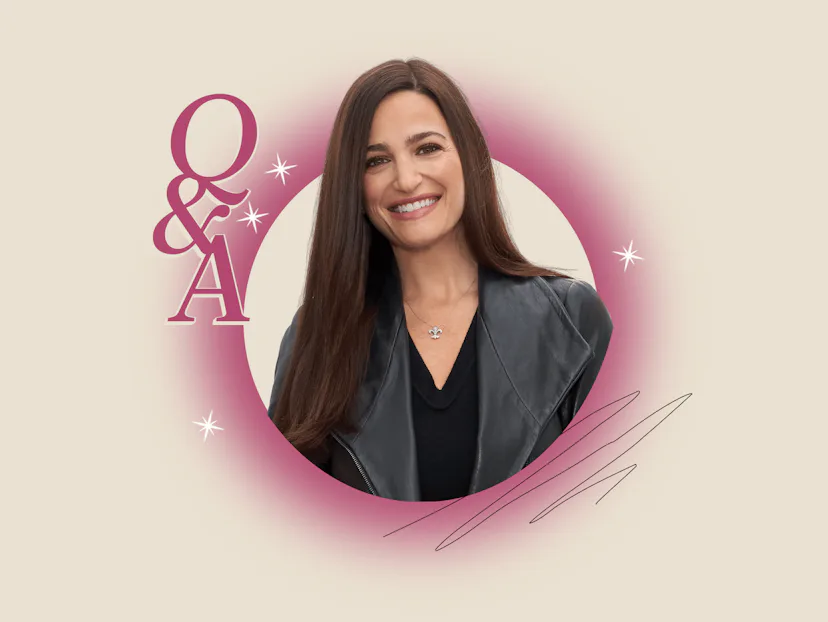
Lauren Neustadter is a 20-year Hollywood veteran, but her “made it” moment only came a few weeks ago, when she joined Reese Witherspoon and their Hello Sunshine colleagues on the red carpet for the launch of their new TV show, Elle.
“I grew up in New Orleans, Louisiana,” says Neustadter, the president of film and television at the company, where she has greenlit productions including Daisy Jones & the Six and The Morning Show. “I watched every movie. I watched every show. I dreamed of being part of this world, and to flash forward and be standing next to Reese at the premiere of the Legally Blonde television show that we worked on together and made is my wildest dream come true. It’s a ‘pinch me’ moment every day.”
Neustadter’s relationship with Witherspoon goes back more than 15 years. “In 2010, we were shooting a movie called This Means War in Vancouver,” she says. “I was the studio executive but I wound up being on set for almost the entire shoot.” During that time, the two collaborated closely, though Neustadter didn’t realize at the time quite how closely. “You never know who's paying attention and you never know who's watching,” she says. “I definitely did not think that Reese Witherspoon was observing the way that I was showing up as the studio executive on the set of that movie and that she would remember it. However, seven years later, she did.”

In 2017, Witherspoon poached Neustadter from her TV job at Fox to join the newly-minted Hello Sunshine. Neustadter, who started out in film at Miramax and 20th Century Fox, had pivoted to the TV side for more “character driven stories,” working on shows like The Mindy Project, 24, and Brooklyn 99. She says the move out of film initially surprised many of her colleagues.
“At that moment it was not a very popular move,” she says, but being adept at both film and TV has come in handy at Hello Sunshine, where executives work across both formats, and many of the company’s biggest successes have come from securing the rights to bestselling books.
“Before I joined her, Reese produced Big Little Lies, Wild, and Gone Girl in very quick succession, and they're all adaptations,” adds Neustadter. “They were unbelievable and very deftly done. So when I joined and had the privilege of becoming her producing partner and having conversations with authors, I think there was a lot of earned trust already.”

Such trust comes in handy. “Adapting books is like raising children,” says Neustadter. “No two are the same. When you raise children, you look at who they are as individuals and then you raise them according to what is going to make them the best version of themselves.” With that in mind, all Hello Sunshine employees are “very fluent” in the language of both film and TV, and comfortable making the judgement of when to stay faithful and when to make adjustments.
“If you look at Little Fires Everywhere and Where the Crawdads Sing, they're biblical in their adaptation. You really look at it and you say, ‘We have to bring this to life on screen exactly as it was written.’ The fans love it. They want it. You know it and you can feel it.” Other times, the team makes bigger shifts, as fans will discover with Lucky, a new crime thriller miniseries out now on Apple TV that departs from the original material in a few strategic ways.
Below, Neustadter takes us through the process of bringing Lucky to the screen.

Step 1: Gain The Rights To The Book
“Reese read Lucky for book club first and she was like, ‘You're going to lose your mind. You have to read this right away. Drop everything.’ And I was getting on a plane and I just tore through this book. I loved it so much. I called her and I was like, ‘Obviously I'm obsessed.’
“We had to sort of do some finagling, but we got the books and then we were like, ‘It's Anya [Taylor-Joy].’ We both loved her and felt like she was the perfect person for the role. So we sent the book to Anya, who is a triple-A student — she is incredibly hardworking and thoughtful and disciplined and amazing. She dove into the book really quickly, loved the character,and she was in.
“Then, together we went to Jonathan Tropper, he said yes. And then it was just like this amazing experience of every single first choice [actor] that we had said yes.”

Step 2: Build Trust With The Author
“Marissa [Stapley] really gave us permission out of the gate. She really trusted us. When you have an amazing author/screenwriter adapting another author, there's an immediate trust fall because you know that there's reverence and respect for the work of the author.
“With her support and blessing, we wanted to really honor Lucky and the character that Marissa created, and also the relationship that she has with John as a throughline. But then we also wanted permission to just build out the world and the danger and the stakes and also invite a male audience to confidently watch the show.
“I think the best collaborations are the ones where authors basically say to us, ‘We trust you,’ and then we keep them in the loop. We always want them to come to set. We always want them to be in conversation with the screenwriters who are adapting their work, because we understand that they're giving us their baby in a way and letting us raise this beautiful child. We don't take that for granted.”

Step 3: Solicit Feedback From The Boss
“One of the things I deeply, deeply admire and have learned from Reese is that it's very important to strike a balance between being involved and invested and also letting your team know that you trust them. She does an amazing job of empowering us and trusting us, but also being our best source of feedback.
“Before we send a script to the author, we're sending it to Reese and we're saying, "We've been in this forest for so long that we know the bark on every tree, and we really want you to give us your opinion." And her notes are so smart. She's unbelievably brilliant and has an incredible ability to see the big picture.”

Step 4: Develop The Script Some More
“Sometimes you get a script in, and it's perfect. Sometimes you get a script in, and it really needs a lot of work. Sometimes you get a script in, and you say, ‘We actually had different visions of what this was going to be.
“Then you have to make the difficult decision of, OK, are we starting over? Are we starting over with the same creative team? Are we going to go in a different direction? Is this what the author wants? It's really through those introspective moments that we learn and grow and hone our own intention.
“I’m very proud of the fact that we have a pretty good ratio of projects we set up to ones that actually get made, but unfortunately not all of the chickens hatch. That's hard and that's sad. But when it doesn't work out the way we dreamed and hoped, it's always a question of what can we take away from it and what can we learn that will inform us as we go forward.”

Step 5: Make Magic Happen On Set
“I love problem solving. I feel very honored that I get to be a person who people trust — they know that they can come to me and say, ‘I don't know what to do. This is hard.’ Sometimes it's a platform or a movie studio calling me and saying, ‘We need you to help us accomplish this.’ And then I go and have the conversation with our creative team on behalf of our partner.
“Sometimes you have something like sweet Lexi Minetree, who really is a discovery. And suddenly we're making two seasons of Elle back to back, which is such a blessing —we’re so grateful that Prime Video loved the first season enough that they greenlit a second season before the first one came out. It’s just being her ally and her advocate and working with everybody on all the different teams to say, ‘Let's make sure that we are taking good care of her.’”

Step 6: Put It Out Into The World
“There comes the inevitable moment when you take what you’ve made and send it out into the world, and everybody's going to have an opinion. Some people are going to love it and some people are really not going to love it, and everybody's going to write about it, whether on social media or in a publication.
“You have to welcome the feedback while understanding that it's art, not science. So when I talk to our team at Hello Sunshine before a project goes out into the world, I remind them that it's not just ours anymore — we're sharing it, and people are going to have opinions about it. You need to stand in how you feel and your pride and the love that you feel for this thing that we all worked so hard to make.
“And don't be less proud of it after reviews come out than you are before.”
