Food
Ella Quittner Is Obsessed With The Best
The food writer traveled the world for the crème de la crème of kitchen tricks.
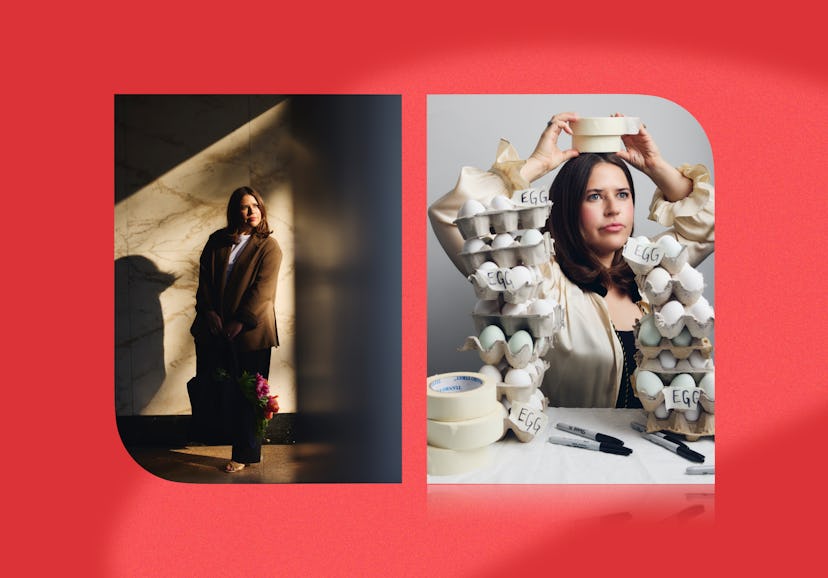
Working on Wall Street with six pairs of high heels tucked away in a desk drawer, Ella Quittner dreamed of the pearly gates of the Bon Appétit Test Kitchen. Late at night, after the markets closed, Quittner “just couldn’t stop making stuff,” she tells Bustle — scripts, personal essays, drafts of “Shouts & Murmurs” submissions for the New Yorker under a pen name — all of which she categorized as a hobby.
At the same time, food media was becoming “psychotically cool,” she says, and growing at a seemingly limitless pace. The space’s brightest stars — Claire Saffitz, Molly Baz, Chris Morocco — doubled as celebrities, attracting selfie-seeking fans in public and elevating their personal favorite restaurants into hot spots.
For Quittner, who dreamed of being a writer and has been cooking since childhood, “I was just sort of attracted to the idea that this thing I’d loved my entire life was finally getting its due,” she says.
The decision to pivot was a slow one. “I felt very tethered to my job and tethered to the security of a future,” she says. “It’s like breaking up with someone, right? It’s not like you decide all at once. You have to have a creeping thought, ‘OK, is this crazy?’ Then you actually have to try to do it.”
Although her career jump wasn’t quite as simple as “showing up the next day in a really cool outfit at Food52, making a sauce,” after a scrappy year of drumming up freelance bylines on blogs and websites, she ultimately landed a job at the company as a writer and recipe developer.
In 2019, she launched “Absolute Best Tests,” in which she set out to determine the best cooking method for specific dishes. From chicken nuggets (best shallow fried and coated in rice flour) to mayonnaise (best combined with an immersion blender and swapping in MSG for salt), she experimented like a scientist.

Quittner’s debut cookbook, Obsessed With the Best, came out last month and takes her column on the road. She visits the enigmatic “Bacon Jesus” in Des Moines and travels to Rome to make tuna and potato meatballs with a beloved nonna (among other adventures). Her goal is to find unique methods that create delicious results.
Spoiler: There’s no such thing as the best. But, damn, does she try.
Part test kitchen, part travelogue, part sociological study, the book attempts to “dive deep into the human obsession that drives people to bizarre lengths to be the best or know the best,” as she says. Between showstopping dinner party entrées and weeknight-friendly proteins, Quittner includes personal essays spanning an incisive investigation of the Las Vegas Strip’s buffet maxxers and the questions they raise about personal autonomy, to a deeply sincere account of visiting a Sicilian restaurant with her father in Yamanashi, Japan, and his subsequent hospital visit. She explores the ways food is entwined with our relationships and ourselves.
Below, read about Quittner’s most cherished recipes, tips for reducing food waste, and favorite moments from her travels.

What was the cooking technique that surprised you the most on your travels?
I was in a Michelin-starred kitchen in Modena, which is a little city in Italy between Parma and Bologna, and the chef was showing me how to make fresh pasta. The little tortelli he created were so excellent and so much chewier than [mine and] everyone else’s. It turned out that the restaurant flash-froze the pasta after they made it, before they boiled it. I went home and started testing, and for some reason, freezing the pasta did really enhance the chew.
I found it very surprising because I think that the freezer gets kind of demonized in cooking as something that leeches out flavor and messes with texture.
Speaking of freezing pasta, I was in love with the photo of your giant frozen bowtie.
I love to make those for dinner parties. It’s a great shortcut. You just have to do one thing, and it’s a spectacle.

Why was it important for you to talk about food waste in this book?
This exercise I do for the book is so excessive and so wasteful. You’re cooking something dozens and dozens of ways, and of course you’re getting other people to taste it, and you’re giving away leftovers, but it’s bound to feel wasteful, over the top, and a little gross sometimes. So it’s really important for me to try to find ways to reduce that.
What are some of the best ways to cut down on food waste?
Drying out discarded strawberry tops in the oven for tea is one example. Another is broccoli stems, which I think often end up in the American trashcan or compost bin a lot, but I really find them delicious and even better than the florets.
I never ever throw away meat bones. If I make a steak, the next day I’ll roast them really dark and then use that to make a quick broth.
Another one is people often get the chicken liver from the butcher and then they toss it, but I like to use that to make a quick kind of chicken liver purée to serve with chips for guests.
What recipe from the book are you most excited for people to recreate?
Honestly, every recipe. Because sometimes, someone will make something that hasn’t gotten a lot of attention, and I’m like, “Aw.” It’s like seeing one of your children succeed.
That said, I love, love, love when people make the vodka sauce. Also, the buckwheat extra brown butter chocolate chunk cookies, and the malted cookie dough bars. Someone made the herb butter stuffed head-on prawns recently, and that thrilled me.
This interview has been edited and condensed for clarity.
