Fangirl Faux Pas
Go Ahead, Just Wear Merch To The Concert
When did deciding on your outfit become more of a production than the event itself?
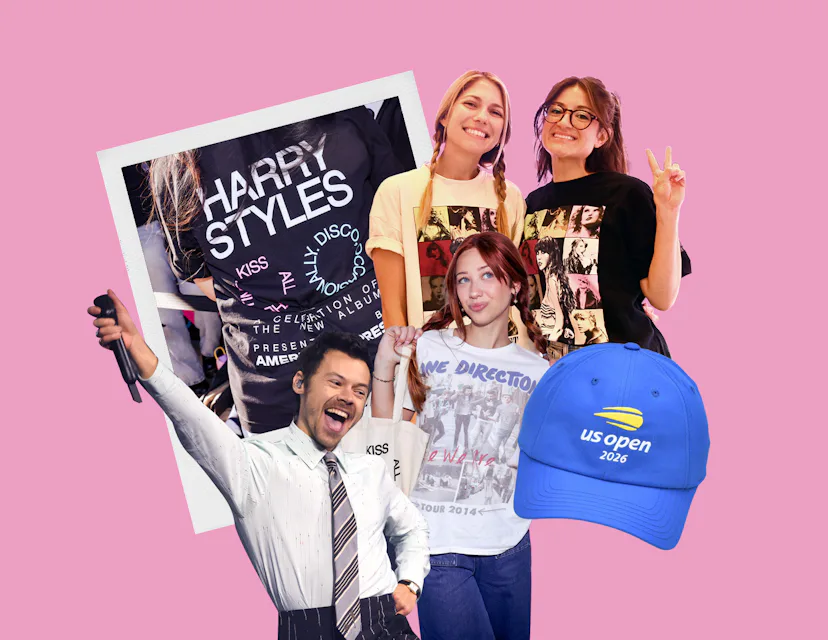
When I got last-minute tickets to see Harry Styles during opening weekend of his Madison Square Garden residency for the Together, Together tour, the first thing I thought was “What am I going to wear?” I had a weekend of lead time, not quite long enough to order something new, but just enough time to spiral.
I searched various versions of the phrase “Harry Styles tour outfit 2026 cute easy” on TikTok and Pinterest. I quickly noted the business-casual aesthetic other attendees seemed to abide by. Styles himself has been sporting pinstriped slacks and ties on stage, and fans have followed suit. Naturally, to try and fit in, I wore a long-sleeve button-up shirt that I usually wear to the office, micro shorts, and tall boots.
It was a mistake.
Before Styles even got up on stage, I was sweating through my top. His most recent album, Kiss All the Time. Disco, Occasionally, is made for dancing. Throughout the concert, I found myself repositioning my shorts after jumping along to each song. Halfway through the show, my socks were falling down to my ankles, the top of my boots were rubbing against my calves, and my feet hurt. Eventually, I leaned back against my chair instead of dancing. I enjoyed the show — I loved it — but I wasn’t exactly comfortable. And it got me thinking, what happened to just wearing merch to a concert?
Having the perfect outfit has become as much a part of the concert experience as enjoying the performance itself. Scrolling through your FYP when your favorite artist comes to town, you’re just as likely to see transition videos of people showing off their themed ‘fits as you are to see clips of the actual set. There’s nothing wrong with dressing up, but sometimes, nailing the looks comes at the cost of the experience.
Themed concert ‘fits aren’t a new phenomenon — it can be traced back to the ‘70s and ‘80s, when fans of the Rolling Stones and Madonna would adopt the respective artists’ aesthetics when attending a show. But a real shift occurred post-2020. After an intense period of remote work and social distancing, the first wave of post-pandemic concerts offered people a sense of community and an excuse to get dressed up.
When Styles’ twice-postponed Love On Tour finally kicked off in September 2021, fans adopted an unofficial, neon-hued, disco-inspired dress code, bedazzling cowboy hats en masse and even fueling a shortage of feather boas. Taylor Swift’s Eras Tour followed in March 2023, with the career-spanning setlist inspiring fans to dress up as their favorite album. Then, in 2024 at Charli xcx’s Brat tour, audiences outfitted almost exclusively in black and neon green. In 2025, Beyoncé’s Cowboy Carter tour drew a sea of *ssless chaps and cowboy boots to stadiums across the country.


It can be easy to see how stars with such clearly-defined eras would invite tributes and imitation in concert-goers, but even artists who aren’t known for their fashion elicit a similar response. Noah Kahan — who, with all the New England love in my heart, is not exactly a fashion icon — is currently on tour, too. For his shows, fans wear flowy white skirts, denim vest tops, and even bug antennae, an accessory inspired by the full title of his album, The Great Divide: The Last of The Bugs.
Even non-concert events have turned up the volume from dressing on-theme to approaching cosplay. At the U.S. Open, tenniscore, with its crisp linens and pleated miniskirts, reigns supreme. When I attended in August, I wore yet another button-up, and was practically soaked under the combined weight of the long-sleeve shirt and the cardigan I decided would look so preppy thrown over my shoulders. My kitten-heel mules were also not the most comfortable by hour four (did you know tennis matches are, like, really long? Because I didn’t). What I do know is that I would’ve been able to enjoy it all even more if I was wearing the U.S. Open x Lululemon tank top instead.
Yes, that oversized, screen-printed Gildan tee can save us all.
It seems like dressing for experiences — and if we’re really honest about it, dressing for the Instagram pictures that come after — has outweighed actually living in the moment. This is why I now stand 10 toes down on the platform that merch can heal society — or at least the vibe of a live event. We need to get back to showing up to the venue, buying our favorite shirt from the merch stand, and wearing it to the show with a comfy pair of jeans. Yes, that oversized, screen-printed Gildan tee can save us all from the pressure to put together a perfectly on-theme concert getup.
A T-shirt will always be the most comfortable thing to wear. Plus, it makes for a great souvenir if you traveled far and wide for the show. Hell, it’s a great keepsake even if you saw the concert in your home city. I’ve never regretted a merch purchase; it feels like taking home a wearable memory. In fact, I still sleep in a Florence & The Machine concert tee from my senior year of high school.

Merch also serves a social function. It can be a status symbol (“Oh, me? Yes, I did win the Ticketmaster presale war!”), or a conversation starter (I can think of at least three instances when I’ve been asked what surprise songs I got at the Eras Tour by someone in a matching blue crewneck).
Now, while having merch rocks, buying it isn’t always quite as fun — $50 for a shirt is pretty wild. But, merch doesn’t have to be official to make it meaningful. Those guys standing outside the venue selling bootleg shirts? That’s merch. The sketchy, $5 fake-vintage band tee on TikTok shop and the fan-made designs on Etsy? All merch. Wear it proudly.
Bringing back merch as the go-to concert ‘fit is about more than just comfort, although it’s always freeing when you don’t have to worry about flashing the crowd in a tube top during your favorite song. It’s about recentering the experience on community during a big event. It’s about matching with the concertgoer to your right as you leave the venue, and a random person on your morning commute a week later. It’s about prioritizing the moment over the TikTok post. And, it’s about leaning in to the thing all performers want from, and for, their audiences: to sit back, relax, and enjoy the show.
