Wellness
Creatine Is Having A Mainstream Moment. Here’s Why The Format Matters
Once a gym-bro staple, creatine has found a broader audience, and easier formats are helping people actually stick with it.
A few years ago, creatine came with a full set of props: the oversized tub, the plastic shaker with the little wire ball rattling around inside, the guy near the squat rack who had unsolicited thoughts about your form.
That's no longer the whole picture. Creatine has drifted into the general wellness conversation, and the people buying it don't match the old stereotype. Women now account for roughly a third of creatine purchases, up from 18% in 2020. Strength and recovery, it turns out, were never an athletes-only concern.
Better Information, Broader Audience
Some of this is just the research catching up with the reputation. Creatine monohydrate is among the most heavily studied supplements on the shelf, but for years its image was set by who was using it rather than by what it did. If you weren't bodybuilding or chasing a personal record, the assumption went, it wasn't meant for you.
That assumption has loosened. People take it now for a fairly ordinary mix of reasons: getting stronger in the gym, staying active, thinking a little further ahead about maintaining muscle as they age. It isn't exotic, either. Creatine occurs naturally in red meat and fish, so anyone eating a typical diet is already getting some of it.

What Creatine Actually Does
The mechanism is specific, which is part of why it has held up. Creatine helps the body regenerate ATP (adenosine triphosphate), the energy source muscles draw on during short, hard efforts: the last few reps of a set, a sprint up a hill.
One misconception is worth clearing up. Creatine may cause a small early increase in water stored inside the muscle. That is not the same thing as gaining body fat. Beyond that, the effects are undramatic almost by design. Used consistently alongside regular exercise, creatine has been shown to support muscle strength, power, and performance on a timeline measured in months rather than days. Nobody is posting a before-and-after from week one.
Why Convenience Became The Deciding Factor
Research only gets you so far. A supplement sitting untouched at the back of a cabinet has an effectiveness rate of zero, and that is where a lot of well-intentioned purchases quietly end up.
For most of creatine's commercial life, taking it meant powder, a scoop, and something to mix it into, or remembering to pack capsules. That works fine when your routine is stable. It works less well when you're on a plane, staying at your in-laws', or simply out the door before you think about it. When a routine takes effort, the daily dose becomes the daily skip.
So the category diversified. One recent industry report found the number of creatine gummy products on the market grew roughly 50% between January 2025 and January 2026, with sharper increases in the United States and Canada. The demand is coming from shoppers who want a supplement to slot into the day they already have, rather than add another task to it.

What To Look For In A Creatine Supplement
Consistency matters more than optimization here, so the honest first question is which format you'll still be using in six months. After that, check that the label states its creatine monohydrate content plainly. Research commonly cites a daily maintenance range of about 3 to 5 grams, though appropriate amounts vary by individual. And pick a flavor you don't have to talk yourself into.
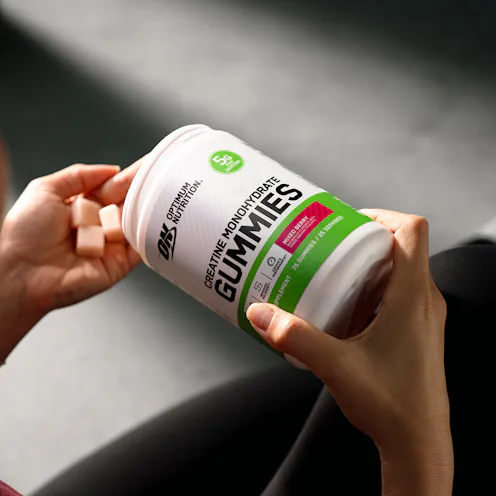
Optimum Nutrition Creatine Gummies are one version of this. A three-gummy serving provides 5g of creatine monohydrate with nothing to mix. They're naturally flavored, gluten-free, contain 1g of sugar, and come in two varieties, pineapple and mixed berry. The practical appeal is that they survive a gym bag or a work tote, which is most of the battle.
A Wider Shift In The Wellness Aisle
Creatine isn't the only place this is happening. Walk the wellness aisle and the same logic shows up everywhere: electrolyte tablets you drop into a water bottle, single-serve greens, protein you drink straight from the bottle after a workout. Less about cutting corners than about removing the friction that quietly kills otherwise good habits.
Results come from repetition. An elaborate protocol abandoned in week two loses to a boring one you keep up for a year, every time. That's most of the reason convenient formats keep gaining shelf space, since they fit into ordinary days.
The ingredient hasn't changed. Consumers did, and the products are catching up.
Disclaimer: This article is for informational purposes only and does not constitute medical advice. These statements have not been evaluated by the Food and Drug Administration. Creatine supplements are not intended to diagnose, treat, cure, or prevent any disease. Consult a healthcare provider before starting any supplement, particularly if you are pregnant, nursing, taking medication, or managing a health condition.BDG Media newsroom and editorial staff were not involved in the creation of this content.
BDG Media newsroom and editorial staff were not involved in the creation of this content.
