Wellness
"Somatic Art" Is A Low-Pressure Way To Get Unstuck
No expectations, just vibes.
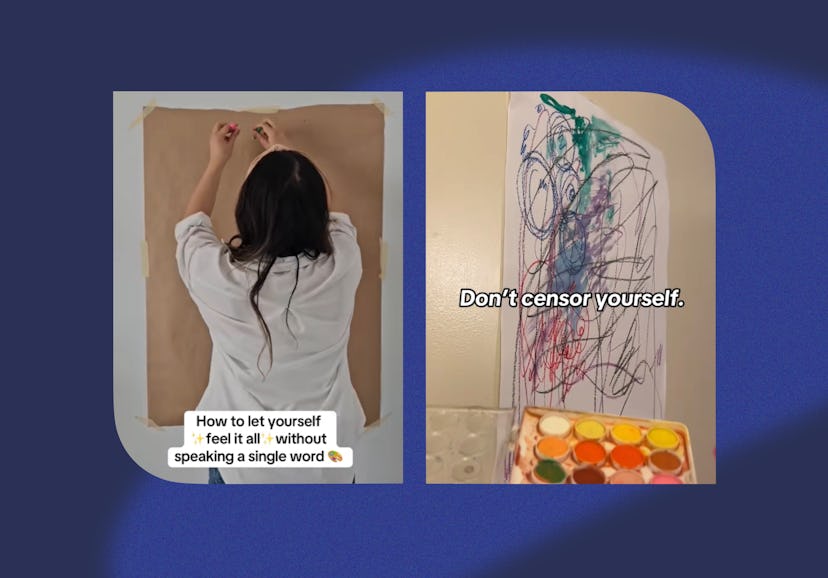
When you think about the most common hobbies, like needlepoint and knitting, so many of them involve hunching over a tiny craft for an extended period of time. While it can be relaxing to zero in on a project, especially if you’re under a cozy blanket living your best grandmacore life, it might feel even better to get up and move.
It’s why somatic art is currently trending on TikTok, where creators are showing their big, expressive artwork and sharing how it helps them release “stuck” emotions, like anger and sadness. Think scribbling all over a paper or painting sloppily on a giant canvas.
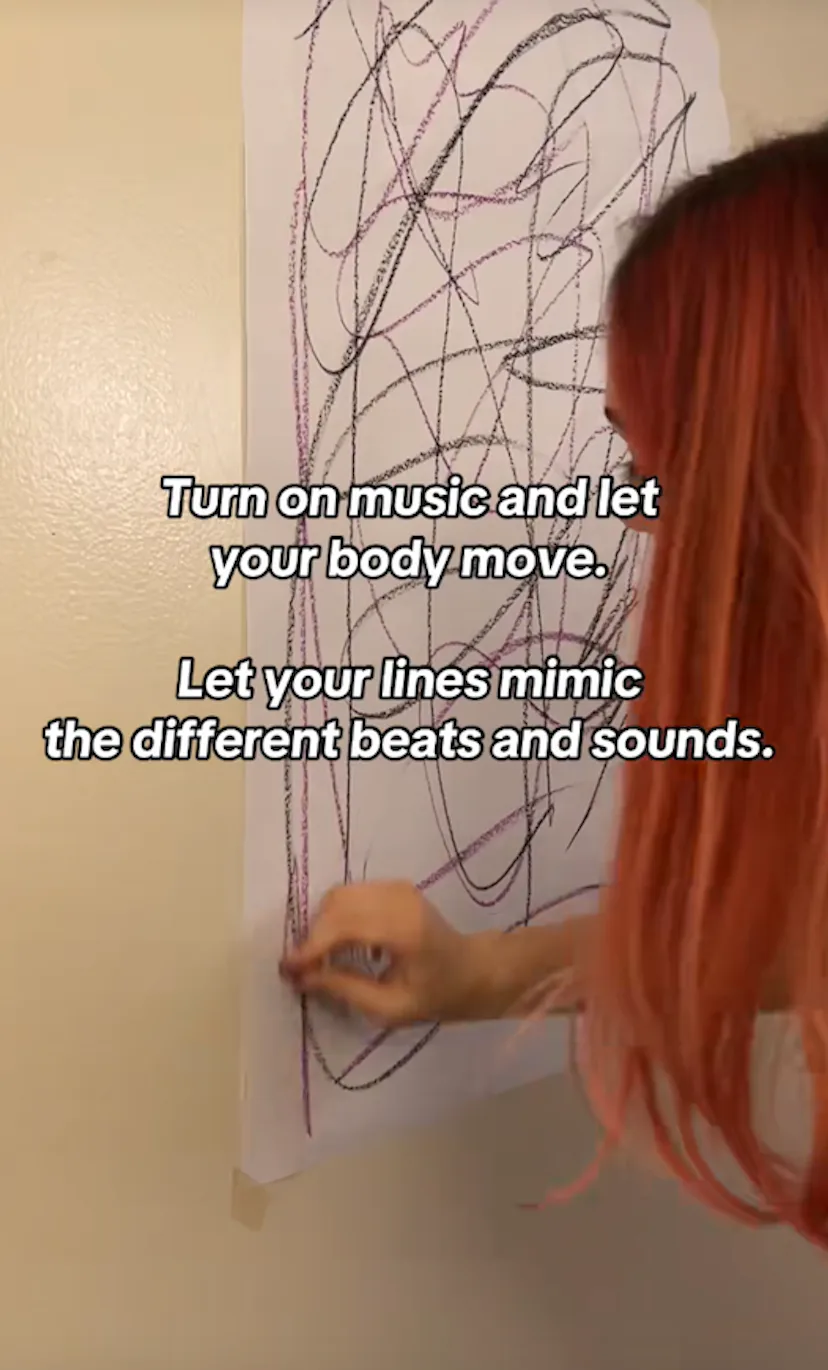
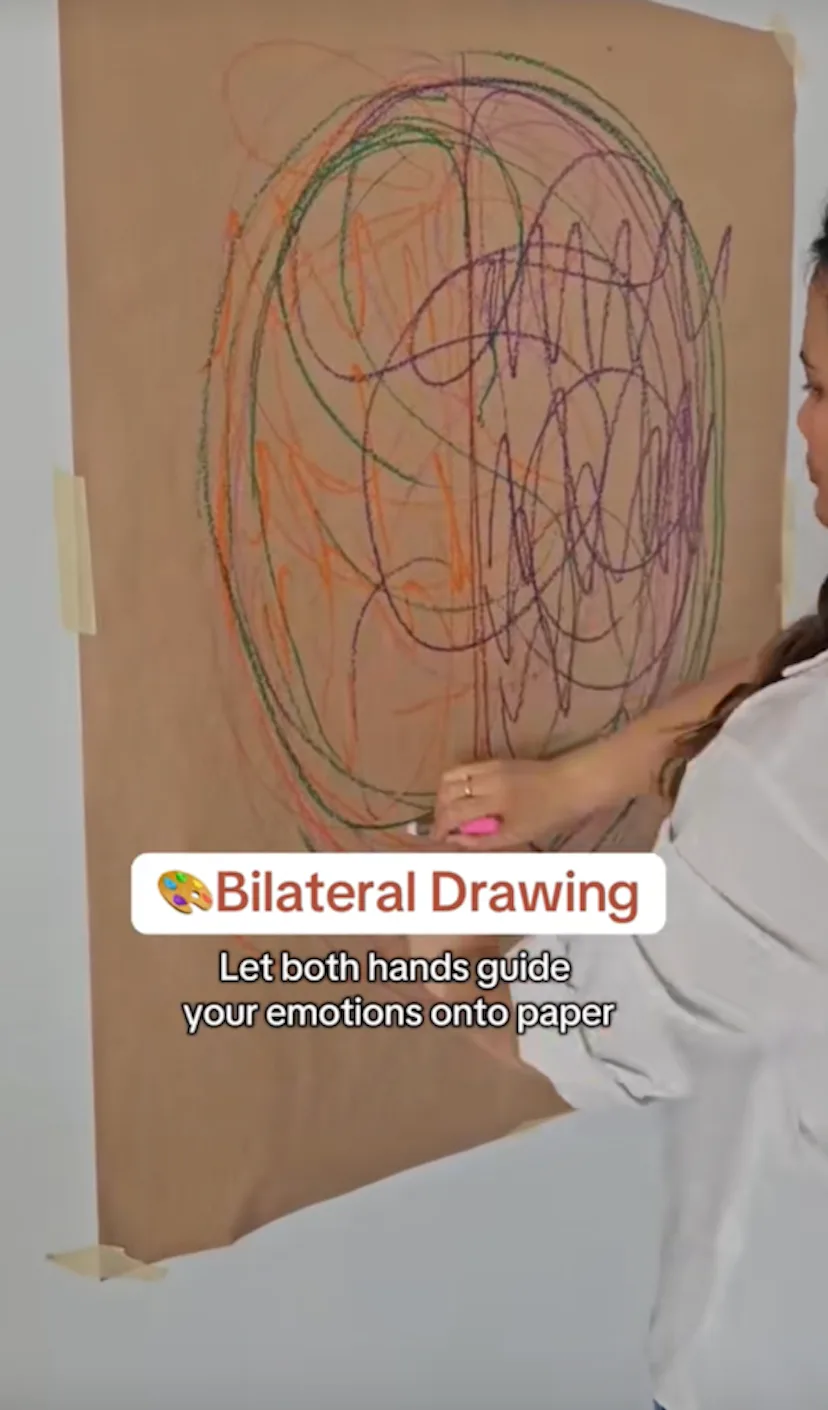
On the app, the user @art.people13, an account of art therapists, taped a piece of paper to the wall and shared what it looks like to release tough thoughts via art. “Are you having a hard time letting go?” they asked in the clip. “Let your body jump around, make big movements, scribble. Turn on music and let your body move. Let your lines mimic the different sounds and beats.”
They started with a messy scribble of pastels, then moved on to drippy watercolors, adding splashes wherever they wanted. “Let yourself make whatever comes to mind. Don’t censor yourself.” Next, they stuck on pieces of paper. “Mess up, then mess up again. Let’s keep going. Make ugly art.” Somatic art is all about letting go, moving your body, and channeling your energy into projects with no expectations. Here’s why it feels so good.
You Need More Somatic Art In Your Life
Somatic art therapy combines art therapy with somatic therapy, which focuses on the mind-body connection to heal from trauma — and you can try a simplified version of it at home. According to Chloë Bean, LMFT, a somatic trauma therapist in Los Angeles, this isn’t about creating “good” art, but about the physical sensation of making something and letting your body guide you as you express yourself.
“If often looks simple and unstructured: scribbling, painting, or making on large paper, sometimes on the floor or wall, sometimes using broad movements rather than precise detail,” she tells Bustle. “The goal isn't the planning or interpreting while you create — it's about letting the hand move and staying curious about what you are experiencing as you do it.” Sometimes, the practice can involve other body movements like dancing or singing. Anything that feels like a release goes.
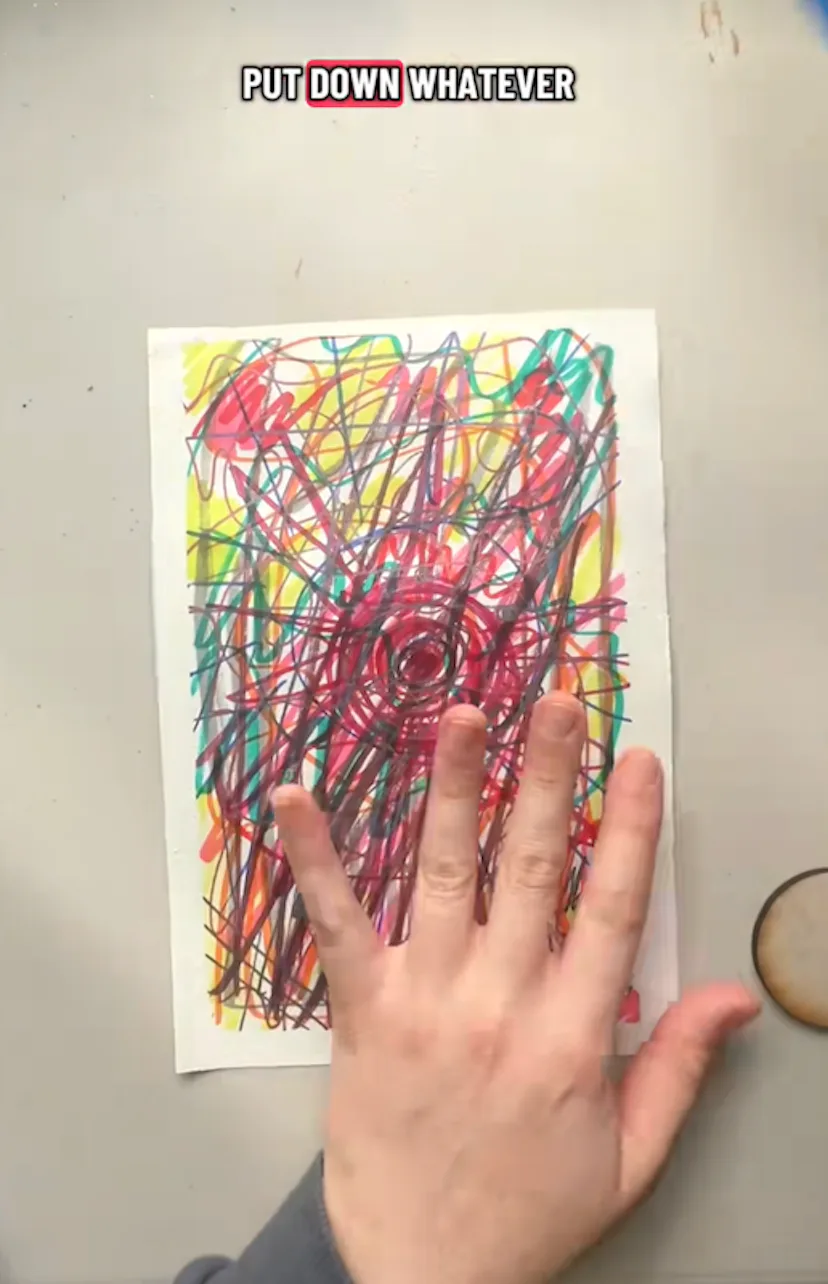
Bean says somatic art is especially helpful for overthinkers or anyone who intellectualizes their emotions, rather than simply feeling them.
“It works because creative movement engages the nervous system directly,” she says. “The coordination between hand, eye, and body gives the thinking brain a bit of a break, which can allow deeper emotional material to surface safely.” The back-and-forth movement, especially if you scribble with both hands at the same time, can also create a bilateral rhythm similar to EMDR therapy, she says, which can help the nervous system feel more regulated and present.
How To Create Somatic Art
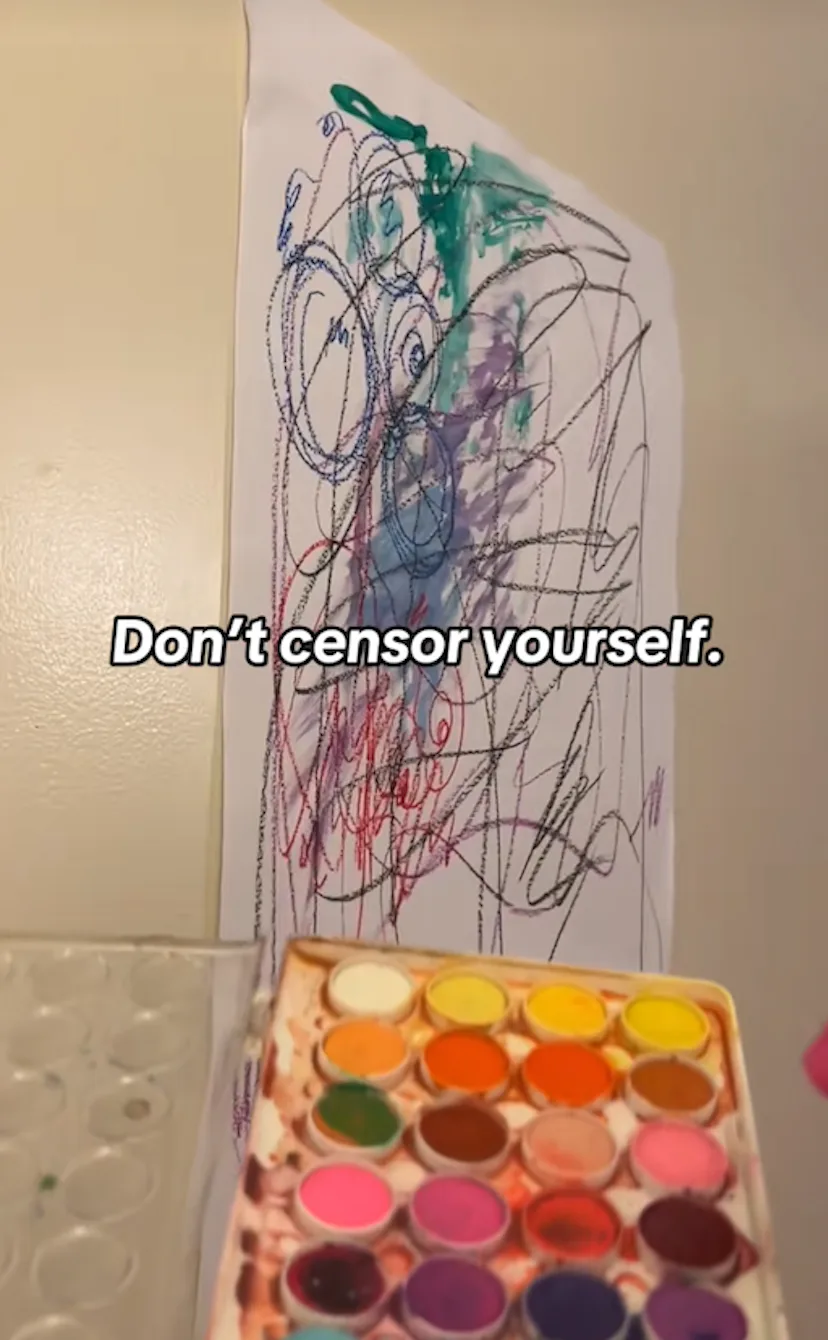
Based on all the viral TikToks, there isn’t one way to make somatic art. It can involve painting, drawing, scribbling — whatever feels good.
“Some people use it as a meditative practice or in conjunction with therapy,” Bean says, noting that it’s also a great self-regulation tool when you’re feeling upset. Doing it for five to 10 minutes can make a difference. Here’s how to give it a try.
Grab Your Supplies
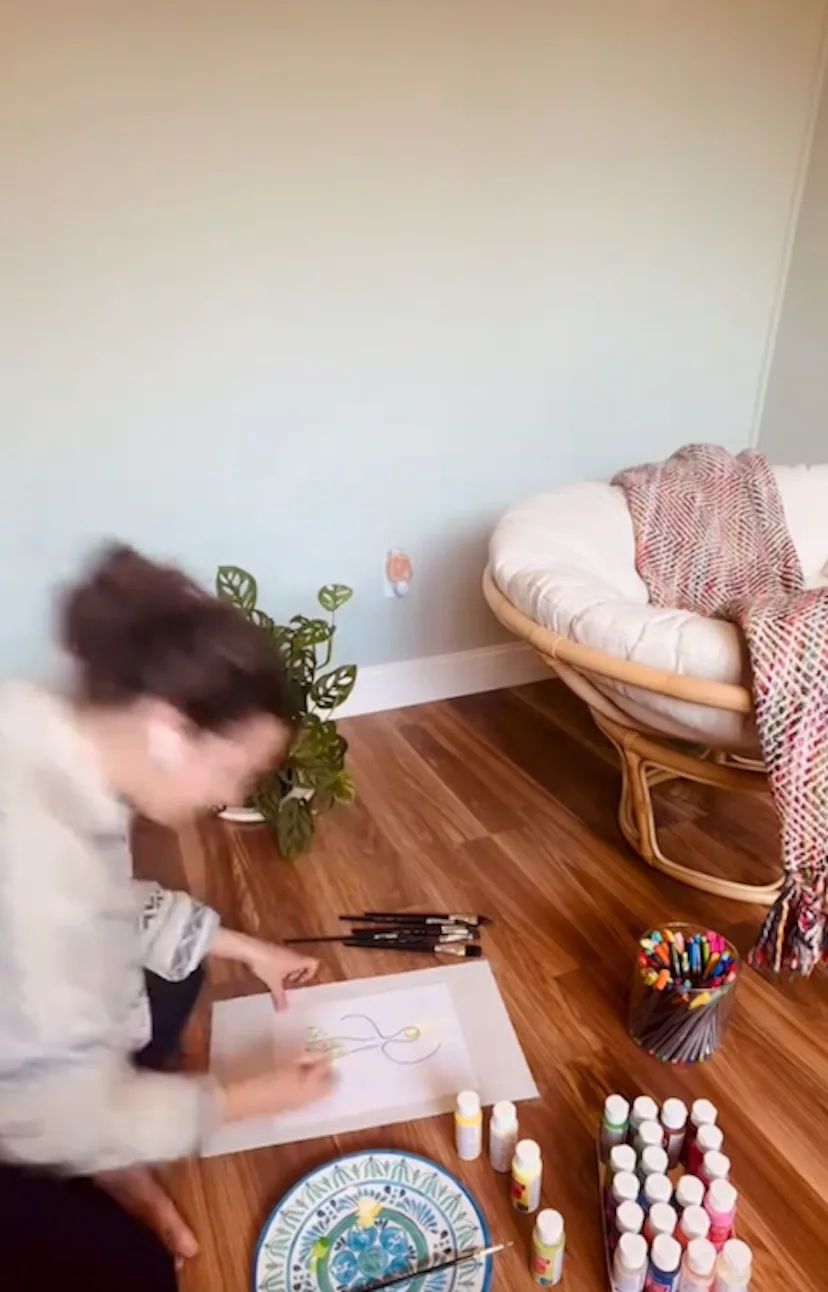
For a quick, easy somatic exercise, get a big piece of paper, some pastels, markers, paint, or whatever craft supplies you have on hand. Tape the paper to the wall so you can stand in front of it and move freely.
Don’t Think
Reach for the first color that speaks to you. “Rather than thinking about why, simply starting to trust your nervous system from the beginning will set the tone,” Bean says. Let’s say you grab a juicy red marker. Put it on the paper, press down, and see what happens.
Focus On Sensation
Since somatic therapy is all about nurturing your mind-body connection, Bean recommends focusing on how the art-making feels. Notice the pressure of your pen, how it feels to move, the speed — even the smell of the maker or paper.
Keep Moving
Let yourself move as you draw. Sway to the left, then the right. Jump up and down. Don’t edit or fix “mistakes” and try not to hold back. Like the folks that post @art.people13, you could put on music and match your scribbles to the beat or take a cue from creator @thecognitivecorner and draw with both hands at the same time for bilateral stimulation.
Notice How You Feel
After five to 10 minutes, Bean suggests taking a beat to notice how your body and mind feel, rather thananalyzing your final product. Ask yourself what you learned about yourself and note which feelings bubbled up.
“Did your inner critic pop up at all? Were you able to stay present and curious?” she asks. Maybe you cried or screamed. Maybe you focused really intensely. Whatever happened is likely just what you needed. Remember, this practice is all about releasing anger, overwhelm, and sadness by getting it out of your body and onto the page.
Studies referenced:
Czamanski-Cohen, J. (2023.) The role of emotion processing in art therapy (REPAT) intervention protocol. Front Psychol. doi: 10.3389/fpsyg.2023.1208901.
Source:
Chloë Bean, LMFT, somatic trauma therapist
