Color Correction
Everyone Is Recovering From “Blonde Blindness”
A celebrity colorist explains why blonde hair is getting warmer, softer, and shinier.
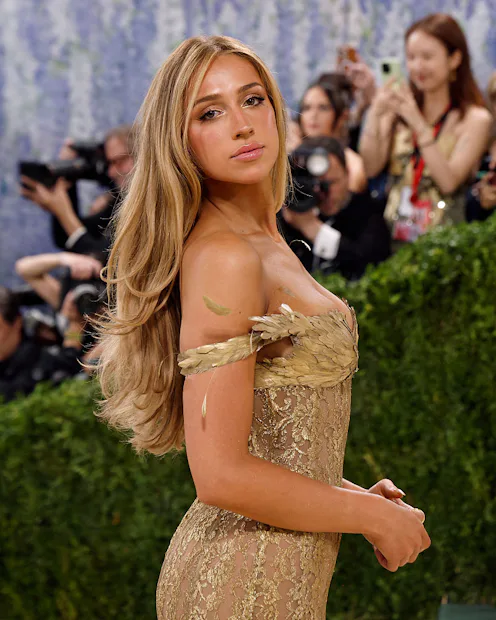
It’s basically a canon event at this point: You go into the salon for a few highlights, and two years later, you’re scheduling root touch-ups every six weeks to maintain a platinum blonde that’s one lift away from looking white. Somewhere between point A and point B, going “a little brighter” turned into your own personal Sisyphean task.
Online, the phenomenon has been dubbed “blonde blindness” — the point where someone becomes so committed to going blonder that they stop noticing when their hair starts looking flat, fried, or aggressively ashy. But according to Emaly Baum, celebrity colorist and owner of Beauty Supply in New York City, the pendulum is finally swinging back. Before you schedule your summer highlight appointment, keep reading for everything to know about blonde blindness, including how to avoid it.
Do You Have “Blonde Blindness”?
If blondes have more fun, blonde blindness is what happens when the fun goes too far. “You're just trying to be as blonde as you can be and you've lost sight of what makes it look expensive — the dimension,” says Baum. “It's overprocessed and completely fried.”


A telltale sign that you’ve pushed your blonde past the limit? Instead of illuminating your face the way a fresh color should, it starts looking flat, dull, and chalky — sometimes even slightly grayish. According to Baum, that’s what happens when people overcorrect for warmth and push too far into the ashy territory. “It’s a completely solid blonde, but it doesn’t look like bright, sunny hair,” she explains. “It looks lackluster and not shiny.” In trying to cancel out every trace of yellow, the shine and dimension that made the color look good in the first place get bleached away.


That’s usually where the problem starts: trying to make your hair cooler and ashier, even when it clashes with your skin tone. “Most people have naturally warm undertones,” Baum explains. It all comes back to color theory — if your blonde pulls too silver or violet against warmer skin, it starts emphasizing redness or sallowness instead of making your complexion glow. Unless you’re one of those rare people with naturally cool undertones, toning out all the warmth ends up leaving both your hair and skin looking flatter and duller in the process.
How To Warm Up Your Blonde


Thankfully, fixing blonde blindness doesn’t necessarily mean giving up blonde altogether. On TikTok, people are documenting their blonde blindness recovery journeys, posting before-and-afters of icy platinum and ashy tones getting swapped out for warmer, richer, more dimensional shades instead.
For people who don’t actually want to go any darker with their hair, Baum says the fix can be as simple as shifting the tone instead of the level. “You can have really blonde, bright hair, but it’s more like a baby blonde that reads slightly yellowy,” she explains. Other options — like Tate McRae’s honey highlights, Elle Fanning’s creamy golden tones, or Sarah Pidgeon’s Carolyn Bessette Kennedy-inspired blonde — all introduce what Baum describes as “purposeful warmth, not brassy.”


Even if you’re getting an all-over blonde, Baum says you should be asking your colorist for “dimension and sparkle” — the two things that counteract blonde blindness. In practice, that can look like swapping your toner, adding some lowlights, or getting a glossing treatment to bring shine back into the hair. “You want your hair to be reflective,” she explains. “It should be shiny, vibrant, and have movement.”
The biggest upside to getting over blonde blindness, though, is that you don’t have to live in the salon anymore. “People want healthier-looking hair, but they also want a good grow-out,” Baum says. “When you're not fighting against your natural undertones, whatever they may be, you're going to have more longevity between appointments.” Because, as it turns out, there’s more to life than bleach.
