Beauty
How Beauty Became Part Of The Safe Sex Conversation
What it means when an everyday makeup staple stands for something bigger.
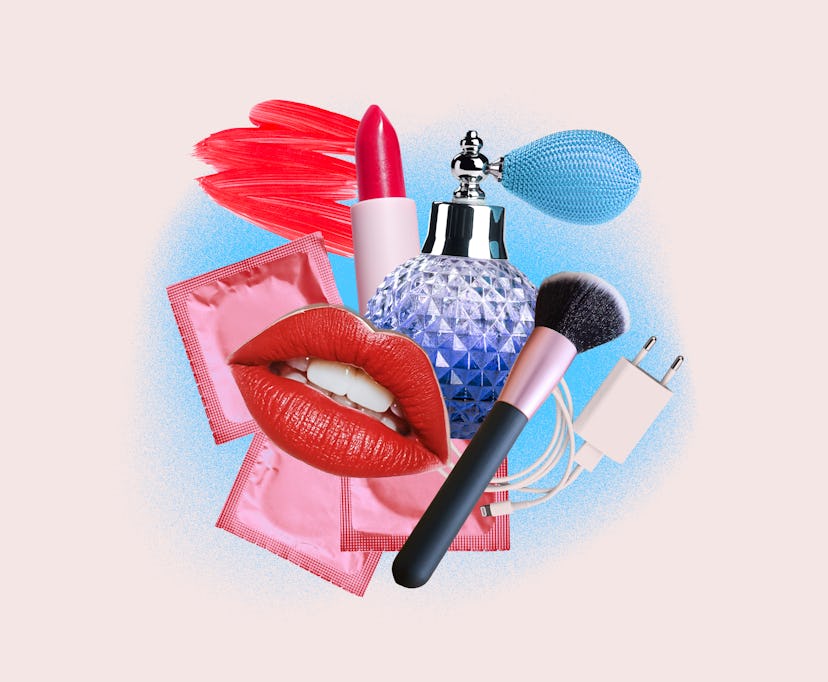
Picture this: You’re getting ready for a night out, running 10 minutes behind (as usual), and putting the finishing touches on your makeup before you call your Uber. But before you go, it’s time to stash essentials in your purse, like your lipstick, phone charger, condoms, perfume rollerball, and keys.
For most, these are the must-haves, and for good reason: They help you feel confident and prepared — after all, keeping your lip color fresh should feel just as routine as taking care of your sexual health. But such alignment of beauty and sex education is a relatively recent development that has only emerged over the last few decades, thanks in part to work put in by activists, educators, and artists. MAC Cosmetics’ Viva Glam initiative, in particular, has been a pioneer in this sort of thinking, existing at the intersection of beauty and activism — including causes that extend far beyond sex education.
The Power Of Values In Beauty
These days, the intersection of beauty and activism may not feel all that groundbreaking. Skin care brands put a portion of sale profits toward clean water, makeup behemoths support breast cancer awareness, and hair care staples help support global aid for children — all causes that most people would support. But brand backing still often disappears when it comes to taking on more controversial topics. “What beauty brands are taking meaningful stances that exist outside the constraints of tiles on their Instagram pages, or denouncing glaringly obvious morally reprehensible headlines?” says beauty creator and model Nykita Joy. “Most aren’t even doing that.”
Back in 1994, though, MAC Cosmetics was one of the few beauty companies to launch a charitable initiative when founders Frank Toskan and the late Frank Engelo established MAC Cosmetics Viva Glam. A direct response to the HIV/AIDS epidemic, the program debuted with the first MAC Cosmetics Viva Glam Lipstick, whose proceeds at the time went toward local soup kitchens and homeless shelters supporting those living with or affected by HIV/AIDS.
“I think people underestimate just how radical Viva Glam was in 1994,” says Nancy Mahon, the chief sustainability officer for The Estée Lauder Companies. “Our founders took on the HIV/AIDS crisis at a time when most brands — and frankly most people — avoided the topic entirely.
“Frank and Frank didn’t hesitate,” adds Mahon. “They created a lipstick that gave back 100% of its selling price to organizations serving people impacted by HIV/AIDS and put that message front and center. They tapped into RuPaul as our first spokesperson — a Black drag queen, someone you didn’t typically see as the face of a beauty brand at the time.”
“I think people underestimate just how radical Viva Glam was in 1994. Our founders took on the HIV/AIDS crisis at a time when most brands — and frankly most people — avoided the topic entirely.” — Nancy Mahon, chief sustainability officer for The Estée Lauder Companies
The campaign featured RuPaul in a sky-high blonde wig, red leather corset, and thigh-high red boots — a visual that stood in sharp contrast to the silence surrounding HIV/AIDS. “It created significant buzz and rallied millions of people behind the cause, which is exactly what we needed at the time,” Mahon says.
The program has been deeply rooted in support for the queer community from Day 1. “That willingness to be visible and unapologetic laid the foundation for everything that followed,” she adds.
That legacy continues today through Viva Glam’s expanded mission, which includes partnerships with organizations like The Trevor Project, whose goal is to create a world where all LGBTQ+ youth are seen, valued, and kept safe. The collaboration continues with a new $1 million donation from the brand’s Viva Glam Fund to provide free, confidential crisis support to LGBTQ+ youth.
That’s what made the difference to makeup artist and Subversive Beauty founder Niko Haagenson. “MAC has repeatedly showcased trans people, people of color, and men in makeup, which is unfortunately very rare in the beauty space,” she says.
The genius of Viva Glam, as well as other charitable initiatives to follow, was illustrating how beauty routines can be a great equalizer — applying a swipe of lipstick can be universally enjoyed by anyone. And, with the Viva Glam lipstick, you could pair self-expression with true impact — looking good, doing good, feeling good.
Beauty Activism’s Real-World Results
Today, the Viva Glam mission feels more pressing — and more expansive — than ever. The brand contributions are even more meaningful in light of new data about the rate of global HIV infections — which, according to UNAIDS 2024 report, have flatlined rather than declined. MAC Cosmetics’ contribution and reach is still focused on educating the public on safe sex practices, but now includes raising awareness around testing, PrEP access, and community resources.
In turn, it’s earned dedicated fans across the industry. “My obsession with and admiration for MAC Cosmetics comes from their willingness to platform alternative and queer voices,” Haagenson says. “There is no other mainstream beauty brand that has the guts to provoke society like MAC has.”
At the same time, the program has evolved into a wider platform for equity, guided by four philanthropic pillars that address stigma-free health access, racial justice, bodily autonomy, and environmental sustainability — recognizing that health outcomes are inseparable from social and structural conditions. According to MAC Cosmetics’ 2026 Impact Report, the brand has served more than 60 million people since 2013 and raised more than $540 million since the initiative’s inception. And in the past year, Viva Glam has donated more than $4.5 million to nonprofit partners across the world.
“There is no other mainstream beauty brand that has the guts to provoke society.” — makeup artist and Subversive Beauty founder Niko Haagenson
Beyond money, Viva Glam has also partnered with more than 60 NGOs worldwide, from HIV/AIDS service organizations and LGBTQ+ youth groups to racial justice initiatives and environmental nonprofits. The through line is action, not messaging — treating representation, inclusion, and care as ongoing commitments rather than seasonal campaigns. “I judge beauty brands by how often they donate and advocate for marginalized communities,” says Haagenson, “rather than what they say.”
“If Viva Glam has proven anything, it’s that meaningful social impact requires leading with heart and having the bravery to act when it’s uncomfortable,” says Mahon. Real change, she emphasizes, comes from sustained investment in communities and work that lives far beyond a single marketing campaign.
