Bustle Exclusive
Leo Woodall Rejects Your Internet Boyfriend Label
The Vladimir star opens up about working with Rachel Weisz, age-gap romances, and that bizarre ending.
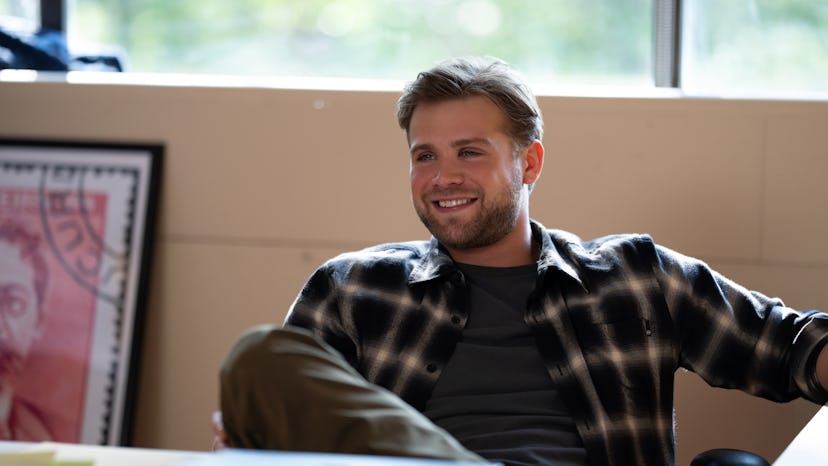
Leo Woodall has charmed many people both on- and off-screen, from nearly the entire White Lotus Season 2 cast (including his real-life girlfriend, Meghann Fahy) to Bridget Jones herself. Just don’t call him an internet boyfriend.
“I don’t really think it’s true,” he tells Bustle over Zoom, laughing from his home office. “If I pay attention to it, it’s kind of funny, but it’s not really a thing.”
Despite his objections, the 29-year-old actor’s new Netflix series, Vladimir, won’t reset that reputation. Woodall plays the titular role, a young author who becomes a literature professor and quickly captivates his older married colleague (Rachel Weisz), whose name is kept a mystery. Weisz breaks the fourth wall and talks to viewers, filling us in on the dalliances her husband John (John Slattery) carries on with students, and letting us see her deepest desires when it comes to Vladimir.
“There is an allure about him,” Woodall says. “There’s a warmth to him, and something new about him, but also it’s the timing. The backlash of her open relationship with John is really starting to take on a new shape, and I think he’s a sort of exciting escape from it too.”

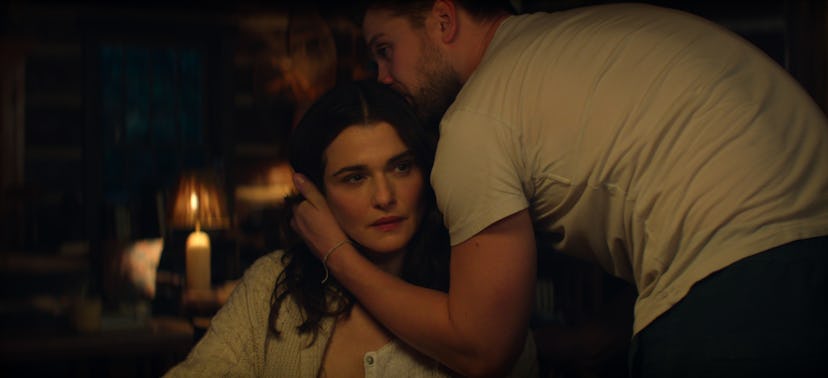
Spoilers for Vladimir ahead. Her infatuation turns into obsession in the last two episodes, when Weisz’s character takes Vladimir to her remote cabin in the woods for a writing session — with other plans, of course. To keep them from going home and facing reality, she drugs his drink and chains him into an armchair, then says he drunkenly asked for domination when he wakes up, before informing him about their spouses’ recent encounters.
Despite her actions, Woodall doesn’t see a straight-up stalker à la You’s Joe Goldberg in Weisz’s character, even with an ending that puts Vlad’s life in jeopardy. She seems to regret drugging him and, in a panic, straps him to a chair to keep him propped up until he gets sober.
“I think what her character goes through is a lot more relatable and human,” he says. “I mean, it does unravel to some extremes — she chains him to the chair, but what’s so funny is that she’s got a very rational reason for doing that. Nothing that she does comes out of any malice.”
Below, Woodall opens up about working with Weisz, exploring age-gap romances on TV, and that wild ending.
What drew you to this show and the role of Vladimir?
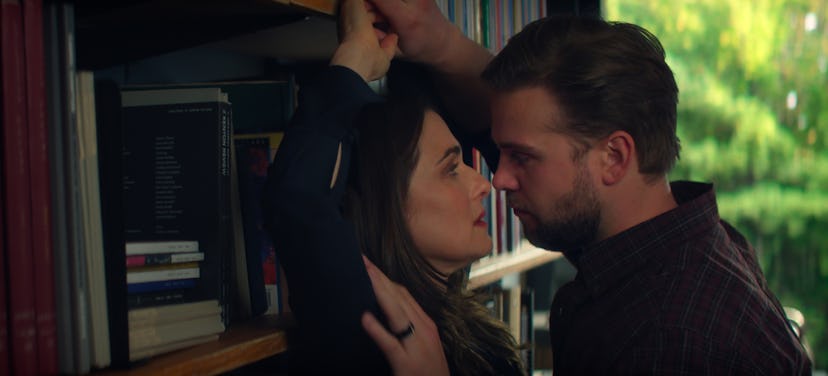
I thought it explored the crazy side of being human. The way that Rachel Weisz’s character unravels and starts to interpret things that Vladimir does or says, which could mean absolutely nothing, but in her mind, she’s going, “Well, that obviously means he loves me, or he hates me, or there’s no hope.”
Tell me about the dynamic between you and Rachel Weisz on set.
She loves being spontaneous, which is how I like to work, so we made a good pair in that department. Our characters’ dynamic came quite naturally. We didn’t really rehearse it or have to try too hard to find it. It came down to both of us coming prepared and being open to the other person.
Things really take a turn in the final two episodes. Was it uncomfortable being chained up?
Desperately. It wasn’t a very comfortable chair, and one arm had to be fully restrained, but it was really quite funny and amusing for everyone to see me just sit there for hours in this position.
I can’t imagine. Do you think Vlad believed her when she told him that she didn’t drug him?
I tried a couple of versions of it on the day. I tried a version of not believing, but trying to convince her that I believe her. But I think showrunner Julia May Jonas felt like the version where he believes her was the best fit for the story.
In the finale, Vlad returns her desires to an extent. How deep do you think his own infatuation went, or were his actions more fueled by revenge?
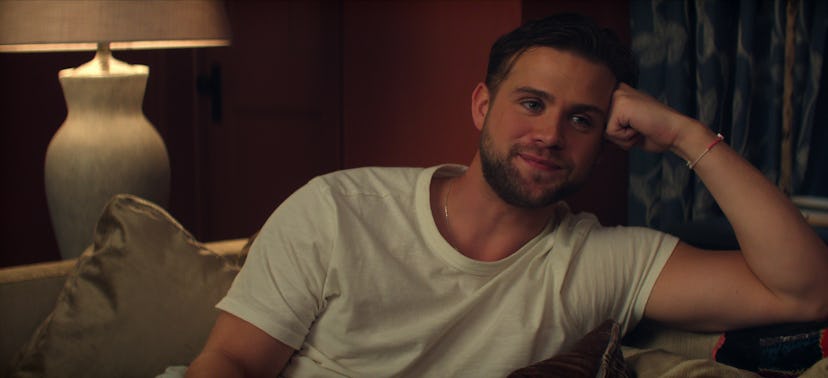
I do think it was a bit of both. We joked about the idea of telling this whole story from Vlad’s perspective and all the different fantasies that he would’ve had. When he storms into her bedroom and tells her all the things he had already fantasized about, they kind of aligned with hers. But I don’t think he would’ve done that if he didn’t have a thirst for some revenge.
I want to know your take on the ending, when Weisz’s character tells viewers that Vlad and John make it out of the burning cabin alive. Do you think she is telling the truth?
I love the ambiguity of it. There’s a world in which this dark-ish comedy becomes pretty dark, and she does let them perish, which I do think is quite funny. But ultimately, I think she is a good person and has never wanted anyone to really get hurt during this time, so I don’t think that she would’ve let them perish.
What do you think Vlad’s future holds if he does make it out of the cabin?
He’s got some patching up to do with his wife, but he’s got a book that he is writing, and it might have something to do with Rachel’s character. I wouldn’t be surprised if he wants to get the f*ck away from that town and start fresh somewhere.
What was your favorite behind-the-scenes memory from set?
John Slattery’s a friend of mine from Nuremberg, and he took me golfing on my birthday. It was my first time, and he’s a seasoned golfer. I sucked, but it didn’t matter. He was great at golf, and I learned a few things. And we would go for dinners with me, Slattery, Miriam Silverman, and Matt Walsh.
Between Vladimir and Bridget Jones, you’ve explored age-gap relationships a good amount. Why do you think viewers are so intrigued by storylines about an older woman with a younger man?
It’s the kind of relationship that has always existed but never really been portrayed that much on screen. An older man and a younger woman — that’s been explored many, many times, and it’s about time the reverse dynamic is portrayed because it’s completely normal in real life. I reckon, in time, it won’t really be a topic of conversation.
Writing is so important to these characters. Is that an outlet you would explore in the future?
When I was a kid, I used to love coming up with stories. I didn’t let that hobby flourish enough, but I think if I really gave it some time, it could be a passion of mine. I had a dream once, and I woke up and spent four hours thinking about how it could work as a movie. But then I started to write the dialogue and was like, “This is too f*cking difficult,” so I might need a lesson.
This interview has been edited and condensed for clarity.
