Viral
This Closet Decluttering Tip Feels Obvious, But So Many People Skip It
A fashion psychologist seconds the viral advice.
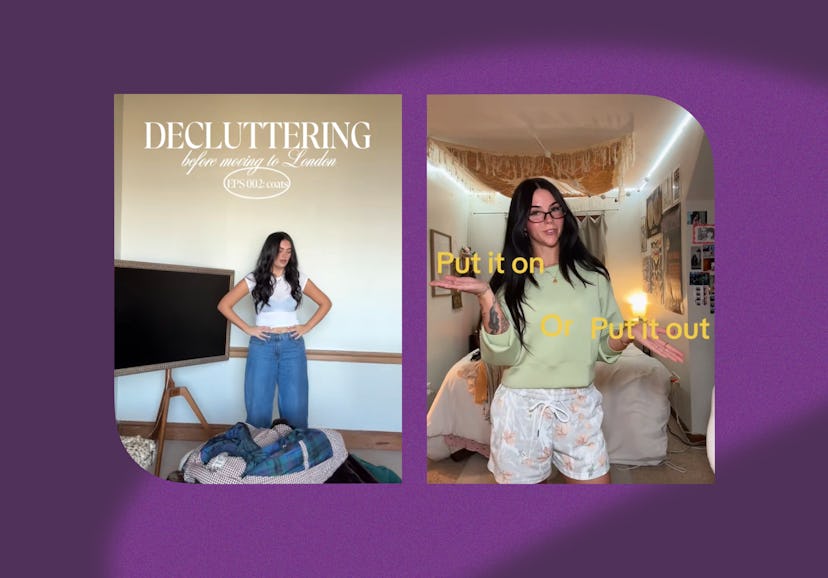
‘Tis the season for you to officially feel overwhelmed by your wardrobe. As you start poking through your hangers to assess what you have for spring, you might realize you own way too much, and yet still nothing to wear. The realization often triggers a major closet clean-out — the kind that results in a messier room than when you started.
If you’ve ever tried to declutter your closet, then you know it gets overwhelming fast. Not only do you have a lot to sort through, but it’s also tough to narrow things down for the donation pile. Does this pencil skirt look good? Are you still a fan of florals? Will you ever actually wear that trench coat? You might spend hours in front of the mirror as you hold up each item, but ultimately give nothing away.
On TikTok, many creators are going through the same process right now, but they added a step that helps them make more headway. Instead of just looking at their jackets and jeans, they put them on. Literally, they try on every single item they own while decluttering. It sounds obvious, and yet it makes all the difference.
On March 11, creator @mary_skinner went through her wardrobe piece by piece. “Today I’m trying on every single coat I own,” she said in the viral clip. “I didn’t realize there was this many!” As she tried each item on, she could easily see what she liked and didn’t like, and ultimately was able to part with quite a few. Here’s what to know about trying everything on while decluttering, and why this technique works.
Why Decluttering Is Draining

According to Sarah Seung-McFarland, PhD, a licensed psychologist who specializes in fashion at Trulery, closets are difficult to declutter because clothing carries so much emotional meaning.
“Pieces may represent memories, relationships, or even versions of ourselves we once identified with, so letting them go can feel like losing part of that story,” she tells Bustle. This is why you might hang onto that sweater from college even though it isn’t your style anymore or a dress you bought for your first job. “People are often sorting through memories and identities, not just clothes,” she says. It’s why you give up and put everything back on the rack.
There’s also the “I might need it someday” factor. “Clothing can represent aspirations, or the life we imagine we should be living, which can make it harder to assess what actually fits our lives now,” Seung-McFarland says. There might be a pair of overalls you hope to wear to a pottery class one day, or a black leather skirt that feels like some version of you, even though you never actually reach for it.
Of course, it’s possible you own way more than you realize, and the sheer volume puts you off. You might also feel stressed every time you look at your closet because it’s a mishmash of aesthetics that have gone viral or microtrends of years past, and you aren’t sure which one feels most “you.” It can result in a messy wardrobe that you just don’t know what to do with.
How To Declutter Your Closet

In a series of TikToks called “Put it on or put it out,” a creator went through her closet section by section and tried on every single piece. In one post, she tried all of her skirts. By wearing them all, she was able to see which items made her feel good and which ones have been rotting in her closet for a reason.
Some didn’t fit, some weren’t her style, and some were only nice in theory. It’s why putting your clothes on, versus just holding them up to a mirror, makes such a difference. “Trying on each piece moves people from imagining how something might fit their life to actually experiencing it in the present,” says Seung-McFarland.
“Reduce the stress of getting dressed.”
To see the full vision, you might even want to put an outfit together. “In wardrobe consultations, I also encourage people to think about their current routines and goals,” she says. “If a piece no longer fits the life you are living, or the life you are working on moving towards, that can be a helpful signal when deciding whether to keep it.”
If you’re still stuck, some creators recommend wearing those “what if?” clothes out of the house for the day. If you’re not sure about a sweater or skirt, wear it to work, out with friends, etc. See how it performs in everyday life. If you don’t like the fit, donate it. If it’s itchy, let it go — even if it’s really cute. This is also a helpful way to fall back in love with a forgotten item and actually put it to use.
A final motivator, Seung-McFarland says, is to think about how good it will feel to have a clean closet — one that’s organized and full of only things you love and use. “When closets or environments in general feel orderly, people tend to think more clearly and experience less mental fatigue,” she says. “A closet that reflects who you are now can make daily routines simpler, and reduce the stress of getting dressed.”
Source:
Sarah Seung-McFarland, PhD, licensed psychologist, founder of Trulery
