Love
The "48-Hour Rule" Is A Game-Changer For Relationships
Nip petty arguments in the bud.

It’s been a week and you’re still stunned that your partner had the audacity to watch the latest episode of Traitors without you. They know you love the show. You usually watch it together. Why would they betray you like this?
Though it seem like a reasonable reaction, some people on TikTok have advice for you: You have two days to get over it.
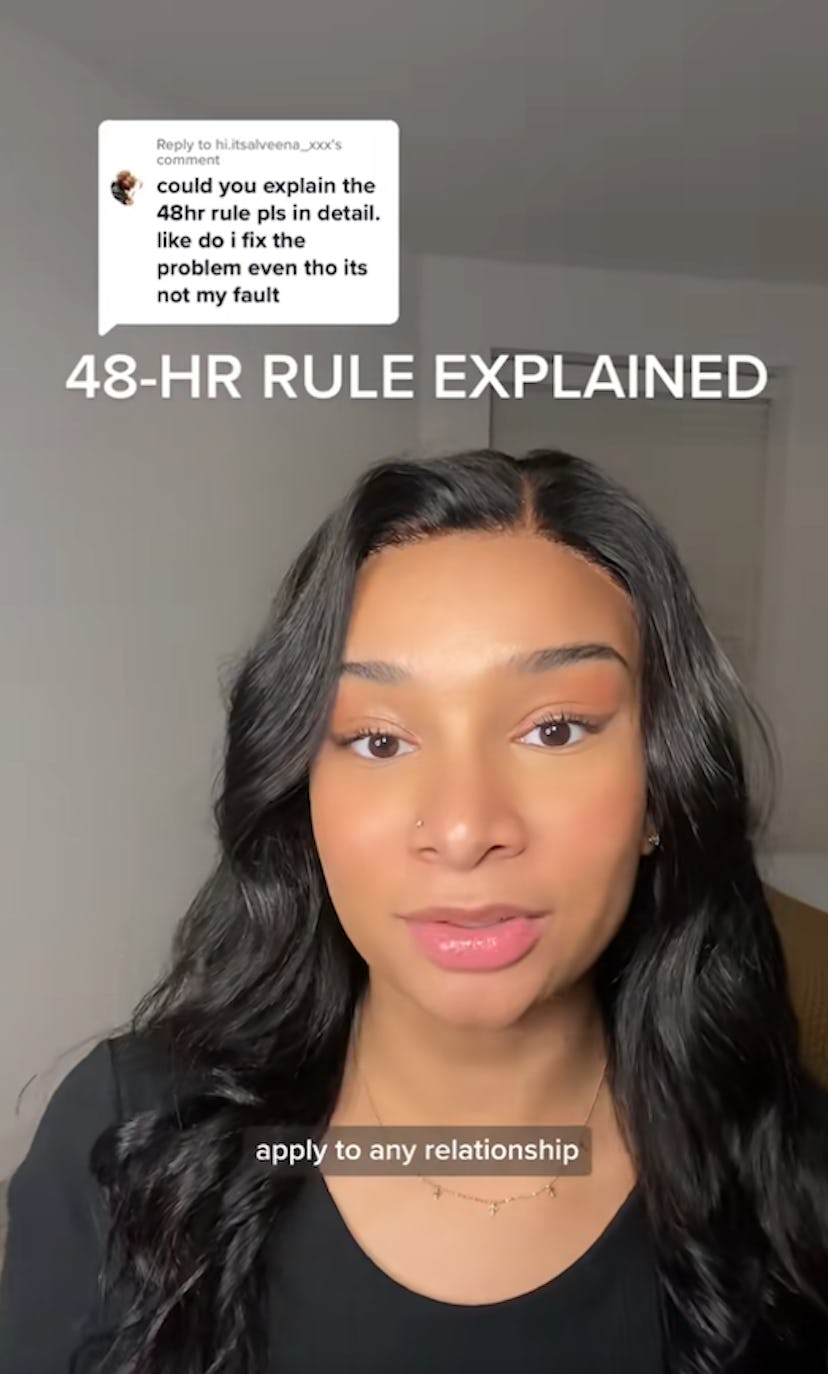
The viral “48-hour rule” suggests a time limit for bringing up these types of issues within your relationship. “You have 48 hours to reflect on it and address it, or you let it go,” said creator @taneamariee. If you don’t bring it up within that time period, you move on.
This rule is designed to keep your personal life running smoothly. Under the video, one commenter wrote, “That’s a good way to make you more assertive and vocal about your needs. I think this will really help passive aggression.” In the Traitors situation, you would tell your partner that you were upset, and then ask to watch all future episodes together. Speaking up and asking for a game plan can help you stop stewing.
While this rule doesn’t apply as seamlessly to larger issues, it's a nice reminder to address everyday problems before they get blown out of proportion. Here’s why relationship experts love this hack.
Why The 48-Hour Rule Works
According to Jerilyn Adams, LPC, a therapist and owner of Totality Counseling, it’s not uncommon to keep things to yourself when you’re upset, especially in relationships.
Whether you’re still processing, trying to play it cool, or hate conflict, you might let annoyances slide for days or weeks at a time. “It’s not fun to have tough conversations, and it can sometimes feel like it’s easier not to say anything in the moment,” she tells Bustle.
The thing is, when you don’t address problems as they happen, resentment can start to build. “A lot of time the same or similar issues can continue because the other person doesn’t know it’s a problem,” she says. “And even if the issue doesn’t repeat, things can get stuck with us if we don’t address them.”
Resentment can eventually show up as passive-aggressive comments, anger, or feeling like your needs aren’t being met, and it doesn’t bode well for your connection.

“The 48-hour rule can help because it pushes you to take time to get clear on how you feel in a timely manner so that you can share it,” she says. If you don’t address the issue in the exact moment, that’s fine. This is about giving yourself a beat to process why you’re upset. You might relax and realize it’s no big deal. Or you might hone in on exactly what you need to explain. A quick, “Hey, about the other night...” is often all it takes to clear things up.
Waiting longer than 48 hours can mean forgetting important details or misremembering exactly what happened. By keeping your complaints within this window, you can have a concise chat, nip it in the bud, and move on before things get worse than they need to be.
According to @jfabfindingauthenticity, this hack also prevents you both from bringing up things that happened six months ago at seemingly random moments. Pretending everything is fine is tends to mean it’ll come pouring out during an unrelated argument six months down the line. The 48-hour rule helps prevent that.
When To Give It A Try

To address what’s nagging you, Adams recommends bringing it up during a casual chat. “This doesn’t have to be a ‘we need to talk’ situation,” she says. “Weaving it into a more normal conversation is more disarming and collaborative.” Share what felt off and what you’d like to change. Your partner will likely be glad you said something.
Not sure how to put your thoughts into words? “Journaling is a great way to reflect and process things when you are unsure of exactly how you feel about something,” Adams says. “If you happen to have a therapy session falling during this time, that’s a great way, too.”
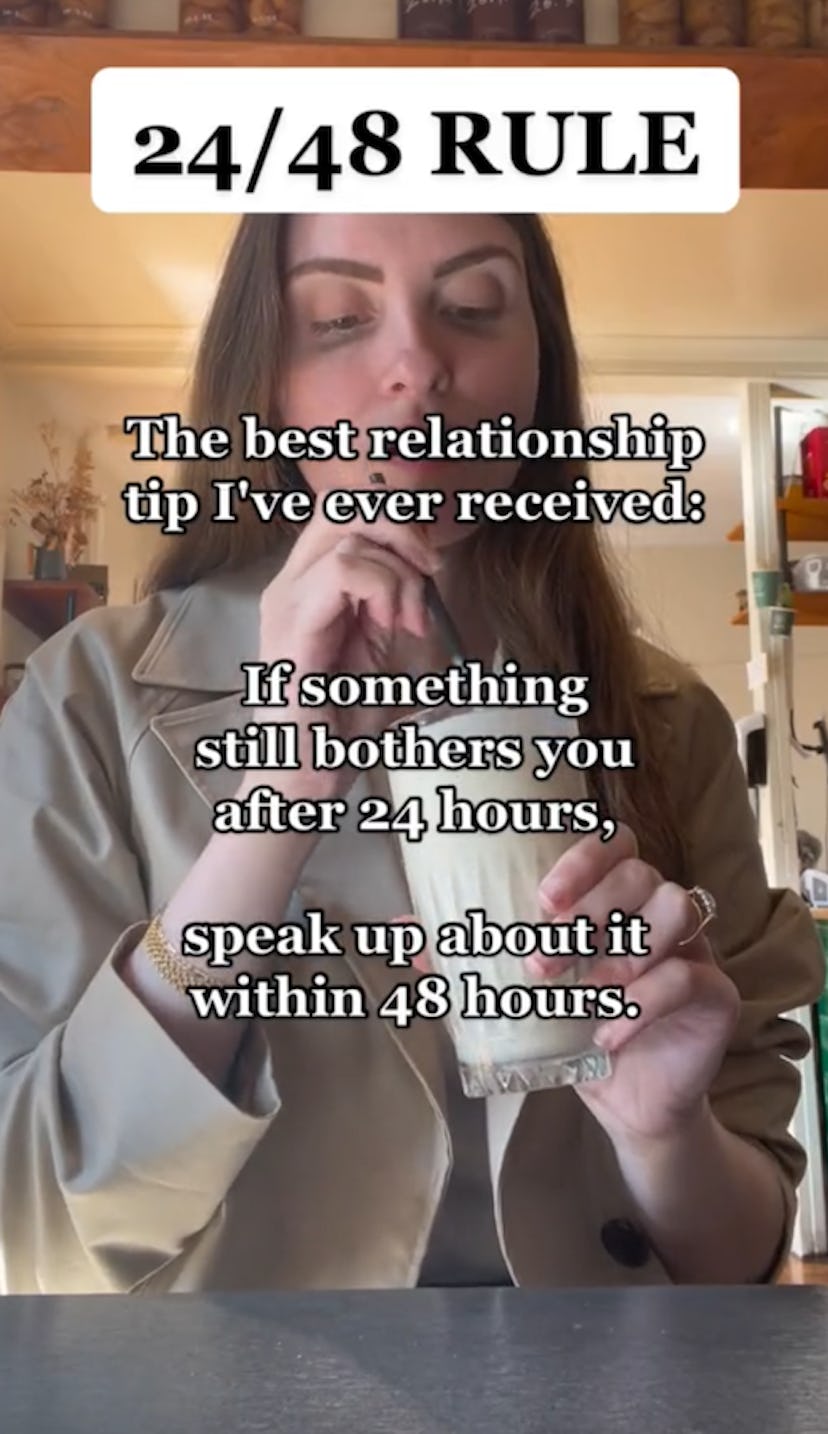
If the 48-hour window passes, that’s your cue to take a deep breath and truly let it go. If you don’t want to talk about it, release it from your mind. It likely wasn’t that big of a deal, and you deserve to move on. Spare yourself the mental replays.
The only time the 48-hour rule doesn’t apply is for bigger issues that often take longer to process. “This rule is a good thing to aspire to, but definitely wouldn’t work in every single situation,” Adams says. Some problems require more thought, longer chats, and serious reflection, and in those cases, it’s OK if you can’t forget about or resolve it all in 48 hours.
Otherwise, though, quick, concise communication is key.
Source:
Jerilyn Adams, LPC, therapist and owner of Totality Counseling
