Beauty
Club Kid Beauty Is Messy, Gritty, & Finally Back
Once a form of rebellion in ’90s nightlife, the intentionally bold makeup style is resurfacing on TikTok and beyond.
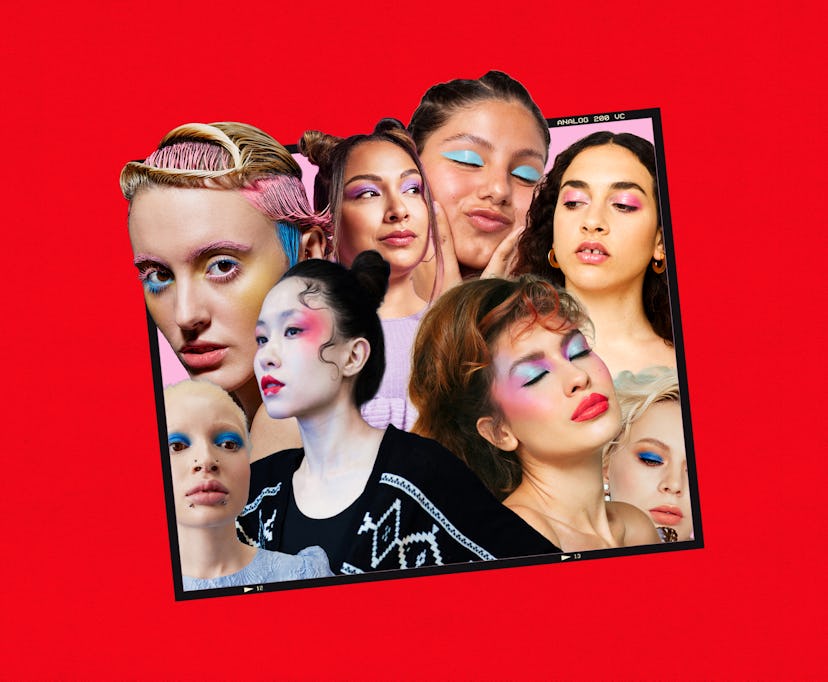
Makeup is algorithmic these days: a YouTube tutorial here, a TikTok GRWM there. Every micro-trend is swiftly dubbed (“Italian summer nails” or some such), and the most elaborate looks are often confined to the wearer’s own home — all dolled up and nowhere to go. But before some of today’s beauty influencers were born (the late ‘80s and ‘90s, let’s say), full beats were meant to be flaunted in public. In those years, no group burned brighter than the club kids, whose visual rebellion through makeup signaled a sense of freedom against the somber backdrop of the AIDS epidemic.
“You always had a character you were going to portray,” recalls Terry Barber, global director of makeup artistry for MAC Cosmetics.
Some recurring archetypes? Straight guys in frilly blouses with eyeliner, looking a little like pirates. Their girlish counterparts, exuberantly glamorous, with pinned-up curls and heavy rouge like “a shipwrecked Marie Antoinette,” Barber says. Debbie Harry disciples with peroxide-bleached hair and coal-black eyeshadow. And, of course, gender benders — “we owned the term,” Barber says — with white-powdered faces, New Wave neon accent colors, and blush swept up to the temples, drag-queen style.
Club kids weren’t just playing dress-up, though. They were building a universe with their own rules, where the only faux pas was looking ordinary. (Oh, and carrying a camera. “People would think you were a tourist,” Barber says.)
“There was a beautiful amateurishness to it,” he says. “It looked raw and unfiltered, and that’s why it looked so cool.” By contrast, today’s clean girl aesthetic — airbrushed and cutesy — demonstrates just how manicured makeup has gotten since. But that impulse toward imperfection is bubbling back up.
From smudged black eyeliner to skinny brows and blurred lips, the emphasis in beauty is once again taking on a gritty, DIY edge. In many ways, it mirrors the original club kid ethos: When the world feels restrictive, makeup gets louder, bolder, and defiant.
Who Were The Club Kids?
The late ‘80s and early ‘90s marked a golden era of New York City nightlife. Geoffrey Mak, author of Writing on Raving, frames the scene during that time as having two parallel lineages: the club kids of Manhattan and the ravers in Brooklyn.
On the scrappier side of the East River, crowds congregated at illegal warehouse parties, like the Storm Rave series thrown by brothers Adam X and Frankie Bones, who DJed some of the era’s biggest events. It was “nerdier, less aspirational” than the club scene, Mak says — much more focused on music than style. “Meanwhile, club kids would spend weeks on their looks and never repeat one.” Manhattan’s playgrounds included the clubs Limelight and Paradise Garage.
Nights out were themed productions where every detail from the guest list to the dress code was meticulously planned. It was carefully curated chaos. “A lot of it looked like drugstore makeup — mismatched foundations, blush that was too bright — but that made it subversive,” says Barber.
Beyond the extravagant glitter shadows and statement lips, what made the club kid scene feel so mythical was its sense of being in the know. Discovering parties required effort — sometimes spotting flyers, sometimes getting a tip from a friend. Pre-internet, there were only a handful of cool publications that covered these events. “That was the only way to find out about things — it was possible to have a secretive nightlife culture,” Mak says. Barber echoes that: “The only photos that exist are from magazines.”
Rebellion Through Makeup
In spite of — or perhaps because of — the ongoing AIDS epidemic, club kids doubled down on creativity and celebration. Parties became a refuge — joie de vivre in defiance of an outside world that was increasingly hostile to queer people. “Communities got tighter,” Barber says. “They went to battle — not violently, but by being more hedonistic, more beautiful.”
Today, that experimental energy lives on, albeit in a new socio-political context. Advances like PrEP (an HIV prevention medication) have ushered in what Mak calls “the second wave of the queer sexual revolution.” Forming connections at parties feels safer than ever. Alongside it, a new wave of club kid makeup is brewing.
The Return Of Club Kid Beauty
In the years since, Barber says that beauty became both competitive and monotonous. “Everyone had the same face from a YouTube tutorial,” he quips. Ironically enough, the very same social media platforms that killed club kid beauty in the 2000s and 2010s are the ones propagating it again. Influencers show off nude lipsticks, bleached brows, and pastel shadows — and in a matter of minutes, their followers know exactly what’s trending in basements and warehouses today.
Think smudged black eyeliner — like MAC Cosmetics’ Feline Eye Kohl, rubbed into the waterline with a finger. Or a concealer lip, à la the brands’s recently revived Lip Erase, a base for bolder colors, and Folio, a grayish-nude shade that Barber — a MAC Cosmetics store clerk in 1999 — sold to Angelina Jolie while she was filming Girl, Interrupted. “The original Fleshpot was basically a Band-Aid lip, and I loved it,” he remembers. Another lip trend that’s been unearthed from Limelight’s basement? Blurred edges. “You might stain your lips red and then smudge it with your finger so it looked like you’d been doing something unspeakable,” he adds.
Other revival trends include skinny brows, chalky eyelids — “white on the brow bone, as long as it isn’t frosted,” says Barber — and matte skin, “but with life, like velvet.” Drag remains a major influence. “Those techniques are useful even when you’re not doing drag makeup,” Barber says, pointing to theatrical eyeshadow, defined brows, powdered faces, and glittery pops of texture. The difference between the club kid movement today and its ancestor? “It’s grunge in spirit, but more polished because the products are just better,” says Barber.
Finding Community
The beauty industry and club scene are inherently intertwined with LGBTQ+ communities. MAC Cosmetics, for example, has been funding AIDS research since 1994 by donating all proceeds of their Viva Glam collection to the cause. (Today, it also supports organizations advancing sexual, gender, racial, and environmental equality.)
In Bushwick, the neighborhood at the heart of Brooklyn’s current party scene, political tracts about trans solidarity are issued at the door, and mutual-aid donations are collected for community members in need. “The thing about club culture is it's very local, and so you get people involved in politics on a local level,” he says. “I don't think the club is inherently political, but the fact of it as community-building is political. It’s one of the core places where queer and trans people can meet today.”
That’s why, ultimately, the new wave of club kid beauty isn’t just about nostalgia. It echoes the same principles that made the original era so iconic: a spirit of resistance and liberation, both on and off the dance floor. Or, as Barber puts it, “People are unified by one idea: They don’t want to be normal.”
