Losing It
Why The “Fall Shed” Is Suddenly All Over TikTok
A trichologist explains the seasonal hair phenomenon.

Fall lives up to its name in more ways than one. The leaves start dropping — and, for most people, so does a little extra hair.
“I was panicking last night in the shower actually,” one TikTok user commented on a video about seasonal hair loss. “I’m always losing hair but this last week has been insane,” wrote another. A third person put it more bluntly: “I’m shedding like a dog.”
“It’s something I see in my salon every year,” says Tina Mui, trichologist and co-founder of AWARE Hair. “Clients will come in around September or October and tell me they’re suddenly seeing more hair in the shower, in their brush, and on their pillow.” As scary as all that extra shedding can look, though, a temporary uptick in hair loss in the fall is actually pretty common — and usually nothing to panic about.
Why Does “The Fall Shed” Happen?
So, the extra shedding you notice in the fall usually reflects your hair’s natural growth cycle. “The hairs on your head aren’t all growing and falling out together,” Mui explains. Each follicle is on its own schedule, cycling through four phases: anagen, when hair grows; catagen, when growth winds down; telogen, when the hair rests; and exogen, when the strand finally sheds.

The timing of those last two phases helps explain why your shower drain might fill up a little faster this time of year. “One study that followed more than 800 women found that summer was the period when the highest percentage of hairs are in the telogen, or resting, phase,” Miu says. “When a follicle enters its resting phase, you won’t see that hair fall out until a few weeks or months later. So, the shedding you notice in the fall usually reflects the seasonal shift that already happened earlier in the summer.”
As for why your hair follicles seem to keep track of the seasons in the first place? Well, that part is a little less straightforward. “We know that hair cycles can shift throughout the year, but we don’t know for certain why,” says Mui. One theory is that changes in daylight hours can affect the biological clock and hormone signals involved in hair growth. “It may be a very mild remnant of the evolutionary seasonal shedding patterns we see in other mammals,” Mui says.
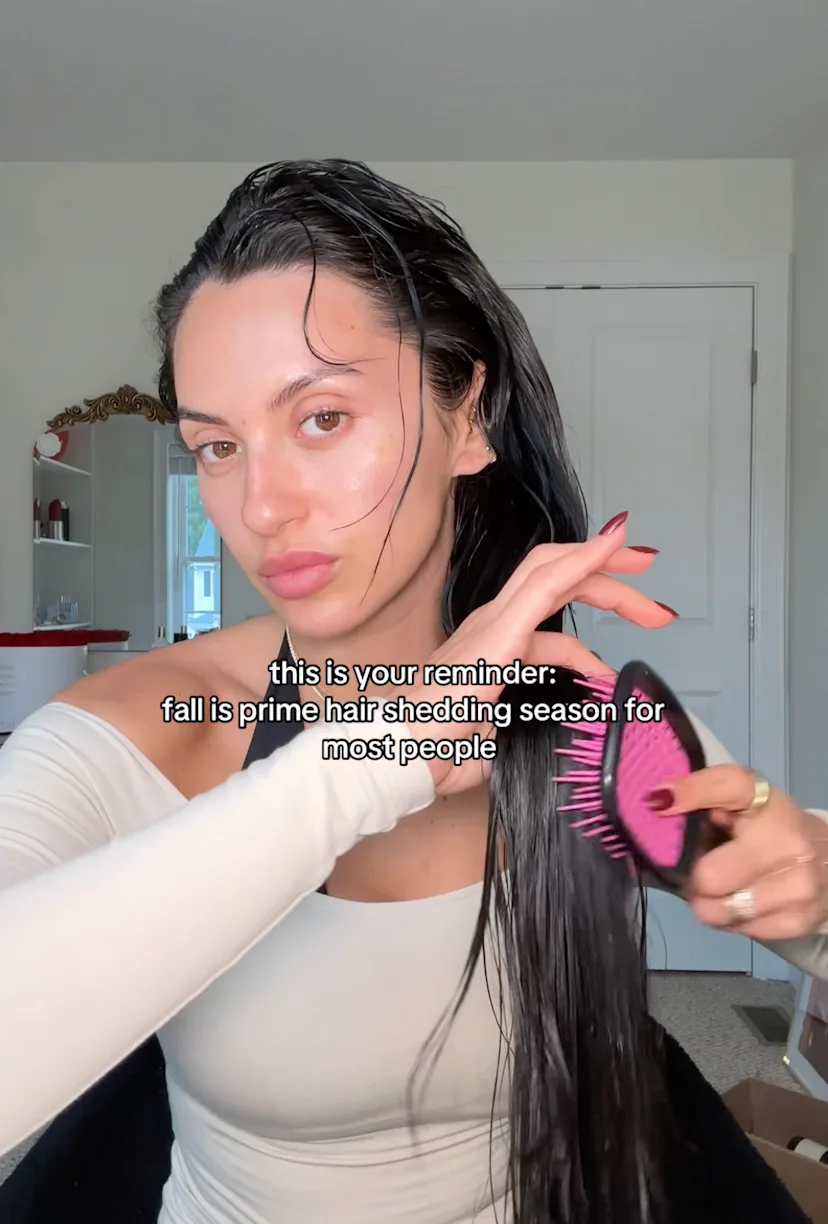
For most people, the extra shedding shows up sometime between August and October and lasts for several weeks, sometimes stretching into a couple of months. Losing around 50 to 100 hairs a day is generally considered normal, but how much you actually see at once also depends on your routine. “Someone who washes once a week will see several days of naturally shed hair come out all at once, while someone washing every day may only see a smaller amount each time,” says Mui. In other words, a little extra hair on wash day isn’t reason to panic.
The biggest clue is what happens next. “If you notice a temporary increase and then things gradually return closer to your normal, that fits a seasonal pattern much better,” says Mui. If the shedding keeps getting worse, continues heavily for several months, or your ponytail starts feeling smaller, she recommends checking in with a doctor to rule out another cause. “Hair loss caused by stress, illness, hormonal changes, medications, or nutritional deficiencies can look similar, so it’s important to monitor how the shedding changes over time.”
What To Do About Seasonal Hair Shedding
Before you start panic-buying hair growth supplements, know that the fall shed is mostly something you have to just let run its course. “If a hair has already completed its growth cycle and is ready to shed, there isn’t a shampoo or serum that can glue it back into the follicle,” says Mui. “What you can do is avoid adding unnecessary breakage or irritation on top of it.”

To do that, she recommends conditioning with a strengthening, scalp-friendly formula; detangling gently; using heat sparingly; and going easy on tight hairstyles like slick-backs. At night, sleeping on a silk or satin pillowcase and putting your hair in a loose braid overnight can also help cut down on friction.
Most importantly, though, don’t overhaul your entire hair routine — or start shampooing less frequently — just because you see some shedding. As Mui puts it: “Watch the pattern, not one scary shower.”
