Money
The "70-20-10 Rule" Will Help You Spend Your Money Wisely
Look out for future you.

It feels good to have your finances figured out — or at least a little more under control. Maybe you’re happy with your monthly paycheck, have some savings squirreled away, and finally want to start thinking about the future.
When that’s the case, a hack like the “70-20-10” rule often feels like a good fit. In a Feb. 17 post, TikTok creator @professormikefinance broke it all down. For this rule, he said 70% of your monthly income will go to rent, groceries, gas, and utilities; 20% to investing; and 10% to guilt-free spending, so you can have a little fun. Many experts recommend splitting the 20% into investing and savings, so you cover all your bases.
Whichever way you approach it, the goal with the 70-20-10 rule is to start building your wealth by putting more of your paycheck towards investments, like a 401K or Roth IRA. “Living by this money rule will change everything,” @wealth1services said in another post about the trend.
For many, this hack is also an opportunity to level up. If you can allocate 70% of your monthly income to rent, it might mean getting the apartment of your dreams or even putting a down payment on a house. Here’s what to know about this viral budgeting rule, according to a financial expert.
The “70-20-10” Rule

According to budgeting expert Andrea Woroch, the 70-20-10 rule simplifies the budgeting process by breaking it down into the most important categories. This makes spending and saving more approachable, she tells Bustle, especially compared to budgets that feel overly strict or overwhelming.
While many hacks require you to spread a more equal amount across various categories, the 70-20-10 encourages you to put a little more in your living expenses bucket. That would allow you to have more wiggle room when it comes to renting, paying bills, and grocery shopping. For many, it might even mean leveling up your lifestyle.
This hack also encourages you to think about what your financial readiness will look like 5, 10, or even 30 years down the line. “Younger generations often [...] follow the soft saving approach, which means they’d rather spend now and enjoy their current lifestyle and worry about saving later,” she says. While soft saving is a stress-free approach, you often get to a point where you want your money to work harder for you, and that’s where investing comes in.
“There's nothing wrong with an occasional splurge to prevent burn out.”
The 10% set aside for guilt-free spending is also key. “While it's important to cut discretionary purchases to stop wasting your money and to reach your financial goals, there's nothing wrong with an occasional splurge to prevent burn out,” Woroch says.
By allowing 10% of your income to go to fun, travel, nights out, or dinners, you’re more likely to stick to your budget.
While this money-saving hack might be too reductive for someone with a tighter budget who wants to account for every dollar they bring in, Woroch says it works if you have a higher income and more financial flexibility.
How To Do The 70-20-10 Rule
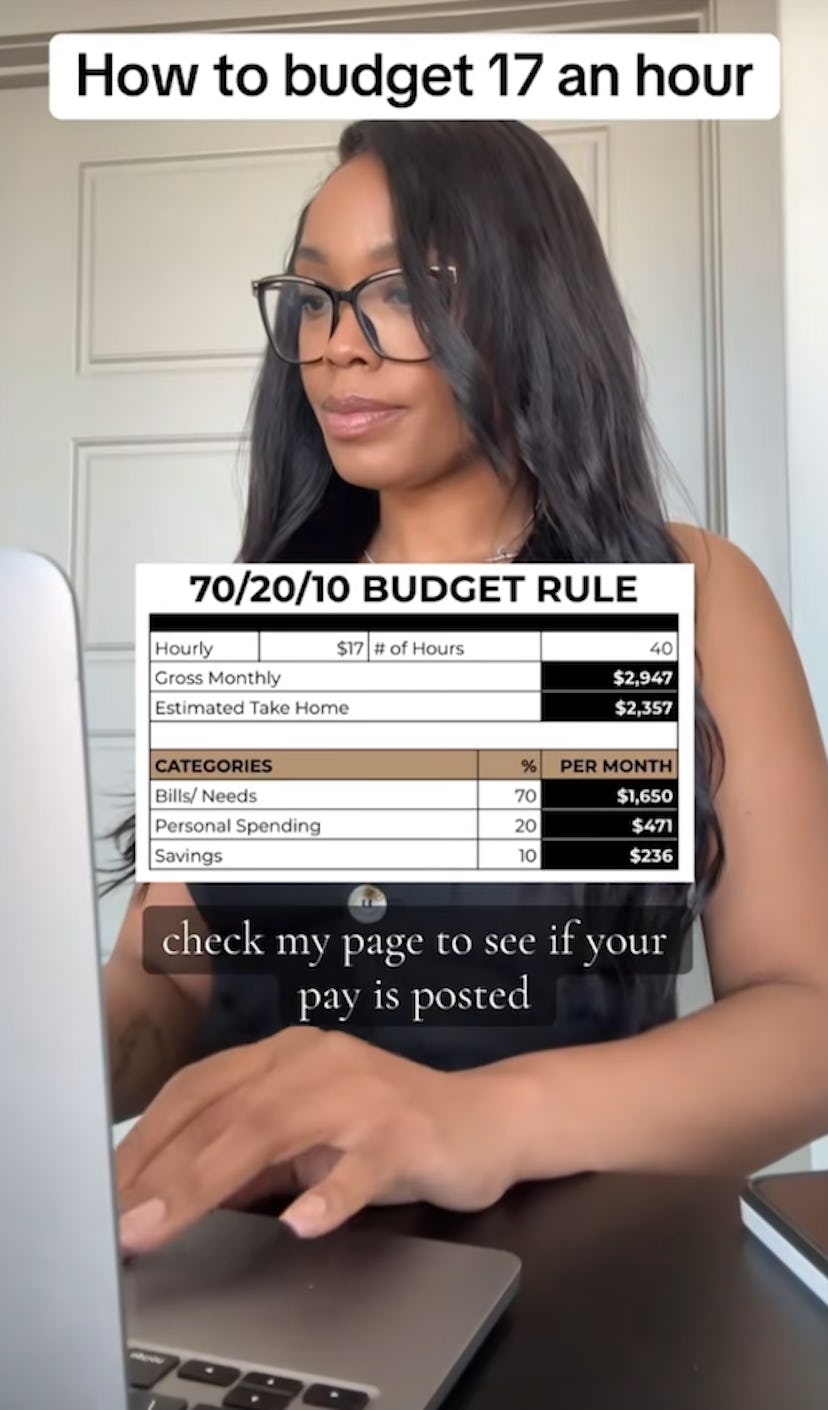
If you make $3,000 a month, that’s $2,100 for rent, food, and gas; $600 for investing/saving; and $300 for fun. “You can even roll over some untapped fun money from a previous month into the next to afford a bigger guilty pleasure purchase,” Woroch says. You can also, stash the extra in savings, of course.
“When applying this budgeting method, it's wise to use that 20% of your budget towards an adequate emergency fund with a minimum of three months of living expenses,” she says. “From there, you can use a portion towards longer-term financial goals and investing.”
If you’re new to investing, Woroch suggests starting by contributing to your employer’s sponsored plan and putting away at least the minimum amount that your employer offers to match. “That's free money,” she says. If that’s not an option, you can go through a bank and ask about a brokerage account.
From there, you can use a robo-investing app like Acorns and set up automatic transfers or “purchase round ups.” Woroch says the app will round up purchase amounts from a linked credit card or debit card to the whole dollar amount and invest the difference in a variety of mixed stocks and other investments.
And that remaining 10% is all for you! Go grab dinner and cheers to your future.
Source:
Andrea Woroch, budgeting expert
