Relationships
Watch Out For “False Intimacy” When Dating Someone New
It’s going viral on TikTok, but the pattern has existed forever.
When you’re swiping on dating apps, the one thing you’re looking for is a true connection. Not two-sentence conversations that seem to fizzle in an instant, but rather, genuine chats and flirty banter that get you excited to meet IRL.
It’s why it feels almost euphoric when a match starts texting you 24/7. It’s fun to wake up to “good morning” messages and to have someone to talk to throughout the day. Before you know it, you have inside jokes, a sense of history, and a burgeoning love story — even though you’ve never even been on a date.
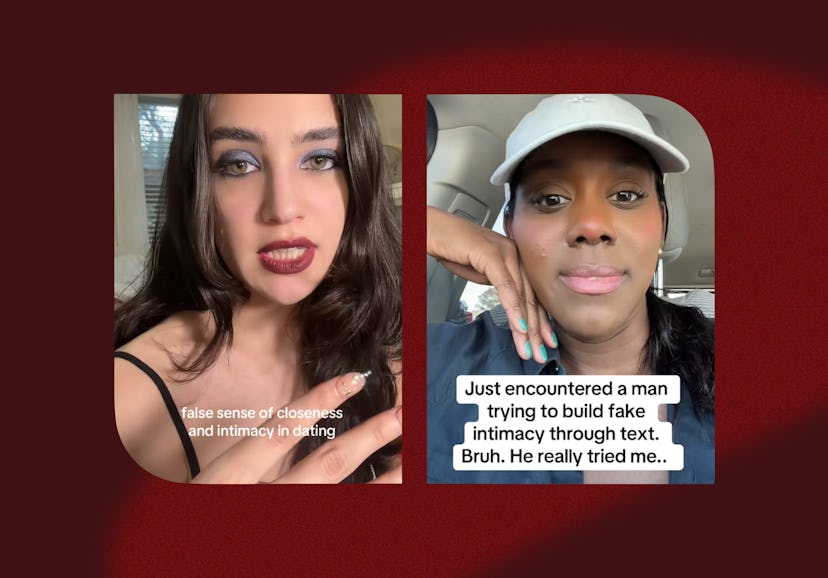
On TikTok, this is called “false intimacy,” and while it feels so good in the moment, it’s actually one of the biggest dating red flags to watch for right now. According to Maria Avgitidis, CEO of Agape Match and host of the dating podcast Ask A Matchmaker, false intimacy is the “illusion of emotional closeness” with someone you don’t actually know.
It’s so common on dating apps because they were designed to build fast rapport and give you quick hits of validation and dopamine, she says. What feels like the early days of true love is often just a fun chat with a stranger. Here’s what to know about false intimacy, plus how to avoid it.
What Is False Intimacy?
Ever had an instant connection with a Hinge match where you talked all day and late into the night? That’s false intimacy. It can linger into the first few dates, too, like when you meet up for dinner and immediately talk about deep, personal things, even though you’re perfect strangers. You might leave thinking you’ve found The One.
False intimacy is that feeling of connection that outpaces the reality of your connection, Avgitidis tells Bustle. “The term feels new because TikTok gave it a name, but the pattern has existed forever,” she says. “Before texting, it was long AIM messages and T9 thumb effort. Before that, it was handwritten letters to someone you barely knew. The medium changes; the emotional confusion doesn’t.”
That’s also what sets false intimacy apart from a true love story: the sense of anxiety, confusion, and “too good to be true” energy it stirs up. False intimacy makes you let your guard down, and it also leads to what Avgitidis calls “emotional traps.”
“What you’re really bonding with is imagination.”
“A classic example is texting for hours with someone you matched with 48 hours ago,” she says. “You’re sharing stories, flirting, maybe even talking about childhood memories, and it feels like you know them. But you’ve never actually sat across from them, heard their voice, seen how they treat a server, or experienced their energy.”
To really know someone, you have to meet in real life, and that’s why texting and being “pen pals” simply won’t cut it. Not to mention, the dopamine from this quick intimacy tricks your brain into thinking you’re emotionally safe and compatible, when in reality you’re not yet. “What you’re really bonding with is imagination and your projection of who you hope they are,” Avgitidis says.
Sometimes, false intimacy happens accidentally, especially when you’re excited to find love. It’s common for both people to skip a few steps because dating is supposed to feel fun. Other times, false intimacy is created on purpose, a lot like love bombing. “That’s when someone accelerates emotional closeness to meet their own goals: attention, validation, sex, caretaking, control,” she says.
The Early Warning Signs
To avoid getting sucked into a fake relationship that feels real, Avgitidis says to keep an eye out for red flags like:
- Long, emotionally heavy texts before you’ve met in person
- Texting all day and night, even if the texts seem casual or fun
- Constant low-effort check-in texts like, “How’s your day?”
- A feeling of anxiety, confusion, or overattachment to someone you’ve only known for a few days
- Lots of “future talk” or grand romantic promises, like travel, moving in together, getting married, etc.
- Phrases like, “I’ve never met someone like you,” or “I think I’m falling for you already.”
- Active daydreams, like you can’t stop thinking about how perfect they seem
How To Avoid False Intimacy
According to Avgitidis, you can prevent false intimacy by meeting with your matches ASAP. “If you don’t meet within three days, the story in your head grows faster than the relationship,” she says, so make sure you schedule dinner or drinks within the next few days after a match or virtual meeting.
While it’s OK to have an initial texting spree to establish interest and a base level of chemistry, you should avoid sharing juicy details about yourself until you meet IRL. “Use texting for logistics only. Not bonding. Not trauma dumping. Not storytelling,” she says. “That all belongs in person.”
Once you’re on the actual date, check for true signs of intimacy, like conversations that feel calm and clear, values and goals that align, and a sense of excited ease — not panicked butterflies or fairytales. “Real intimacy has clarity. False intimacy has chaos,” she says.
Source:
Maria Avgitidis, CEO of Agape Match, host of the dating and relationship podcast Ask A Matchmaker
