Wellness
This Tiny Mindset Shift Will Make You More Productive
One word can change how you see your to-do list.
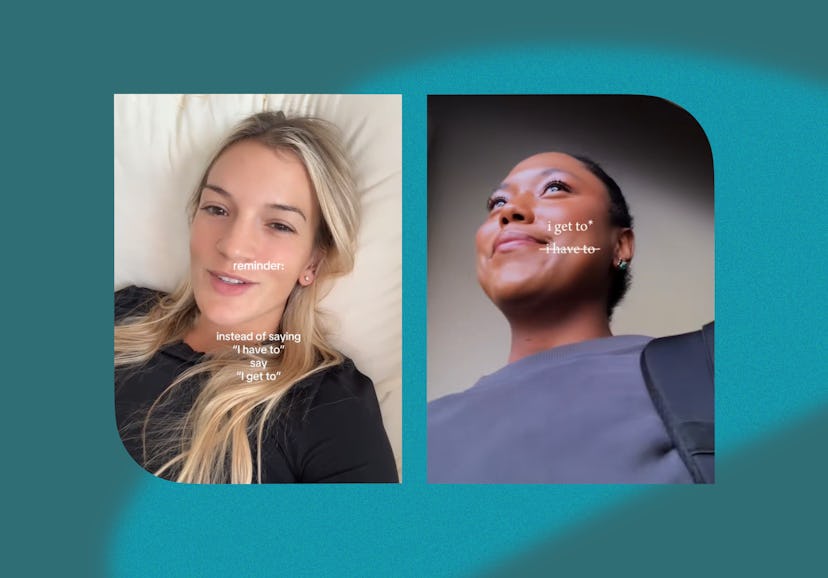
“Ugh, I have to go to the gym later.” This is something you might have said before, but have you ever noticed the wording makes it seem like a chore? The same feeling of dread crops up when you say “I have to see my friends later” or “I have to cook dinner.” Suddenly, something kind of neutral — or even something fun — can seem like a massive burden.
On TikTok, many people recommend saying “I get to” instead of “I have to” in these situations as a way of changing up your perspective. It’s the tiniest shift in language, but it really does help you feel less overwhelmed and annoyed by all the things you have to do in a day. It’s a secret trick to getting more done, and it also helps you remain positive.
“So often we take for granted that we’re the creative director of our lives,” TikTok user @unleashedwithsheridan said. “When you think about, ‘Oh, I have to go to the grocery store,’ ‘I have to go to work,’ ‘I have to attend this meeting,’ versus ‘I get to,’ I feel like that’s just a mindset shift.”
In another clip, creator @leximinifit said, “Real talk? You don’t have to go do that run. You don’t have to go to that workout class. You get to do all of those things.” In her comments section, someone said, “Yesss! Such a good mindset.” Another wrote, “Love this.” Here, a therapist explains the psychology behind why this wording works.
“I Have To” Vs. “I Get To”

According to Hillary Pilotto, MA, LCPC, a licensed trauma therapist and owner of Better Balance Therapy, many people underestimate the power of thinking and the way they speak to themselves. “Our minds are constantly ‘on’ in the background making internal comments as we go about our day,” she tells Bustle.
It’s why you might say something like, “I have to go for a walk,” or “I have to run a quick errand,” without realizing the toll it takes. When you frame a task as something you have to do, it feels overwhelming — and you might even end up bailing. Cut to you canceling on your friends or skipping your walk just to avoid the pressure and mental fatigue.
If you were to switch it up and say “I get to go for a walk” or “I get to catch up with my besties,” it makes your brain pause for the tiniest second and recalibrate. Suddenly, you realize you might actually enjoy the experience — or at least feel more OK about it. In an instant, your energy and motivation kicks back in, and you follow through.
Saying “I get to” instead of “I have to” also helps you skirt around the self-criticism and judgment that creeps in when you don’t follow through — something that can lead to resistance and avoidance in the future, Pilotto says.
When you sigh and say you have to do something, it feels like you no longer have a choice in the matter, and that sends a ripple effect through your mind. Suddenly, you dig your heals in, you feel overwhelmed, and refuse to do it.
“It can trigger resentment or dread before the task even begins,” she says. On the flip side, “‘I get to” signals opportunity,” she adds. “It says, ‘I’m about to do something that not everyone has access to.’ That simple reframe and change in language has real emotional weight.”
Your brain no longer hears something negative, boring, or burdensome, but something kind of exciting or special. You get your autonomy back and remember that you’re the one calling the shots.
Trying It Out

The next time you’re scanning your to-do list and feeling stressed, try saying “I get to do these things.” It’ll help boost your motivation, especially if you believe it. “The brain doesn’t respond well to empty affirmations,” Pilotto says. But if you can find a sliver of gratitude or an ounce of joy, it could change how you think about the upcoming task.
For things that are hard to frame in a positive way, search for the silver lining. It might not feel right to say, “Yay, I get to go to the dentist” or “Wow, I get to have my tires changed.” But you can reframe these chores by thinking about how grateful you are to have a dentist you trust, or a spare afternoon to take care of your car. Suddenly, it’s not so bad.
This mind trick also works well when you’re building a new habit. “It helps to lower that internal friction that causes people to quit in the early stages,” she says. “Reframing it as a gift, rather than something you must do, helps with showing up consistently before it becomes automatic.” You get to go for a walk. You get to take that fun dance cardio class. You get to go to bed early.
That said, avoid trying this trick when you’re truly burnt out. “If a person is dealing with chronic stress, forcing gratitude on a situation can dismiss real pain,” Pilotto says. “Those difficult feelings that are coming up may be a signal from the body that needs to be noticed before you head into full burnout.” In those moments, you get to take a break, and that’s OK.
Source:
Hillary Pilotto, MA, LCPC, licensed trauma therapist, owner of Better Balance Therapy
