Wellness
In Defense Of Sleeping In
On TikTok, night owls are working toward a rebrand.
Every late sleeper has heard it: The chorus of comments that bounce off the walls when they come downstairs after 9 a.m. “Look who decided to join us,” your parents might say, as they sip their third coffee and rattle off everything they’ve already accomplished. “Welcome to the land of the living!”
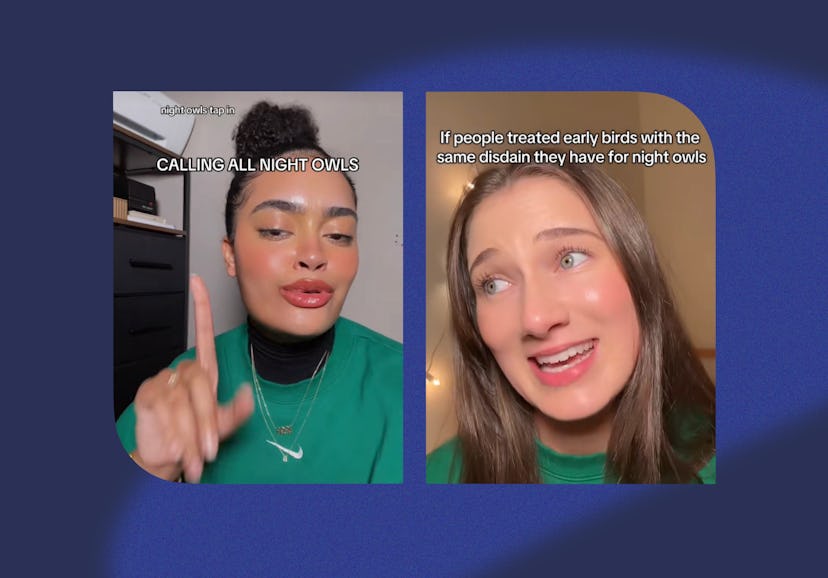
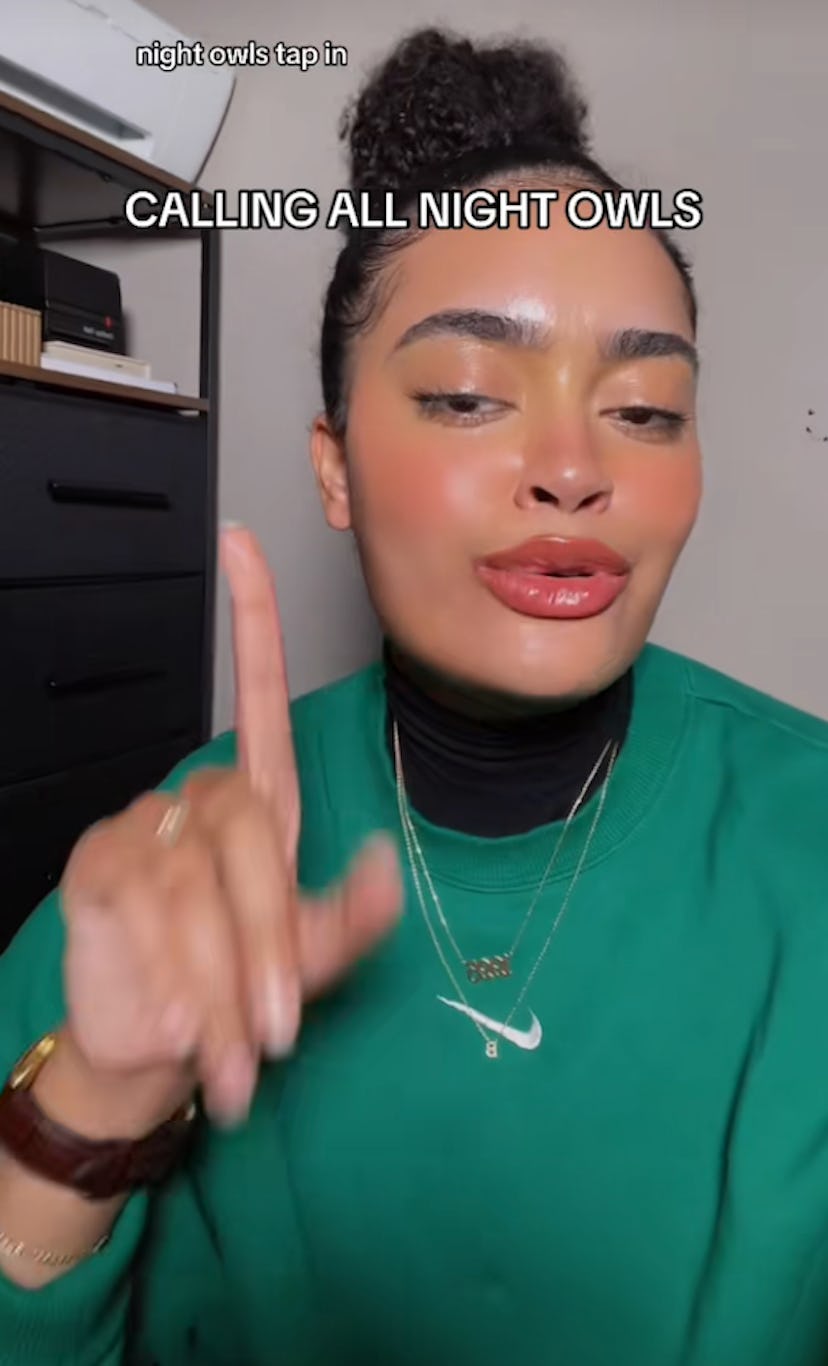
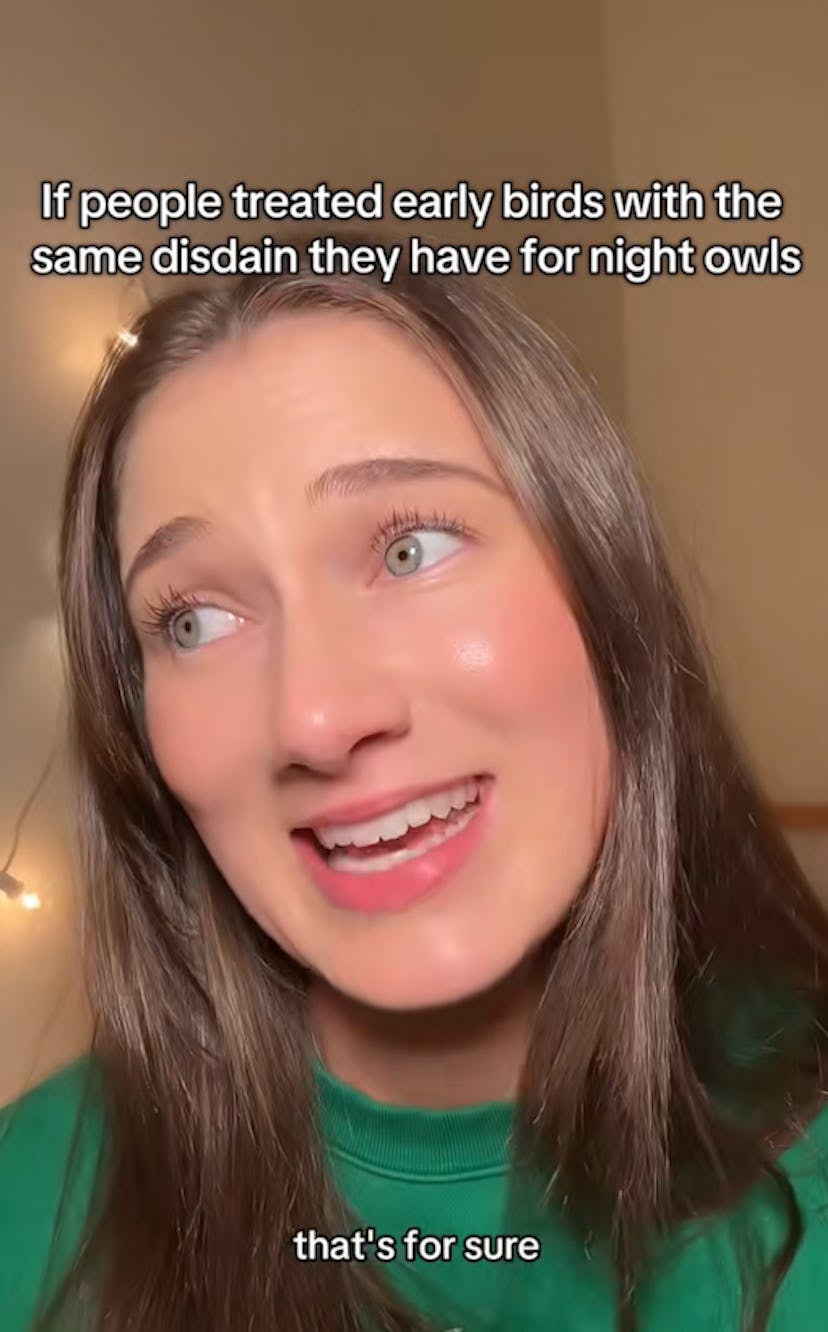
On TikTok, people are talking about sleeping in late, how it gets a bad rap, and how it’s sometimes even met with disdain, especially when visiting home for the holidays. On Dec. 17, creator @sonyakatarinaa made a video about early birds feeling superior to night owls and how they often make these snarky remarks. They love to rave about their ability to get up early, but seem to love dunking on those who sleep in even more.
From a late riser’s perspective, there’s nothing wrong with feeling more lively in the evening or enjoying the peacefulness of midnight — those quiet hours after all the rowdy morning people have gone to bed. In fact, many view it as a way of life. In Sonya’s comments, one person wrote, “Night owls unite! We ride at sundown.” Another joked, “I’m soooo suspicious of morning people. Like, why are you awake?”
Creator @janibellrosanne also talked about the intense pressure to become a morning person, but noted that it’s common to eventually slip back into your beloved night owl ways. “It’s a lifestyle,” she said in the clip. “It’s a way of being. I just like being up in the wee hours of the night. The stillness. Everyone’s asleep. It’s quiet. Being in bed by 10 is giving sacrilegious.”
Read on for a few things to know about being a late sleeper, plus why night owls deserve more respect.
Night Owls Need Love, Too
It goes without saying that morning people get all the love. Many viral wellness routines center on waking up at the crack of dawn to get a jump on the day. It seems to go hand-in-hand with being a successful go-getter and having your life organized to a T.
It’s why those who sleep in are seen as lazy in comparison, but according to Kasryn Kapp, LPC, a licensed professional counselor and sleep expert, nothing could be further from the truth. If you’ve always been good at sleeping in, it could be due to your body’s chronotype.
“This is related to your circadian rhythm or body clock, which regulates not only sleep but also things like digestion and daytime energy levels,” she tells Bustle. “Night owls tend to prefer a later schedule, but also tend to feel more energized later in the evening and report getting their best work done then.”
That’s an important thing for early birds to remember: While they might be ready to clean or do yoga at 5 a.m., night owls feel those same urges, but later in the evening. In the end, everyone accomplishes the same goals, just at different times. It’s why Kapp says “a morning schedule is not morally superior,” and shouldn’t be viewed as such.
“I’m not sure where this belief comes from, but there are a few things that might be contributing to it,” she says. “There are common clichés about teenagers sleeping in and older individuals waking up very early, so those who do wake up earlier as adults may assume everyone should get up earlier as they age.”
There’s also society’s constant focus on productivity. “Those who are long-sleepers who go to bed early and wake up later get a lot of pressure to get less rest,” she says. “Getting the sleep they need can be seen as rebellious [to this system].”
Long-sleepers are people who naturally need more than eight hours of sleep per night. “In that case, they might get to bed early and also sleep later,” she says. While the lifestyle can seem lethargic at first glance, it doesn’t mean you’re any less important than a morning person.
In fact, Kapp says night owls and late sleepers actually play an important role in society. “We need people who can excel with later shifts where morning people might struggle, especially in industries that run around the clock like healthcare,” she says. See also: restaurant staff, drivers, pilots, security workers, 911 dispatchers, hospitality shifts, theater performers, etc. Where would the world be without them?
In @brookeisasillywilly’s viral TikTok about sleeping in, commenters also pointed out that many early birds take multiple naps throughout the day and then go to bed impossibly early. Meanwhile, night owls are awake, burning the midnight oil, being creative, completing projects, and sometimes even pulling all-nighters. When you look at it from that perspective, night owls may be the harder workers.
Support For A Night Owl
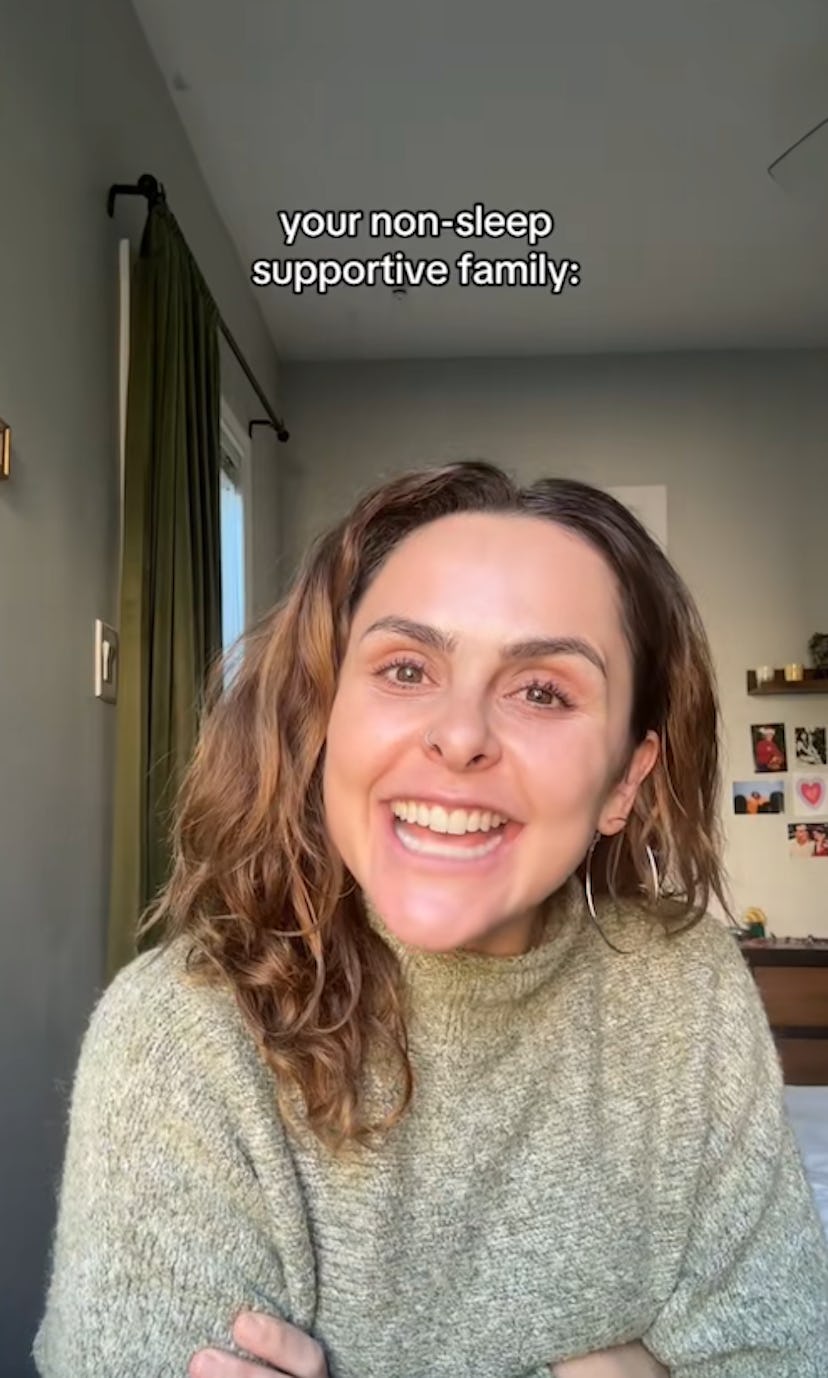
Creator @brookeisasillywilly’s TikTok called out “non-sleep supportive families.” Remember, they’re the ones who make remarks like, “Wow, she’s alive!” when you dare to wake up at nine on a Saturday. They also might give you a hard time when you need more than eight hours of rest.
According to Kapp, it’s because morning people often struggle to understand night owl energy flows, especially in a world that’s designed around 9-to-5 work schedules. To help your family, partner, or friends grasp why you like to stay up late, offer them a thought experiment.
Kapp recommends asking the morning person in your life how they’d feel about taking a very important meeting at 10 p.m. They’d probably sleep through it, or at least not be on their A-game. That’s what it’s like for night owls to exist in this world, and why they will snatch extra sleep whenever they can.
It also wouldn’t hurt to do some internal work around the negative messaging of the night owl lifestyle. “Many late sleepers really internalize these comments,” Kapp says, especially since they’re tinged with moral superiority. While you might not be able to convince a morning person that it’s OK to sleep until noon on the weekends, you can adjust how their words impact you.
“Working with a therapist who specializes in sleep can help unpack and challenge them, as well as build up skills to cope and set boundaries with family members who make hurtful comments,” she says. Remember, a late schedule is not inferior. “When you can, enjoy your body’s rhythms,” she says. “Be a rebel!”
Source:
Kasryn Kapp, LPC, licensed professional counselor, sleep expert
