Art Class
Colorful Eyeshadow Is Back With A Soft-Focus Makeover
An expert's guide to nailing the "watercolor eyeshadow" trend.
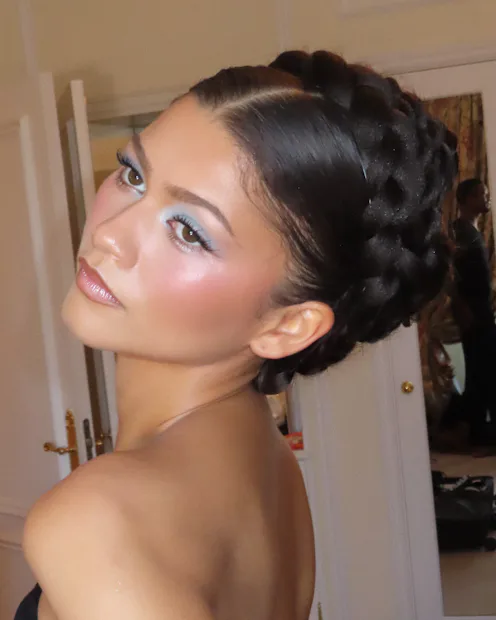
You’re not imagining it: Colorful eyeshadow is making a comeback — but it’s not the bold, blocky pigment of decades past.
Last week, Zendaya wore a dreamy wash of baby blue across her lids to the Odyssey premiere in Paris, while Jennifer Lopez stepped out at Paris Couture Week with a hazy lavender look that paired perfectly with her Celia Kritharioti gown.
Beyond the pastel palette, both makeup looks shared a bigger beauty trend in common: a sheer, skin-like finish that let the color melt into the lids. That's the idea behind watercolor eyeshadow, the celeb-approved trend giving colorful lids a muted, more romantic spin.
Think of it as the eye makeup version of beauty's current obsession with softness: watercolor blush, blurred lips, and suede bronzer have all leaned into makeup looks that are diffused rather than deliberate. Ahead, everything to know about watercolor eyeshadow, including the pro tips for recreating it at home.
What Is Watercolor Eyeshadow?
Just like a watercolor painting, the goal isn’t full coverage. “It’s all about a translucent wash of color across the lids,” says celebrity makeup artist Christian Briceno. “It should feel diffused, cloudlike, almost airbrushed — but never opaque.”

Pastels like baby blue, lavender, mint green, and peach naturally lend themselves to that airy effect, but the trend isn't limited to candy-colored lids. According to Briceno, a softened taupe or warm terracotta can feel just as fluid. Whether you choose a single shade or layer a few together, the finish remains the same.
“What makes it different from other eyeshadow looks is the transparency,” Briceno explains. “A soft smoky eye can still have weight and a neutral eye can still be sculpted, but watercolor shadow has more airiness. The color floats over the lid, so you still see the skin underneath.”

In other words, if you’ve ever felt intimidated by colorful eyeshadow, this trend is one of the easiest entry points. “The whole point is color without the commitment of a packed pastel,” Briceno says. Instead of feeling straight out of the ’80s, it gives even the brightest shades a lighter, more lived-in touch — which is exactly where makeup is headed.
“Watercolor blush, diffused bronzer, blurred lips, and sheer eyeshadow all come from the same instinct,” Briceno says. “People are reacting against makeup that looks too mapped out.” Think less paint by numbers, more color that melts into your skin.
How To Recreate The Look
The beauty of watercolor eyeshadow is that the technique is intentionally imperfect. You’re not chasing sharp edges or maximum pigment — you’re building a soft veil of color. According to Briceno, the trend doesn’t rely on any complicated technique but a little intentionality and restraint.

To start, prep your lids with a thin layer of eye primer, plus the tiniest amount of concealer if you want to even out any discoloration. "You still want some skin quality to come through, so don’t erase the eyelid for this look," Briceno says.
Next comes the fun part: applying the color. Start with a medium fluffy brush with enough structure to place color without packing it on. Tap off the excess product before applying it on the areas where you want the most intensity, then use whatever shadow is left on the brush to softly feather the edges.

Don’t stop after the first wash of color, though. Watercolor eyeshadow should still have a focal point, whether that's a little extra depth at the outer corner or a soft haze along the lower lash line. "Without structure, the eye can look unfinished rather than delicate," says Briceno.
If you're wearing more than one shade, keep the colors distinct, barely blending them at the edges. “It should look melted, not fused into a single indistinct shade,” says Briceno, who recommends testing out the color combos on the back of your hand before committing. “If they turn gray or muddy when they overlap there, they will do the same thing on the eyelid.”

Finally, knowing when to stop is the most important part. “People keep touching the eye to make it look seamless, but eventually the color fades, turns gray, or loses its shape,” Briceno adds. If you do need to blend everything more, be sure to use a clean brush, so you’re not adding any extra powder. And that’s the secret: a colorful eyeshadow look that feels less like a statement and more like a filter for your eyes.


