Bring It To The Runway
How Reality Stars Became The Fashion World’s New Muse
The best way to turn your TV fame into something lasting? Get the fashion world on your side.
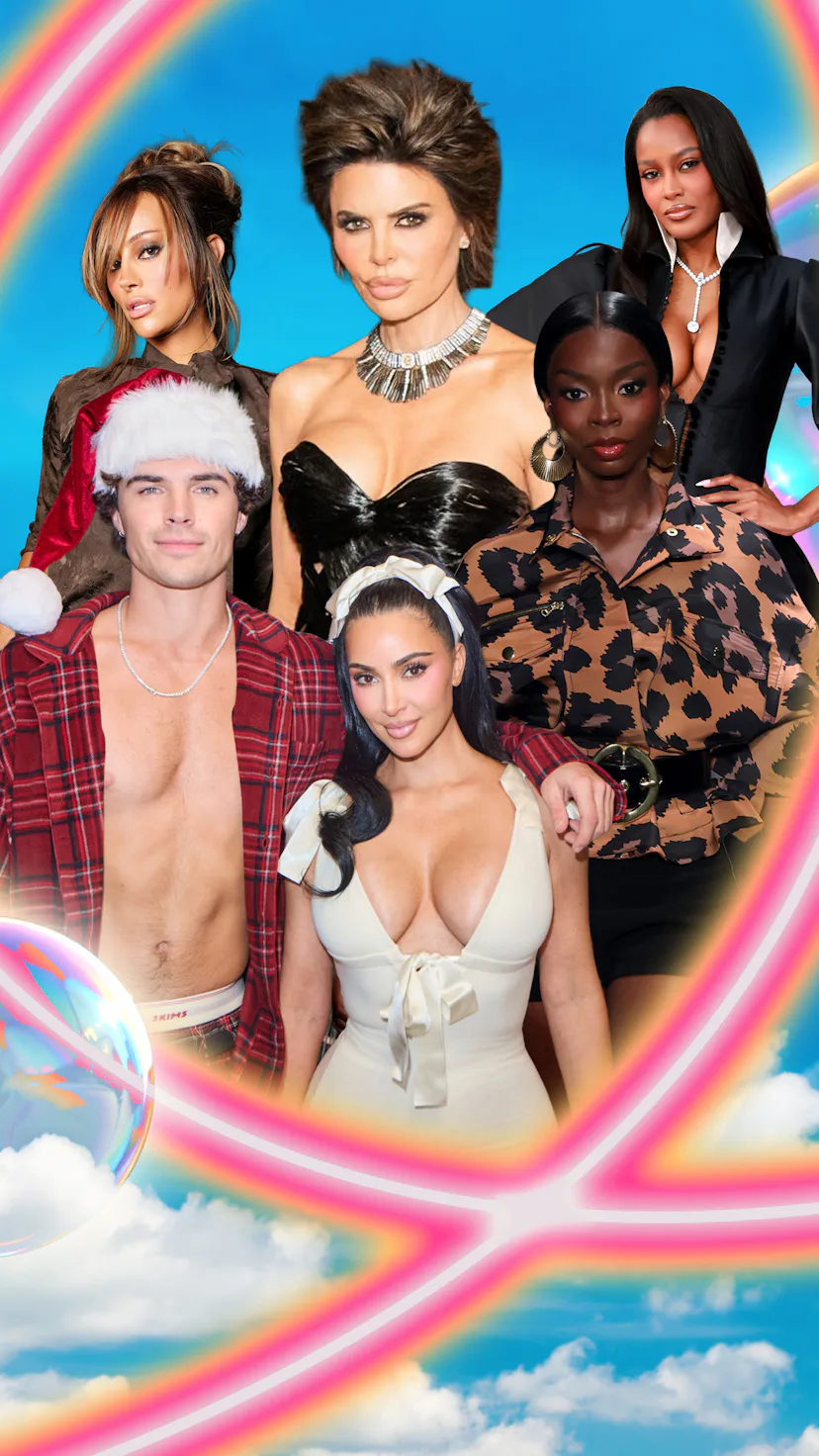
It wasn’t long ago that the fashion industry held reality television at arm’s length. When Kim Kardashian finally made it to the cover of Vogue in 2014 — after years of reported resistance from Anna Wintour — many in the establishment saw it as pure blasphemy, and #boycottvogue became a trending topic. (Remember those?)
Those days seem quaint now. Reality stars are packing front rows at fashion weeks, making cameos in The Devil Wears Prada 2, and even walking the runway themselves. Take Love Island USA breakout Olandria Carthen, who’s among those bridging these formerly disparate worlds: strutting in Sergio Hudson’s Spring/Summer 2026 show last fall, securing a coveted seat at Valentino’s Couture Show in January, collaborating with Brandon Blackwood on a sold-out handbag collection, and landing a Glamour cover alongside her boyfriend and Love Island partner Nic Vansteenberghe (whose own postshow resume includes a Skims holiday campaign).
The shift was, at first, slow — then lightning fast. “I’d have to give credit to Bravo, specifically Housewives,” says Tchesmeni Leonard, global fashion director of Teen Vogue and Glamour, who styled Glamour’s covers with “Nicolandria” and Summer House star Ciara Miller. “The caliber of Housewives started to shift,” including cast members of Atlanta, Beverly Hills, and New York “who had the means to buy fashion in a real way. A lot of editors’ and designers’ guilty pleasure was watching Housewives.” She adds: “I don’t know if we would’ve had Gigi and Bella Hadid if it wasn’t for Yolanda. And look at Amelia Gray now. I don’t think she would be who she is if her mother wasn’t just Lisa Rinna, but Lisa Rinna on Housewives.”
Now, as reality stars break into the industry’s highly exclusive circle, fashion’s own power players are increasingly crossing into unscripted TV, too. Former J.Crew president Jenna Lyons and designer Rebecca Minkoff both stepped into the Real Housewives of New York City universe in recent years, while iconic stylist Rachel Zoe — already a pioneer in the format with The Rachel Zoe Project, which ran on Bravo from 2008 to 2013 — is back on TV as the latest Beverly Hills Housewife.
Even stars who were already working in beauty and fashion before they were on television can’t deny the boost. Emira D’Spain had already modeled for Fenty Beauty and made history as the first Black transgender model to work with Victoria’s Secret by the time she joined the cast of Next Gen NYC; she’s since added a couple more iconic brands to the mix, including that little startup you may have heard of called Gucci. “They never want you to feel like they’re only [hiring you] because of it, but I really do feel like I’ve been put on the map even greater for these brands to notice me,” D’Spain says. “That’s the most incredible and the most fun part because it’s like, ‘Oh, wow, I can’t believe you guys know I exist.’”


Still, not all stars are created equal in the eyes of the fashion industry. “When I invite people to sit front row at my shows, what usually connects more with my customers is actresses,” says designer Christian Siriano, whose own career launched on Project Runway (which returns for a new season July 9). “The biggest challenge [with reality stardom] mostly is that it doesn’t always translate to sales necessarily, and I think the big fashion houses look for that usually. You could be the most famous TikToker in the world, but that doesn’t necessarily translate with Hermès.”
If you can get that coveted stamp of approval, though, there are few better ways to shore up your star power as a newfound reality star. The fashion world may be (relatively) less snobby these days, but the legitimacy it confers is still undeniable: “It can make someone very successful very quickly,” Siriano says. “If you can get the industry in your corner, you’re pretty much set.”

Work with what you’ve got…
The biggest designer brands are probably not going to be blowing up your phone right away. “Obviously being seen at fashion week is important, but that’s such a small moment to cut through the noise,” D’Spain says. “You’re better off creating your own tentpole iconic moments.” Let your social media be a showcase: Do you have expert knowledge of the latest trends? Style them in your OOTD Instagrams. Loyal to a few brands? Go ahead and be loud about it. “It really is about authentically showcasing your aesthetic and your personal style,” D’Spain says. “If your budget is giving Zara and H&M, then work with that. Become a fashion icon for making that work.”
…but think long-term
“Don’t partner with cheesy brands right away just for the money,” Siriano says. “You have to be smart about what you do, where you go, and who you start to partner with.” His advice? “Be picky — go for your dream brand and keep at it. Once you get there, you can go kind of anywhere. Once you get one big, really great brand on your side, you can kind of pull anyone, and that’s really the goal.”
“People are so caught up in becoming besties with the creative director of XYZ fashion house. That’s not necessarily who’s going to get you in the door.”
Your storyline matters
Look, being gorgeous isn’t nothing. “Sometimes for me, I just want to dress someone that’s really beautiful and looks great in a dress, and that’s it,” says Siriano, who dressed Carthen for the Golden Globes and ex-Summer House star Paige DeSorbo for the Devil Wears Prada 2 premiere. “With Olandria, I thought she was really gorgeous. Paige, the same. Paige — she just looks great in clothes.”
But for the most part, designers and brands aren’t just looking for famous faces with social media clout; they’re looking for a story. They need to be able to champion you — and that’s also based on what you stand for and represent. “What I look for, especially in regards to fashion week, is a narrative that feels super compelling, where it’s just not a regular old girl from wherever,” says Lindsey Solomon, founder of the public relations firm Lindsey Media, who often connects emerging designer clients with celebrity talent for campaigns, red-carpet dressing, and fashion-week invites. Take someone like Gabby Windey, he says, “who’s incredibly intelligent and did a lot of COVID relief work before she was even on Bachelorette, and then discovering her sexuality — it’s super interesting.” Or Miller, who advocates for representation within reality TV as Summer House’s first Black cast member, or Ariana Madix, whom he calls the “poster child for reinvention.”
You don’t need a stylist, actually
If your post-reality-TV game plan includes tons of red-carpet and fashion-week appearances, you might assume a stylist is the first person you want on speed dial. Not quite. The most important hire is actually a publicist. “You can have the greatest stylist in the world, but if a designer’s not feeling it…” Solomon says.
D’Spain’s rise is proof. “I style all of my own looks, do all of my own glam. I just have someone do my hair,” she says. “The main reason why you would want to use a stylist is so you don’t have to keep buying everything yourself.” Instead, she recommends focusing on something much more valuable: finding your overall aesthetic and then playing around with it. “That’s the most fun part of this job. I can wake up one day and say, ‘OK, today we’re going to do a goth vibe.’”
“I don’t know if we would’ve had Gigi and Bella Hadid if it wasn’t for Yolanda.”
Don’t play it safe
Not every look is going to land. That’s more than just OK — that’s kind of the point. “The people I’m drawn to aren’t afraid to take risks with fashion,” says designer Christian Cowan. And that’s exactly why he likes working with Rinna. “Lisa is fearless with fashion.” For Elton John’s Oscars afterparty this year, Cowan dressed Rinna in a gown made out of 11 pounds of human hair in collaboration with Tresemmé. “She completely committed to the look, which made it even more powerful.” Avant-garde aside, what else catches his eye? “Have fun with fashion and lean into what makes you unique,” he says. “The most memorable style moments come from authenticity.”

D’Spain puts it this way: “You can’t be afraid to flop because sometimes the biggest flops come up with the greatest slays. F*ck it. You’ve got to experiment.”
Know your fashion ABCs
Want style cred? Do your homework. “In order to be taken seriously in this space, it would help if reality stars showed an affinity for the industry in a meaningful way outside of ‘Oh, I’m just going to wear these Top 10 brands and call myself a fashion person,’” Leonard says. That includes familiarizing yourself with the top stylists and photographers, and being intentional about which brands and designers you wear. She especially stresses the importance of supporting emerging designers: “I would take someone seriously if I saw that they did that. Like, ‘Oh, you get it. You’re using your platform for good.’”
“You could be the most famous TikToker in the world, but that doesn’t necessarily translate with Hermès.”
Building a fashion identity isn’t just a switch you flip. “What’s really off-putting for me is a stylist being like, ‘Hey, we’re styling this person and completely reinventing them,’ but then there’s no personal narrative,” Solomon says. “How am I supposed to advocate for you if you have no personal relationship with fashion?”
Being a paying customer pays off
Here’s one small act that goes a long way: Buy the clothes you want to wear. Solomon recalls the early stages of trying to build a relationship between DeSorbo and designer client Wiederhoeft. “There definitely was a level of convincing with Wiederhoeft,” he says, “but when she bought, that was really helpful and compelling.” The look she picked up? A Wiederhoeft dress she wore to the 2025 Las Culturistas Culture Awards — one of her most acclaimed looks to date.
Real Housewives of Salt Lake City star Bronwyn Newport made it to this year’s Met Gala as a red-carpet commentator for E! (alongside Miller), but she’d already won over designers like her pal Siriano as a loyal shopper first. “Bronwyn was my customer for 10 years before anybody knew who she was. She actually paid a lot of money for her clothes, and still does,” Siriano says. “Bronwyn was a Schiaparelli customer, and they’re inviting her to Paris.”


Your relationships are, in fact, everything
In the celeb-fluencer realm, one-time projects are common. You’re sent a product, you wear it, post it, and never work with a brand again. But the real secret in the fashion industry is relationships. “Build friendships along the way with even the little guy,” D’Spain says. “People are so caught up in becoming besties with the creative director of XYZ fashion house. That’s not necessarily who’s going to get you in the door.”
“You can’t be afraid to flop because sometimes the biggest flops come up with the greatest slays.”
Some of the most important connections you can make aren’t even on the designer or brand side. “Support emerging talent — stylist, hair, makeup,” Leonard says. “If you’re on set with photographers, really engage with them on what’s the story that you’re telling or participating in. Be engaged beyond brand deals and free clothes.”
Carthen and Vansteenberghe “were just so fun on set and such a vibe and also interested and down to shoot and play and converse,” Leonard says of their Glamour cover. She also praises Miller, whose shoot took place in the middle of this spring’s Summer House drama. “Ciara was going through this traumatic moment, but showed up to set on time. She was engaging with the photographer and was like, ‘I want your guys’ feedback after every shot.’ She was just really such a pleasant person to work with while she was going through whatever she was going through.” A good reputation, after all, travels a lot further than a hot outfit.
