Holistic Hair Care
All The Ayurvedic Hair Growth Secrets You're Sleeping On
It's not just about which products you're using.

The latest wellness hack on TikTok is… drinking hot water first thing in the morning. Creators claim it helps with digestion and de-bloating, but the “trend” isn’t new at all. It’s rooted in Ayurveda, a 5,000-year-old holistic wellness system from India — and hot water is just the entry point.
Small, consistent rituals are central to the Ayurvedic approach, especially when it comes to hair. Practices like scalp oiling stem from that idea that long, healthy strands start beneath the surface. “Ayurveda looks at hair holistically, whether it’s growth or loss,” says Monica Miglani, founder of Asna Beauty. “When someone is dealing with shedding, thinning, dullness, or breakage, the question isn’t just, ‘What do I put on my hair?’ It’s also, ‘What’s happening with my body, my routine, and my scalp?’”
Whether you’re trying to grow your hair out or maintain the inches you already have, Ayurvedic hair care is all about going back to the basics. Here’s how to incorporate a few expert-backed habits into your routine.
How Does Ayurveda Explain Hair Growth?

At its core, Ayurveda views the body as an interconnected system, influenced by everything from diet to seasonal shifts and lunar cycles. “It literally translates into the science of life,” says Nidhi Pandya, a certified Ayurvedic practitioner and author of Your Body Already Knows. “It’s a sister science of yoga — they come from the same body of knowledge, the Vedas.”
Within that holistic framework, hair health becomes a reflection of overall balance. When something is off, it tends to show up as shedding, frizz, or dullness — which can signal underlying stress, inflammation, or lack of nourishment. “Anytime you’re more in that stress mode, your body starts to lose its essential fluids,” explains Pandya.
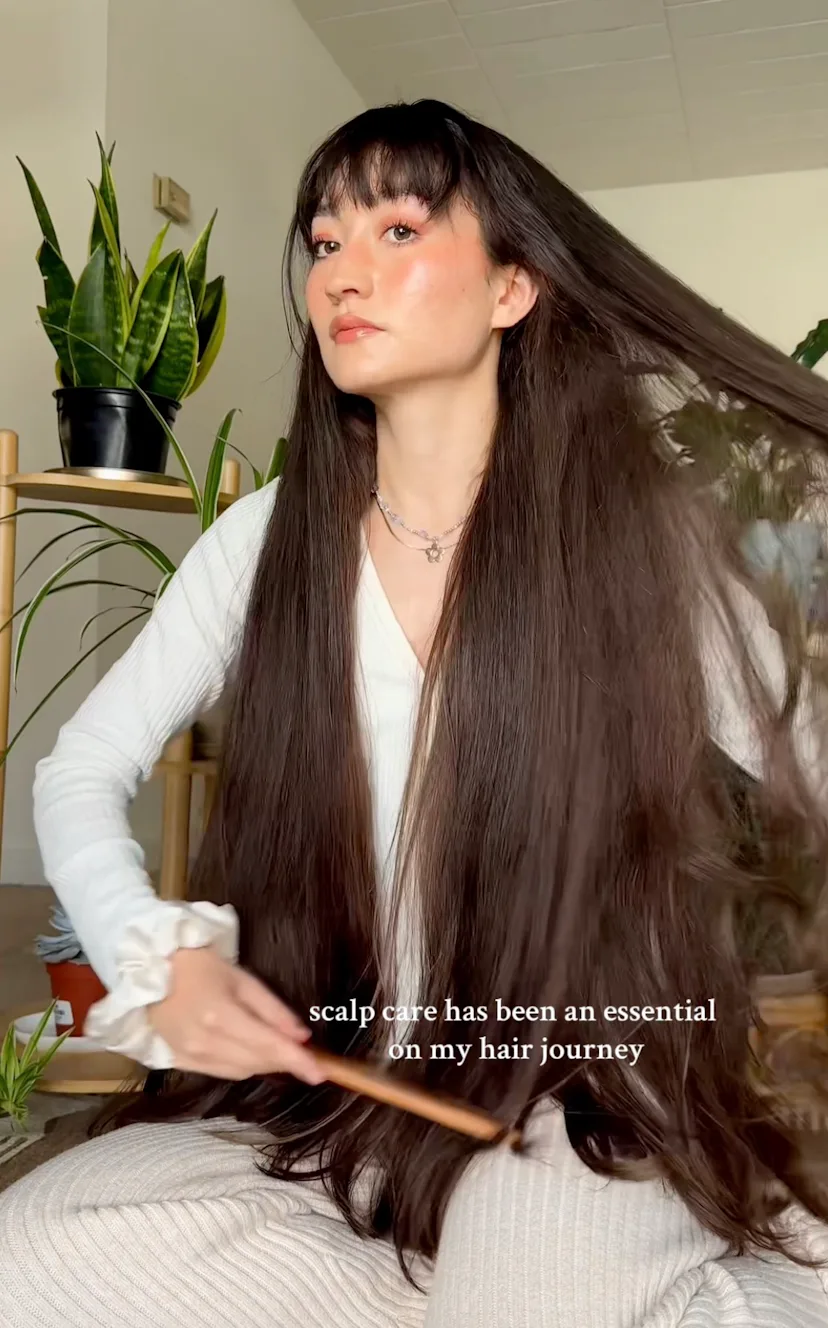
The result is what Ayurveda describes as a state of dryness and depletion, which can leave the scalp lacking its natural oils and make strands more prone to breakage. “People often focus on styling, covering, or correcting visible issues without supporting the foundation underneath,” says Miglani.
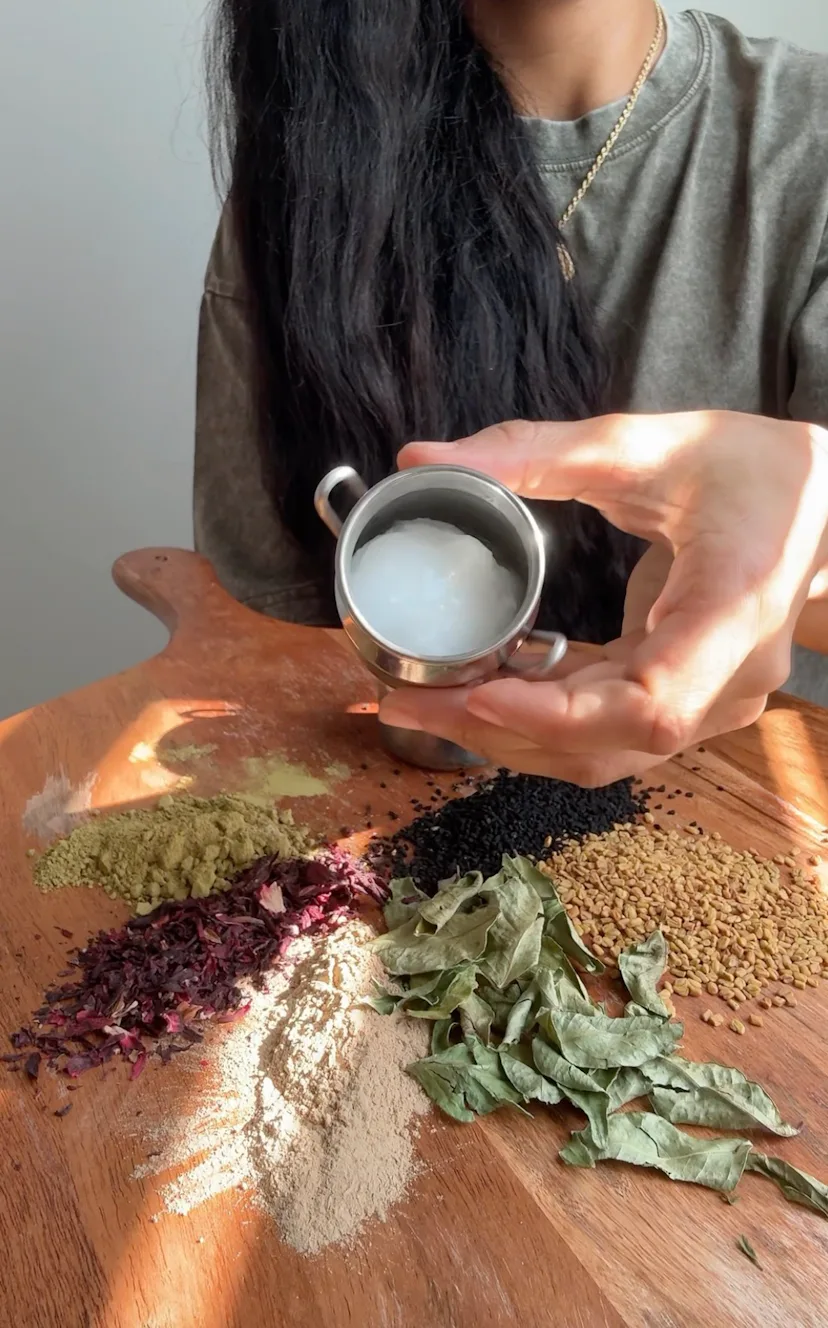
Luckily, getting your hair back to its long, luscious state doesn’t require a complete overhaul. “Consistency is where the magic happens,” says Miglani, who recommends starting with simple rituals rooted in care, not just correction. Pandya adds a caveat: “No matter how much you oil your hair, if your nutrition is lacking, you’re not going to grow the right type of hair.” Because it’s not just about length — it’s about stronger strands, too.
How To Put It Into Practice
First things first: scalp oiling. If Ayurveda has a claim to fame, it’s this. Before you dump half a bottle on your head, though, there’s a method to it. “A proper scalp massage should feel intentional, not aggressive,” says Miglani. She recommends applying a small amount of oil directly to the scalp and use the pads of your fingers in slow, circular motions, starting at the crown, moving to the sides, and finishing at the nape of the neck. “The goal is to stimulate the scalp and support circulation,” she adds, “not to scratch or tug.”
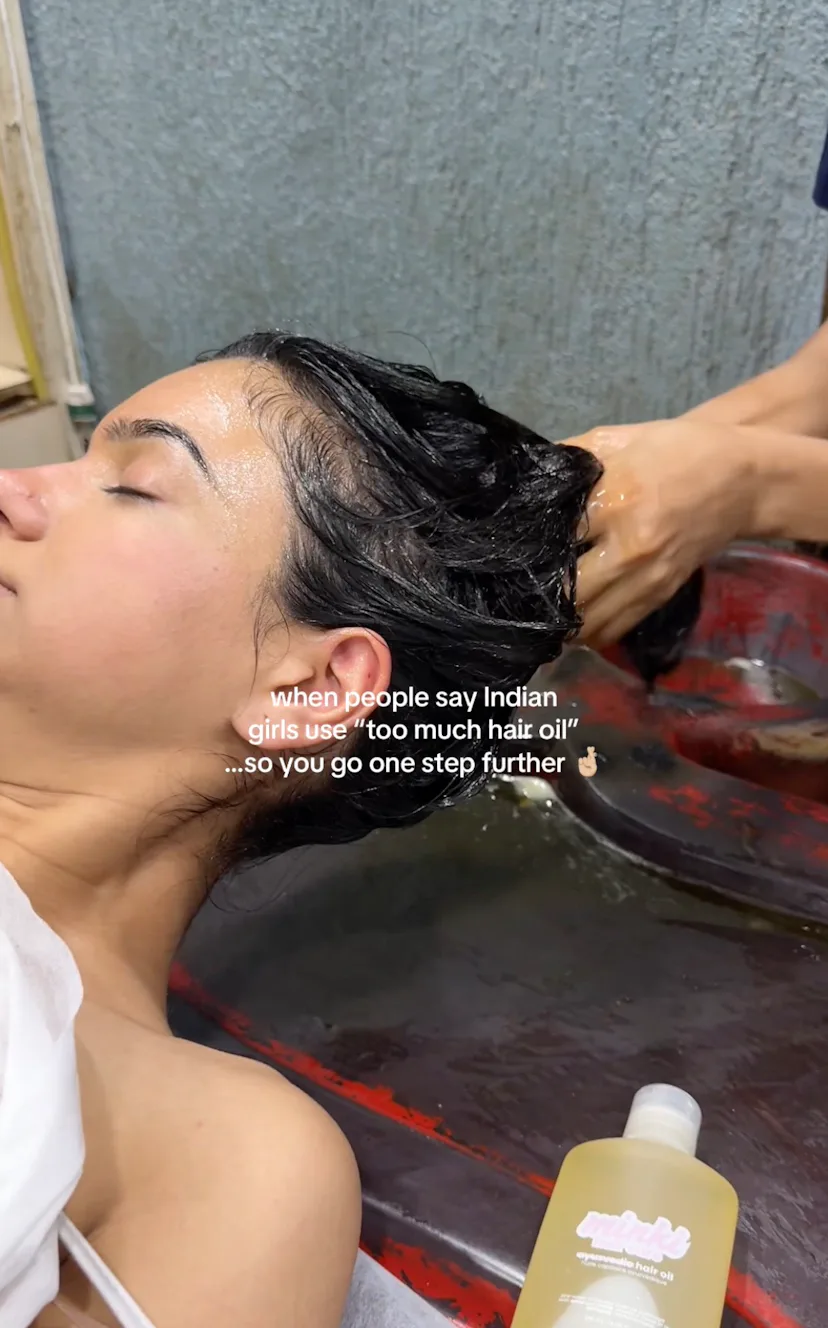
It’s not just a relaxing technique, either. “Hair follicles produce their own sebum,” Pandya explains, but between washes, scalp oiling helps “re-lubricate the hair follicles and provide them with nutrients.” If you’re new to it, start by leaving the oil in for 20 minutes and rinsing it out, then work your way up to overnight treatments.
Beyond oiling, try swapping your brush for a comb when you can. “Brushing helps you style, but combing distributes the oils evenly across your hair,” says Pandya, adding that it helps maintain moisture along the hair shaft, supporting moisture and shine. Washing habits matter, too. Doing it every day can strip the scalp and cause frizz, but letting sweat sit after a workout isn’t ideal — the key is being more mindful about when your scalp actually needs a reset.

Ayurveda treats hair growth as something you support internally, too. Pandya notes that winter is an especially supportive time, when the body is better able to proces heavier, nutrient-dense foods.
One simple suggestion: sesame. Think a spoonful of tahini paired with a date in the morning. “Within three weeks, you’ll start to see less hair shedding,” she says.
Just as important is scaling back on certain lifestyle habits. Daily heat styling, running on little sleep, overdoing caffeine or alcohol, even pushing workouts to the point of burnout can all contribute to shedding and breakage over time.
“Consumers are waking up to that dynamic across beauty as a whole,” Miglani says. “They’re asking harder questions about ingredients, long-term health, and whether a product is truly helping or just creating a temporary illusion.”
Thankfully, beauty brands have made Ayurveda easier than ever to incorporate into your routine. While ingredients like amla, bhringraj, and brahmi might traditionally be blended into kitchen-made hair oils, they’re now showing up in ready-to-use formulas that take out the guesswork.
So no, it’s not as simple as drinking hot water in the morning — but paying more attention to the habits you repeat and ingredients you use every day doesn’t exactly feel like rocket science.


