Astrology
What’s The Astrological Significance Of A Blue Moon?
Every so often, the lunar cycle aligns to create these special lunations.
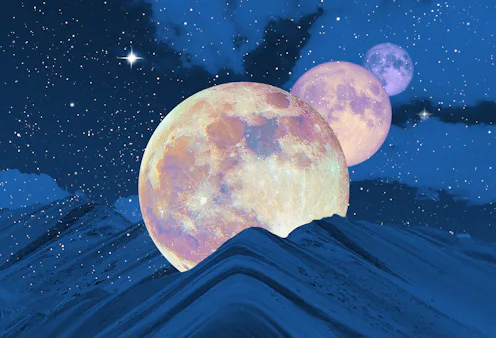
You’ve probably heard the phrase “once in a blue moon” used to describe something that happens rarely — and that makes sense, given that a blue moon usually refers to the second full moon to hit in one calendar month, which only occurs every two to three years. But depending on who you talk to or where you’re looking, this term could refer to slightly different lunar situations, and there are numerous ways to interpret this celestial moniker. With the full moon coming up on May 31 following up the one that rose on May 1, knowing the definition and spiritual meaning of a blue moon will come in handy, whether you’re planning a lunar ritual or just want to be able to impress your friends.
The moon is the celestial body closest to the earth, and its gravitational pull affects everything from the ocean’s tides to the anchoring of our planet’s axial tilt, which creates more stable seasons and climates. This luminary is equally essential and important in astrology, as it symbolizes the way people process and express the inner world of their emotions. Throughout the monthly lunar cycle — which technically lasts 29.5 days, and not a whole month — the moon waxes and wanes through its various phases in the sky, simultaneously making a full rotation through the zodiac.
Of all the lunar phases, the full moon is the most visually and energetically powerful. This type of lunation occurs when the sun and moon sit exactly opposite from one another, allowing the sun to illuminate the face of the moon in full. Astrologically, this zodiacal opposition indicates lots of tension, emotional swells, and potential revelations, and it’s thought to be a good time to bring situations to their climax or conclusion.

Because the lunar cycle is almost the same length as an average calendar month or zodiac sign season, full moons usually occur once a month. However, when the lunar cycle is timed just right, there can be an extra full moon in a single month and this is the criteria necessary to bring forth a blue moon. The former is known as a calendrical blue moon, while the latter is an astrological or zodiacal blue moon.
Because there are different definitions of a blue moon, it’s helpful to understand what they mean and when they occur. Read on to find out the types of blue moons and their spiritual meanings
The Origins Of The Blue Moon
In modern times, blue moons are usually either calendrical or astrological, but the traditional use of this lunar label didn’t quite align with either of these definitions. The first known explanation of this term in relation to astronomy is believed to have been published in a 1937 issue of Maine Farmers’ Almanac, and it based it upon the four seasons rather than singular months.
You can look at the mystical symbolism of these lunations as an opportunity for a second chance.
Dictated by the solstices and equinoxes, spring, summer, fall, and winter are each about three months long, and thus they typically contain three full moons. Occasionally, when timing is right, there will be a fourth full moon within a single astronomical season — and by this original definition, the third moon in such a season would be a blue moon.
This became known as the "Maine rule" for defining a blue moon in astronomy. And because it’s based on the seasons and dates back further than any other official definition, it is also called a seasonal or traditional blue moon.
What’s A Calendrical Blue Moon?
While it may not be the original definition of a blue moon, the most commonly known one has less to do with seasons and more to do with the month that the lunations occur in. Under these terms, a blue moon is the second full moon to occur within one calendar month — something that happens every two to three years. Interestingly, the origin of this more modern description of a blue moon was based on a misinterpretation of the original Maine Farmers’ Almanac definition, and this incorrect definition was published in a 1946 Sky & Telescope article. This wound up taking off in the collective consciousness, becoming the most popular and well-known use of the term. Because it’s based on the calendar months, it’s known as a calendrical blue moon.

What’s A Blue Moon In Astrology?
Unlike a calendrical blue moon, an astrological or zodiacal blue moon is based on the lunar cycle’s alignment with a zodiac sign’s solar season rather than a month on the calendar. In astrology, the sun spends approximately 30 days in each sign, while the moon takes about 29.5 days to complete a journey through all twelve of them. That means that when the timing is just right, the moon can oppose the sun in the zodiac twice in a single sun sign season, forming two full moons — once at the very beginning, and once again at the tail end. In this case, the second consecutive full moon in that same sign is called an astrological blue moon or zodiacal blue moon.
The Spiritual Meaning Of A Blue Moon
When it comes to moon spells and rituals, the spiritual meaning of a seasonal or calendrical full moon is more symbolic than energetic — as these lunations generally take place in different zodiac signs and still function as a regular full moon on an astrological level. That said, you can look at the mystical symbolism of these lunations as an opportunity for a second chance. The symbolism of having an extra full moon in a month makes it a good time to revisit something that you’d set aside for a while or give another push on endeavor that wasn’t successful in the past.

In the case of an astrological blue moon, the spiritual meaning is a bit more significant. Having two moons during the same zodiac season is arguably better for energy work, manifestation, or anything astrology related, as the moon cycle is more commonly honored in these practices than the designations on a standard calendar. In order for an astrological blue moon to occur, the two lunations will need to take place near the very first and last degrees of a zodiac sign, respectively — and these degrees are considered especially sensitive and potent for energy work. With that in mind, working with an astrological blue moon as well as the full moon that came before it can make for a powerful series of lunar rituals. The blue moon is a time when the lessons from the previous full moon can come full circle, deepening whatever internal exploration or outside endeavors you’ve been working toward throughout that month and capitalizing on the lunar momentum.
